
Categories
Advertiser

5 Common Affiliate Marketing Mistakes E-commerce Brands Make (And How to Avoid Them)

Affiliate marketing is no longer a side channel for e-commerce brands; it’s a core driver of performance. According to a report by Statista, affiliate marketing accounts for over 16% of all e-commerce sales in the U.S. alone, making it one of the top four sources of online sales. This kind of impact is only possible when the program is managed with precision, backed by the right infrastructure, and aligned with measurable business outcomes.

Yet, many brands still struggle to extract full value from affiliate marketing due to avoidable missteps. Whether it’s underestimating channel diversity, using outdated tracking systems, or partnering with the wrong affiliates, these errors can slow growth and undercut ROI.

Here are five of the most common affiliate marketing mistakes e-commerce brands make and how to avoid them by adopting best practices grounded in performance, accountability, and scale.

Mistake 1: Partnering with the Wrong Affiliates

One of the most common affiliate marketing mistakes e-commerce brands make is assuming that all affiliate traffic is valuable. But not every affiliate brings the right audience, conversion intent, or promotional quality to the table. Collaborating with affiliates who operate outside your niche, use generic or non-compliant promotional methods, or focus on volume over quality can result in poor traffic quality, inflated acquisition costs, and brand misalignment.

Brands that don’t actively evaluate the relevance, strategy, and historical performance of their affiliate partners often find themselves chasing metrics that don’t translate into sales or loyalty.

How to Avoid It:

Work only within affiliate ecosystems where partner selection is data-driven and aligned with your vertical. vCommission has a rigorous affiliate evaluation process that looks at:

    • Vertical expertise – ensuring affiliates have proven success in your niche.
    • Promotion methods – reviewing how they drive traffic (e.g., SEO, social, email).
    • Historical performance – analysing conversion rates, traffic consistency, and ROI.
    • Content relevance – verifying how authentically your brand fits within their content or platform.

By curating high-performance affiliate rosters, vCommission ensures your campaigns run with partners who have already demonstrated their ability to deliver results within your industry.

Mistake 2: Overlooking Compliance and Brand Safety

In affiliate marketing, your brand may appear in many places across cashback websites, email newsletters, influencer content, or social video ads. Without controls in place, this can quickly spiral into misrepresentation, unauthorised messaging, or even ad policy violations on major platforms.

Unregulated affiliate activity can not only impact trust in your brand but also lead to penalties from ad platforms, customer confusion, or even legal repercussions, depending on your vertical (especially in finance, health, and education).

How to Avoid It:

Maintain strict governance over where and how your brand appears. vCommission enforces a compliance-first environment with pre-approved creatives and messaging guidelines to maintain consistency and controlled access to campaigns so only verified, brand-suitable affiliates participate. Tracking and reporting systems that surface any anomalies or violations early.

This ensures full transparency into affiliate activity and protects brand reputation at every stage of the campaign lifecycle.

Mistake 3: Ignoring the Full Customer Journey

Assuming that a single contact, such as a visit from a deal site, should result in an instant conversion, many e-commerce advertisers only pay attention to last-click attribution. In practice, it frequently takes several touchpoints for clients to go from awareness to decision.

Brands lose out on increased engagement and enduring loyalty when affiliate tactics disregard this path and do not guide users through the stages of discovery, education, and consideration.

How to Avoid It:

A well-designed affiliate program supports users throughout their buying process to save brands from such affiliate marketing mistakes. vCommission’s omnichannel execution enables brands to engage audiences across content platforms for in-depth product education and social channels for community-driven discovery. They also ensure mobile touchpoints that drive action at the right time and place and coupon/cashback models that close the sale at the final moment.

This multi-touch orchestration ensures you’re not just driving traffic but conversions that are contextually nurtured and more likely to stick.

Mistake 4: Using a One-Size-Fits-All Pricing Model

Although affiliate marketing relies on results, not every activity is equally valuable. A sale for a high-margin product shouldn’t cost the same as one for a low-margin one, and a lead doesn’t equate to a sale. Yet many e-commerce brands make such affiliate marketing mistakes and stick to a single pricing model (often CPA or CPL), regardless of product type, audience source, or customer lifetime value.

This approach either restricts campaign growth or leads to unsustainable costs, especially when volume-focused affiliates dominate the funnel.

How to Avoid It:

Use pricing models that align with your conversion goals, product value, and sales cycles. vCommission supports flexibility through:

    • CPS (Cost Per Sale) – perfect for e-commerce brands focused on purchase-driven KPIs.
    • CPL (Cost Per Lead) – effective when nurturing prospects is part of the sales funnel.
    • CPA, CPT, and CPI models – for specific acquisition actions like form fills, transactions, or app installs.

Mistake 5: Lack of Real-Time Tracking & Optimisation

Many affiliate programs suffer from outdated tracking or fragmented data sources, which leads to slow reactions and missed opportunities. Without real-time insights, advertisers can’t identify which creatives are converting, which affiliates are underperforming, or when campaign budgets need to be reallocated.

As a result, brands continue to make these affiliate marketing mistakes, spend on ineffective placements and are unable to adapt quickly enough to optimise for performance.

How to Avoid It:

Operate in a performance environment where tracking is live, transparent, and integrated with your systems. At vCommission, postback-based tracking is used to ensure conversion data is passed accurately and in real-time from affiliate platforms to the advertiser’s own tracking panel. Platform integration is aligned using macros, enabling seamless attribution and reporting on the advertiser’s side.

Each advertiser is assigned a dedicated account manager who continuously tracks campaign data and recommends timely optimisations. This setup ensures advertisers maintain full visibility and control, with precise attribution for each conversion.

How vCommission Empowers E-commerce Brands to Scale Success
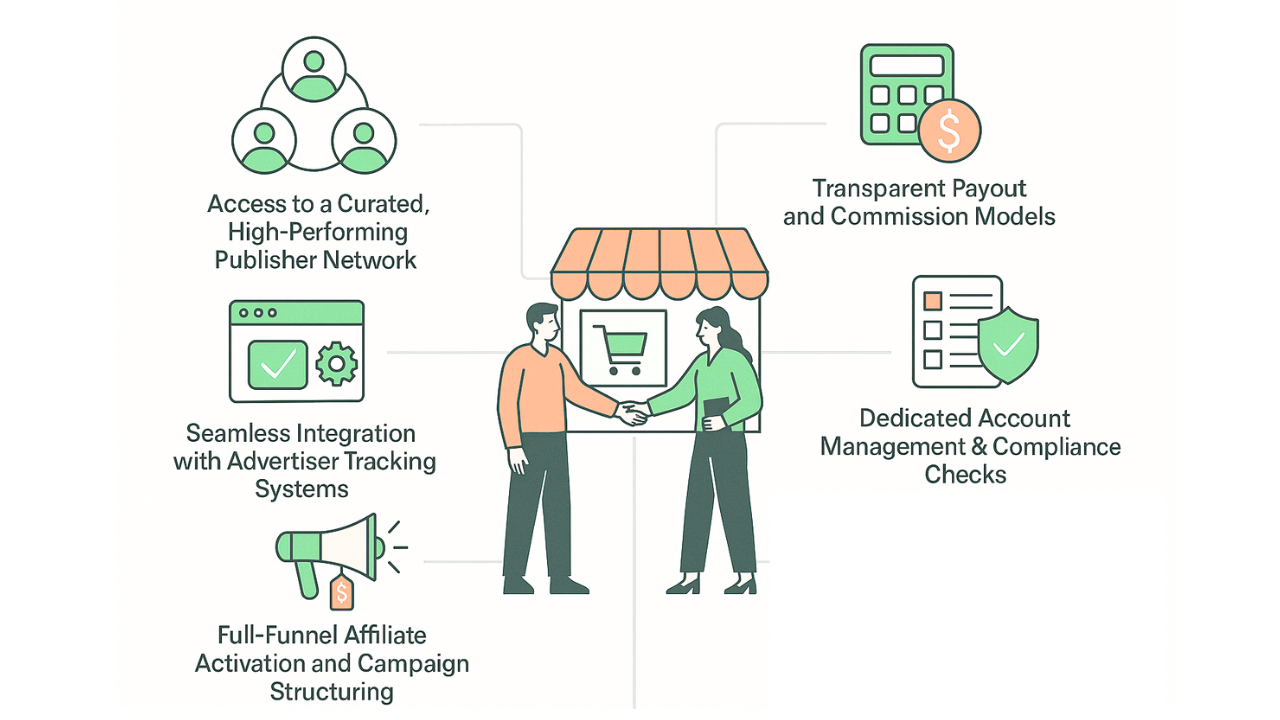
vCommission enables e-commerce brands to expand their digital performance strategy by providing:

1. Access to a Curated, High-Performing Publisher Network

E-commerce growth relies heavily on visibility across multiple touchpoints. vCommission connects brands to a wide-reaching affiliate network comprising content creators, coupon and cashback platforms, price comparison engines, influencers, and media buyers, each evaluated for relevance, performance history, and compliance.

This curated network allows e-commerce brands to reach consumers at different stages of the buying funnel with the help of affiliates that align with their vertical (e.g., fashion, beauty, electronics, home, or FMCG).

2. Seamless Integration with Advertiser Tracking Systems

vCommission integrates efficiently with the brand’s existing tracking setup. Instead of enforcing proprietary systems, vCommission aligns tracking macros and parameters to reflect conversions directly within the advertiser’s panel. Brands retain complete visibility into real-time conversions and affiliate performance, attribution sources and quality of traffic, and ROI and cost-per-action metrics, matched against internal KPIs.

3. Full-Funnel Affiliate Activation and Campaign Structuring

vCommission supports campaign structuring based on performance objectives, allowing e-commerce brands to activate partners across different funnel stages:

    • Awareness (top publishers, influencers, and media buying affiliates help drive reach and visibility)
    • Consideration (review sites and niche content creators aid in product education and trust-building)
    • Conversion (coupon, cashback, and deal affiliates drive intent-led traffic for last-mile conversions)

This structured funnel-based approach ensures that affiliate activities align with brand-specific sales goals and marketing timelines.

4. Transparent Payout and Commission Models

With clear, predefined payout structures, vCommission ensures that affiliate compensation is directly tied to performance outcomes such as confirmed sales or qualified leads. Brands have full control over commission rules (e.g., product category-based, new vs. returning users), validation cycles for sales, and budget allocation across affiliate types.

5. Dedicated Account Management & Compliance Checks

E-commerce brands working with vCommission receive strategic guidance from experienced account managers who understand category dynamics and channel-specific affiliate behavior. These account managers manage everything from onboarding to campaign optimisation, including fraud detection, affiliate matching, performance metrics, and compliance checks.

The Bottom Line

By avoiding the most common affiliate marketing mistakes, like partnering with the wrong affiliates, overlooking compliance, using a single pricing model, and lacking real-time tracking, e-commerce brands can achieve high ROI and scalable growth. This entails having the proper marketing plan, performance visibility, and infrastructure operating in the background for e-commerce brands.

At vCommission, every campaign is built on data-backed execution, transparent tracking, and a deep understanding of how to reach audiences at the right moment. From seamless integration with your tracking systems to structured, full-funnel performance strategies, the focus stays on what matters most: extensible growth and ROI. 

If you are looking to improve results, vCommission offers a reliable framework designed to deliver a measurable impact efficiently and at scale. Sign up Now!

Categories
Affiliates

Affiliate World Dubai vs. Affiliate World Bangkok: Which event is more influential?

In affiliate marketing, timing is everything, but what about proximity to the right people? That’s where real growth begins.

Whether you’re chasing scale, smarter funnels, or your next breakthrough traffic source, the world’s top affiliates aren’t waiting around; they’re showing up at Affiliate World Conferences. And not just for the talks. They’re there to connect, strategise, and close deals that don’t happen anywhere else. We’re talking about Affiliate World Dubai and Affiliate World Bangkok, two global hubs that shape the future of performance marketing. 

But here’s the question affiliates may have in mind:

Which one of these events offers more value to you as an affiliate?

At vCommission, we’ve had boots on the ground in both Bangkok in December 2024 and Dubai in February 2025. So here’s a front-row look at what each event brings and which one is worth your attention, depending on what you’re looking to scale next.

AW Dubai 2025: Where Global Performance Marketing Converges

Affiliate World Dubai 2025 is more than just a gathering; it’s where the world’s leading minds in affiliate marketing converge. With over 100 nationalities represented, it’s a truly global event designed to reflect the current and future pulse of performance marketing.
The event attracted a diverse group of media buyers from the U.S. and Europe, e-commerce leaders from Southeast Asia, digital agencies from the MENA region, and performance marketers from across India and beyond. Attendees were treated to a robust lineup of expert-led sessions, hands-on workshops, and a buzzing expo floor featuring global networks, SaaS platforms, and traffic sources across major verticals such as health, beauty, fintech, travel, and e-commerce.

Who Attends Affiliate World Dubai?

    • International affiliate marketers
    • Performance networks and programmatic traffic experts
    • D2C brand founders and e-commerce entrepreneurs
    • AI tech providers, SaaS startups, and martech enablers
    • Indian publishers and agencies scaling cross-border campaigns

Key Takeaways from AW Dubai 2025:

  1. The Global Market is Going Granular: Sessions emphasised not just global reach but geo-specific strategies. Whether it was unlocking growth in Tier 1 markets with native ads or localising creatives for Southeast Asia and LATAM, affiliates were encouraged to refine their tactics based on user behavior, language, and channel fit.
  2. India Took Center Stage: One major storyline? India’s growing dominance in COD eCommerce and CPL campaigns. Multiple global partners expressed interest in Indian traffic, particularly with the vCommission introducing exclusive offers and scalable verticals. High EPCs, lower CACs, and a mobile-first consumer base make India a rising star.
  3. AI Is Not the Future; It’s the Now: From AI-driven creative testing to auto-confirmation systems for COD orders and CRM-integrated chatbots, automation tools weren’t just on display; they were actively being used to scale affiliate campaigns. Solutions that cut down manual intervention and accelerate time-to-conversion dominated the floor.
  4. Meta Advertising Tactics Got Tactical: Workshops on Meta (Facebook + Instagram) were filled to capacity. The focus was on broad audience targeting with narrow creative segmentation, story-driven, hook-first UGC-style ads, fast-paced testing (3–4 creatives per day per campaign), and integration with WhatsApp for retargeting and checkout journeys.
  5. Networking with Intent: More than just business cards and casual chats, AW Dubai facilitated meaningful, partnership-driven interactions. vCommission’s team held strategic meetings with partners from LATAM, MENA, and Southeast Asia, all looking to tap into Indian affiliate traffic and explore vertical expansion.

vCommission’s Role at AW Dubai 2025

As a key player in the Indian affiliate ecosystem, vCommission used AW Dubai as a launchpad to showcase:

    • India-first COD nutra and eCommerce offers
    • Customisable AI-driven campaign tools for lead-gen and order processing
    • Tracking solutions aligned with both global and local needs

Our booth became a destination for global publishers exploring India-focused scaling and Indian affiliates exploring global campaigns. Dubai proved that when innovation, scale, and strong partnerships meet, the future of affiliate marketing is borderless.

Affiliate World Bangkok 2024: Where Growth and Innovation Meet

Affiliate World Asia (AWA) in Bangkok isn’t just another conference; it’s a performance marketer’s battlefield for next-level strategy. The event brought together elite affiliates, aggressive media buyers, ad tech innovators, and D2C founders in one of the most dynamic business hubs of Asia. 

As Southeast Asia continues to rise as a mobile-first economy, the AWA floor echoed strong demand for Indian traffic and regional partnerships. Indian publishers were not just attendees; they were sought-after collaborators. For vCommission, AWA reinforced India’s growing role as both a scalable traffic source and a high-EPC offer market.

Who Attends Affiliate World Bangkok?

    • Top-tier affiliate marketers and high-volume media buyers
    • Mobile app networks and monetisation platforms
    • D2C brands target growth across Asia-Pacific
    • Influencer and content marketing agencies
    • SaaS solution providers, tracking platforms, and analytics tools
    • Indian publishers expanding into Tier 1 markets

Key Takeaways from Affiliate World Bangkok 2024:

  1. Diverse Global Offers with Regional Precision: AWA stood out for showcasing offers across verticals: US lead-gen (finance, health, legal), iGaming in India and LatAm, e-commerce in MENA and APAC, and travel/education CPL in SEA. The variety created space for strategic diversification at scale.
  2. Deep-dive Workshops Dominated by CRO and LTV Growth: Sessions focused heavily on funnel optimisation, email and push automation, AI-enhanced retargeting, and maximising average order value (AOV). These weren’t surface-level talks; they were advanced frameworks that top affiliates could plug in instantly.
  3. The App and Call Lead-gen Ecosystem Surged: Pay-per-call campaigns for insurance, home services, and finance saw heavy interest. vCommission’s US pay-per-call portfolio gained significant traction with publishers looking to diversify beyond display.
  4. Strategic Shifts in South Asia’s Perception: AWA made it clear that South Asia is no longer seen just as a traffic pool. Indian and Pakistani publishers are now building media properties, launching private offers, and co-owning user journeys across niches.

vCommission’s Key Wins at AWA Bangkok

For vCommission, the Bangkok stage delivered:

    • Exclusive India CPS and CPL campaigns for high-intent verticals
    • US pay-per-call campaigns tailored for affiliate scalability
    • Evergreen COD Nutra offers optimised funnel support
    • Cross-border collaborations with SEA, US, and MENA publishers looking to tap Indian performance traffic

AWA Bangkok wasn’t just a learning ground; it was a launchpad. For affiliates looking to scale intelligently, diversify traffic, or plug into India’s growing monetisation stack, this was the event that sparked the next big move.

So, Which Event Is More Influential?

It’s not really about picking a winner; it depends on where you are in your affiliate journey and what you’re aiming to achieve.

If you’re looking to connect with a global crowd and tap into India’s growing affiliate potential, AW Dubai delivers. It’s where international reach meets regional opportunity, especially for those eyeing the MENA or EU markets. You’ll also find the latest AI tools and automation trends that are shaping the future of affiliate operations.

But if you’re after hands-on tactics, campaign optimisations, and real talk on scaling high-volume traffic, AW Bangkok is your go-to. It’s built for performance marketers who want to go deep into CRO, funnels, and vertical-specific growth, especially across finance, nutra, and gaming.

At vCommission, we don’t choose one over the other.

AW Dubai sharpens our global strategy. AW Bangkok pushes our performance edge. Together, they help us align better with market shifts, improve our tech stack, and roll out stronger offers for our affiliate partners worldwide.

Categories
Affiliates

The Future of Nutra Affiliate Marketing: Trends to Watch in 2025

A pill claims to help you lose 5 kilos in seven days. An anti-aging cream promising to take 10 years off your face. Even protein shakes that keep you energised all day long. You’ve probably seen the ads, right?

Whether or not these claims are entirely true is another story, but it is notable here that there’s an unimaginably huge market for them. People are constantly on the lookout for solutions to feel better, look younger, and live healthier. Some buy on impulse, others after thorough research. 

Either way, the demand is real, and the world of nutraceuticals, or Nutra, is booming. With the global market projected to reach USD 991.09 billion by 2030 (Grand View Research), the affiliate marketing potential is off the charts.

For affiliate marketers, Nutra is a treasure trove of opportunities rather than just another industry. The audience is enormous, and the product variety is wide, ranging from immune and mental wellness to weight loss and exercise. Top-performing affiliates in this space are already earning millions, and there’s still plenty of room for new players to break in.

So, what does it really take to stand out in the Nutra niche today? Let’s explore the trends shaping the future of Nutra affiliate marketing and how you can stay one step ahead in 2025.

Introducing Nutra Affiliate Marketing

Nutra affiliate marketing is about promoting health products, such as dietary supplements, herbal solutions, and functional foods, through digital partnerships. Affiliates make commissions by generating traffic or sales to Nutra businesses through various channels like blogs, social media, paid ads, email funnels, and more.

The nutra industry has experienced significant growth over the years. Transparency, compliance, and content that promotes healthy lifestyles will be the main focus in 2025. 

Key Challenges Affiliates Face in Nutra Affiliate Marketing

There are some challenges affiliates face to succeed in nutra affiliate marketing:

    • The nutra niche is highly competitive, so standing out requires some unique and powerful strategies.
    • Some platforms, for example, Facebook, have strict policies for health-related products, leading to ad restrictions.
    • Products like weight loss aids may see seasonal spikes around a specific time, like New Year’s, but taper off later.

What Makes Nutra Industry a Hot Niche

The Nutra sector is attracting more affiliates because of its enormous growth potential. The demand for wellness solutions from the general public is not a fad. It is now a necessary part of contemporary life.

What are the main causes of Nutra’s popularity? It is extremely varied. There are other sub-verticals within this niche that address particular needs, so affiliates can select the one that best suits their audience or content style. Some of the best-performing sub-niches in 2025 are as follows:

    • Weight Loss (always in demand, always evolving- from detox teas to fat burners, this is one of the most competitive and rewarding segments)
    • Hormonal Support (PMS relief, menopause balance, testosterone boosters)
    • Gut Health (Probiotics, enzymes, and fiber-based solutions)
    • Sleep Aids (products like melatonin supplements and calming blends are trending)
    • Joint Support (joint care supplements deliver high intent buyers and recurring sales)
    • Skin Health (anti-aging creams, collagen boosters, and acne treatments have a massive overlap with beauty and skincare audiences)
    • Cognitive Boosters (Nootropics and brain health supplements)
    • Sexual Wellness (from libido enhancers to hormonal balance products)

No matter which sub-niche you explore, the key is to understand your audience’s pain points and motivations, then deliver offers that solve their problems in a credible, engaging way.

Emerging markets are also helping to drive Nutra’s growth. As awareness of self-care rises across Southeast Asia, the Middle East, and Tier 2 Indian cities, so does the demand for high-quality wellness items. Affiliates who can localise their marketing and messaging now have more opportunities.

The global focus on preventative health is another important factor. Particularly after the epidemic, consumers are spending more money on regular wellness routines. Natural remedies, adaptogens, and immunity boosters are all becoming more popular, giving affiliates access to high-converting products.

Key Trends in Nutra Marketing for 2025

  1. Hyper-Specific Markets Are Expanding: These days, affiliates are concentrating on highly specific product niches rather than running wide wellness campaigns. Stronger engagement and greater retention are being observed for supplements intended for women’s hormone balance, IBS sufferers’ gut health, or remote workers’ cognitive enhancement. Over time, these micro-niches develop a devoted following and enable customised messages.
  2. Content Is Outperforming Traditional Ads: Today’s audience looks for value before making a purchase. They are more receptive to educational content than to pushy sales techniques. Conversion rates are rising for affiliates who establish credibility through user-generated content (UGC), explanatory videos, expert interviews, and blog reviews. Native content formats work particularly effectively on sites like Facebook and YouTube and complement the user experience.
  3. Compliance is Non-Negotiable: Nutra is a high-reward vertical, but it comes with regulatory scrutiny. Affiliates need to stay on top of FDA guidelines, platform-specific ad policies, and local compliance standards to avoid penalties and keep campaigns running smoothly.
  4. Funnel Ownership & First-Party Data Strategy: With third-party cookies disappearing, owning your funnel is no longer optional. Successful affiliates are building quiz funnels, opt-in pages, and email capture strategies to collect first-party data, nurture leads, and create long-term monetisation opportunities beyond a single click.
  5. A Multi-Channel Presence Increases Profits: Successful affiliates in 2025 aren’t depending on just one platform. Email funnels, native ad networks, YouTube, TikTok, and Google search are all being used to spread the word about their projects. Each channel serves a unique audience and enhances the others in the client experience. A TikTok video can attract viewers, an email series can convert, and a blog can educate. The impact of the campaign is increased by this approach.
  6. Different Payment Methods Are Increasingly Popular: Payout mechanisms have evolved along with the Nutra affiliate industry. Many programs now offer hybrid models, including basic payouts with performance bonuses, lifetime commissions for subscription-based products, and tiered compensation for high-volume affiliates, even if cost per sale (CPS) is still a mainstay. This adaptability aids in creating sustainable and scalable revenue streams.

What Smart Affiliates Do to Succeed in Nutra Affiliate Marketing

Smart affiliates who wish to be successful in Nutra affiliate marketing understand their audience. First they learn the needs and pain points of their target audience, then produce content specifically designed to address those issues.

Organic traffic is frequently the foundation of Nutra goods. To improve your search engine ranking, use phrases such as “best weight loss supplements,” “anti-aging solutions,” or “natural immunity boosters.”

Influencers or original content are perfect for promoting Nutra items on platforms like Instagram and TikTok. To grow your campaigns and attract targeted traffic, spend money on native advertising or paid advertising on sites like Facebook and Google. 

To inform and persuade your readers, write product reviews, comparison articles, or “how-to” manuals. Infographics and videos can help increase participation.

Follow advertising regulations in your region to avoid legal issues. Be transparent in your promotions, especially when dealing with health claims. 

How vCommission Fuels the Success of Nutra Affiliates

Selecting high-converting offers is only one aspect of success in Nutra affiliate marketing; another is choosing the right partner to support your compliant, sustainable, and intelligent growth. vCommission is here to set the standard for successful nutra affiliate marketing.

Affiliates collaborating with vCommission have access to a well-curated portfolio of verified Nutra campaigns. These offers are selected based on performance data, market need, and regulatory readiness. This ensures that the goods you promote not only look fantastic but also satisfy platform-specific regulatory requirements and bring in money. 

vCommission offers information and tools that make execution easier. With vcommission’s real-time tracking, you can immediately check how your links and campaigns are performing. Anything that isn’t working can be improved with a few simple adjustments.

One of the vCommission’s biggest strengths lies in its affiliate support system. Our team stays on top of industry trends and ad platform changes, offering personalised guidance on everything from traffic source strategy to funnel optimisation. Whether you’re scaling TikTok ads or testing native placements, you’ll have expert help in your corner. We ensure personalised help from our account management team and on-time payouts.

vCommission’s cross-vertical expertise is a major plus for many affiliates. You get exposure to multiple high-performing niches, broader data insights, and the flexibility to diversify your income streams. Every campaign reflects high performance, strong compliance, and long-term monetisation potential.

The Bottom Line

The future of Nutra affiliate marketing is shaped by innovation, intention, and informed choices. Affiliates who lean into micro-niches, build engaging content, and capture their own data are setting themselves up for long-term success. As health and wellness continue to integrate into everyday life, the demand for high-quality Nutra products will only grow.

Affiliates that are ready to adjust to this evolving environment should act now. If you have a good plan, trustworthy offers, and the right support, 2025 could be your most profitable year to date. vCommission is here to support you to thrive in this competitive yet profitable sector. Sign up Now!

Categories
Affiliates

The Psychology Behind High-Converting Affiliate Marketing Campaigns

Affiliate marketing is more than just promoting products, it’s about understanding people. What motivates them to buy something? Psychological factors hold the answer. To improve conversions, every effective affiliate marketer must be a master of human behavior, including motivations, emotions, and decision-making processes.

Think about it: have you ever bought something just because it was labeled “limited edition” or had lots of great reviews? That’s no coincidence! Brands use psychological triggers like social proof and urgency to encourage purchases. In fact, a Wall Street Journal study found that 63% of customers are more likely to buy a product if it has positive reviews.

Do you want to understand how you can use various psychological patterns to convert your campaigns smoothly? If yes, keep reading the blog.

Understanding Consumer Psychology

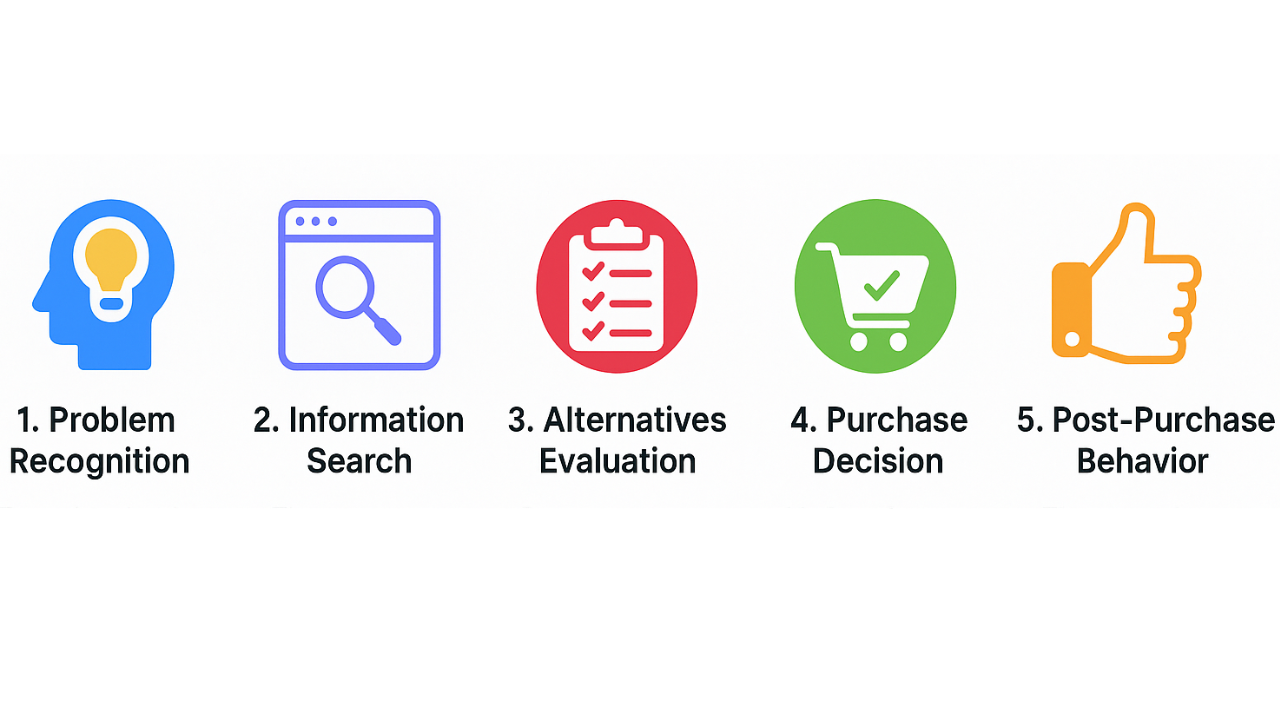
Consumer psychology is the study of how individuals think and behave when purchasing something. To master the art of marketing, it’s essential to walk in the consumer’s shoes. This is how the psychology of buying a product or service works and how affiliates can leverage that to convert their campaign:

1. Problem Recognition

Every buy begins with a realisation: the customer needs something. This can be an internal motive (e.g., to stay in shape) or an external one (e.g., hearing about a new gadget from an influencer). As an affiliate, your job is to bring these problems to the forefront through relatable content. 

You can create blogs, social media posts, or videos that present a product as the ideal solution to the consumer’s needs, even before they realise they have one.

2. Information Search

The consumer searches for solutions after realising their requirement. At this point, they look for additional material on websites, blogs, YouTube, and even social media.

Affiliates can take advantage of this stage by creating educational and high-quality material. Whether it’s comparison guides or SEO-optimized blog posts, providing helpful, accurate information along the buyer’s journey positions you as a trustworthy source.

3. Alternatives Evaluation

Seldom do buyers choose the first alternative they come across. Before choosing, they weigh features, costs, and advantages. Content that highlights the unique features of your marketed product is crucial at this point.

Promoting goods from well-known brands instantly lends legitimacy to your content. Your audience will be more likely to select the product you’re marketing if you combine this with persuasive comparisons or value-driven reviews.

4. Purchase Decision

This is the crucial phase, the turning point. However, psychology is still quite important in this situation. A tiny prod, such as a time-limited deal or a glowing customer review, can have a big impact.

Use terms like “Offer valid till midnight” or “Highly rated by 10,000+ customers” in your affiliate strategy. Promoting brands that have already gained market confidence facilitates the last phase considerably.

5. Post-Purchase Behavior

The story does not conclude with the purchase. Customers who are satisfied are more likely to purchase the product again or promote it to others. That is why affiliates should always prioritise advertising products with great feedback, refund policies, and high brand value.

Affiliates can leverage vCommission’s thoroughly vetted network of brands to promote dependable products and services that provide a positive user experience, resulting in long-term value and recurrent conversions.

Applying Psychological Triggers for Better Conversions

Understanding psychology is only the first step; utilising that information is the key to success. Here is how affiliates can apply these triggers to create high-converting campaigns:

1. Use Pre-Selling to Build Curiosity

Instead of pushing products directly, smart affiliates create pre-sell pages, advertorials, or short-form content that highlights problems and introduces a solution without giving away too much. This approach builds curiosity and positions the product as a natural next step. You can use tactics like “What most people don’t know about XYZ supplements…” to create a curiosity in the consumer’s mind.

2. Connect with an Emotional Story

Emotional storytelling is often very powerful and evocative, especially when talking about domains like health, fitness, and finance. Many listeners become more empathetic when listening to change (before and after) or real-life obstacle stories. Try to add first-person testimony or customer experience in your content for it to become more relatable or even emotive.

3. Include Social Proof When Available

Every touch point, landing page, email, and social tweet should have points of evidence such as reviews, testimonials, mentions by influencers, and user-generated content. Increased evidence enhances the likelihood of a product being convinced by the consumer. Use social proofs like satisfied customers who achieved results in only 7 days to create trust, confirmation, and herding behavior.

4. Make a Sense of Urgency/Scarcity

Scarcity and urgency are conditions that encourage the user, making them realise they will miss an opportunity. To get users to make decisions faster, use countdown timers, limited supply messaging, or special bonuses. One tactic that could be employed is tagging the product like: Hurry! only 3 left at this price. A limited availability will lead to FOMO, or fear of missing out, wave wash over the buyer.

5. Personalize the User Journey

Personalised affiliates who tailor content to the user’s behavior, location, or intent can drive much higher levels of engagement. Dynamically modify creatives or segment audiences to provide suitable offers. You can retarget website visitors with ads triggered by their prior interests or site actions.

6. Provide Real Value Prior to Pitch

Before prompting users to click a link or purchase a product, reward them with something of value, whether it’s a tip, a tool, a freebie, or simply good, plain ol’ advice. This establishes goodwill and trust. Employ tactics such as “Download our free guide to selecting the top natural supplements, no sign-up required.”

7. Streamline the Decision-Making Process

Too many options can cause decision fatigue. Facilitate the choice for users by suggesting one best product or comparing top 3 products in a simple manner. You can employ comparison charts, pros/cons tables, or “best overall” stickers. It will put the consumer at cognitive ease and enable them to make a purchasing decision easily.

8. A/B Test Psychological Hooks

Don’t speculate; experiment with various psychological drivers in your headlines, CTAs, and ads. For instance, test one that applies urgency and one that applies social proof, and then double up on what drives more. Experiment with strategies such as “Limited Time Offer” vs. “Rated #1 by Experts” and observe what converts better.

How vCommission Empowers Affilates to Boost Campaign Success

Here is how vCommission helps affiliates to create high-performing campaigns:

1. A Network of Trustworthy Advertisers

vCommission offers top-tier advertisers in a variety of high-converting sectors, including e-commerce, health, travel, and more. As an affiliate, you promote credible brands that are already having an impact in the market rather than random products. This increases the conversion potential of your campaigns while also lending them more legitimacy.

2. Real-Time Tracking & Transparent Reporting

You can immediately check how your links and campaigns are performing with vCommission’s real-time tracking. Anything that isn’t working can be improved with a few simple adjustments. The reports are simple to read and indicate which tactics are increasing your income. Clear data will always be available to help you make decisions and advance more quickly, whether you’re testing a new concept or evaluating performance. 

3. Regular Payments and One-on-One Help

Personalised help from our account management team and on-time payouts with zero cutback are two of the main reasons why affiliates remain with vCommission. Assistance is just a message away if you require additional information on a campaign or scaling tips so you can focus on developing campaigns that drive leads.

4. A Trusted Affiliate Community

With more than 100,000 affiliates worldwide, vCommission is not only a network; it’s an expanding community of marketers, content creators, and performance specialists. Affiliates get timely newsletters, new vertical access, and shared learning that keeps them ahead of the curve. You’ll always be in the conversation, whether you’re new or an old-timer.

Conclusion

It takes more than simply a strong offer to manage an affiliate marketing campaign with a high conversion rate. You need to understand how people think, what influences their choices, and what mental or emotional cues result in conversions.

By combining strategic affiliate marketing with behavioral psychology and working with a strong network like vCommission, you can develop campaigns that not only draw in visitors but also turn them into devoted clients.

Ready to put the power of psychology into action?

Sign up with vCommission today and start building smarter, higher-performing affiliate campaigns backed by real human insights.

Categories
Advertiser

Expanding to New Markets? Know How vCommission can help you launch in India

Are you a global advertiser looking to grow? There’s one market that continues to attract attention for all the right reasons: India.

India is not only growing but also transforming digitally. According to the January 2025 edition of the World Bank’s Global Economic Prospects report, India’s economy is projected to grow steadily at 6.7% in both FY26 and FY27. That’s significantly ahead of global and regional averages, and it reflects not just resilience but momentum.

What makes this even more exciting is how this growth is tied to digital-first consumer behavior. Across verticals like e-commerce, travel, fashion, and technology, millions of Indians are transacting, engaging, and discovering products online daily. 

However, expanding to India isn’t just about translating existing strategies or running ads at scale. The real challenge and opportunity lie in connecting with consumers through the right channels. That’s where affiliate marketing proves to be a powerful model. It offers performance-driven growth by partnering with publishers, influencers, and platforms that already have the trust of Indian audiences. 

What Makes India a Goldmine for Global Brands

India is a rapidly growing, digitally-first country with a significant consumer base. According to Telecom Regulatory Authority of India (TRAI), India has a massive internet user base, with 971.50 million users as of 2025. The figure keeps rising every month. The rise of affordable smartphones and some of the world’s cheapest mobile data rates has made the internet more accessible than ever, not just in major cities but also deep into tier 2 and tier 3 towns, where the next wave of digital consumers is coming from.

This digital infrastructure is powering an ecosystem where:

  1. E-commerce platforms are scaling beyond metros, with consumers increasingly comfortable shopping online for everything from groceries and electronics to fashion and furniture.
  2. Fintech adoption is accelerating, driven by platforms like UPI, digital wallets, and neobanks that have simplified how people manage, invest, and spend money.
  3. EdTech and online learning have become mainstream, with learners across age groups embracing digital tools for skill-building, test prep, and certification.
  4. Health and wellness brands are finding new audiences through digital-first communities focused on fitness, nutrition, mental health, and self-care.

Famous global brands like Amazon, Apple, Unilever, Netflix, and many more have already scaled in India with localised marketing strategies. This presents a rare opportunity: a digitally engaged, mobile-first population that’s eager to explore, try, and trust new products and services online.

Key Challenges for Brands Launching in India

For all of its potential, India is a complex, multifaceted market. Brands frequently confront fundamental hurdles when debuting here, including:

  1. Language and Cultural Diversity: India combines geographies, languages, cultures, and behavioral patterns. What works in Delhi may not be as effective in Chennai. Users access material in more than ten distinct regional languages. Brands that neglect this detail risk low engagement or possibly losing their target demographic entirely.
  2. Local Payment Preferences: While cash-on-delivery is still common in some places, some customers prefer UPI, while others rely on mobile wallets. You can observe low conversions or cart abandonment if your campaign does not follow these trends.
  3. Traffic Quality and Ad Fraud Risks: The digital advertising market in India is vast, but not all traffic is reliable. Many advertisers deal with low-quality leads, click fraud, or traffic that does not convert. Without the proper fraud prevention measures, it is simple to burn through ad budgets with little ROI.

How vCommission Helps Your Brand Launch in India Confidently

Launching in India requires a performance approach that prioritises return on investment in all choices, trusted partners, and extensive local knowledge. vCommission India’s biggest affiliate network brings precisely this to the table. This is how we do it:

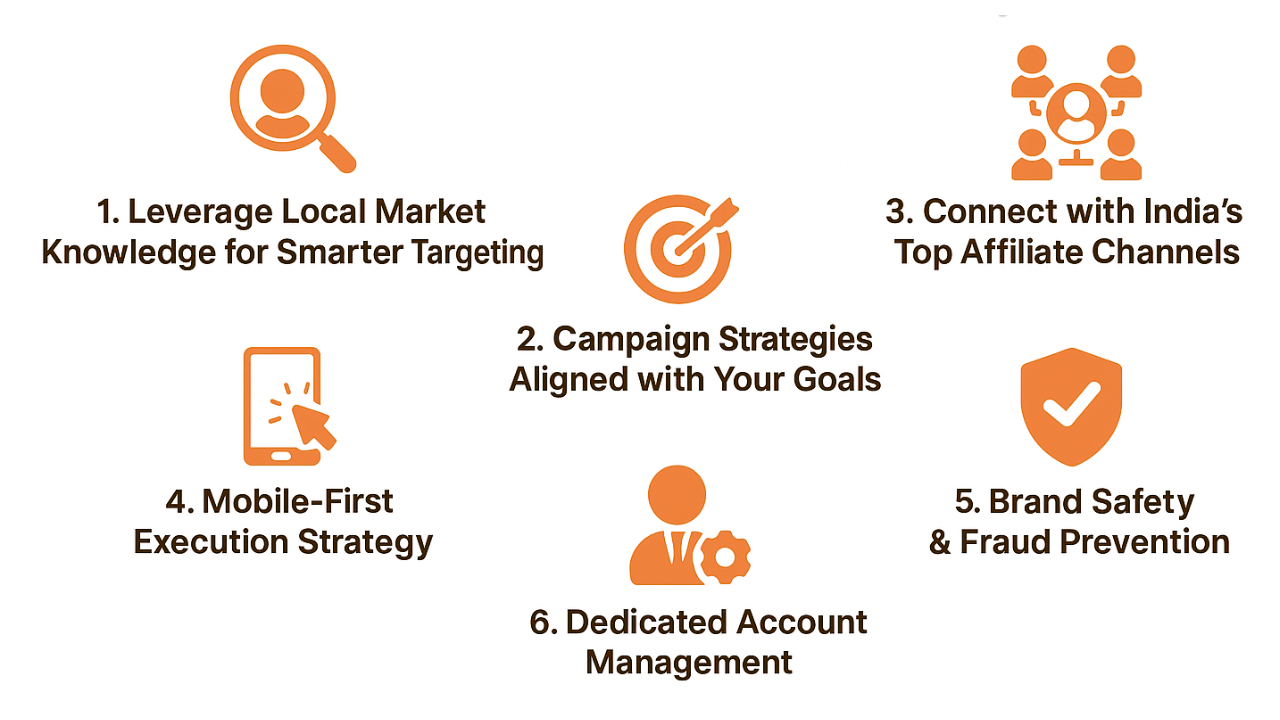
1. Leverage Local Market Knowledge for Smarter Targeting

vCommission helps simplify this complexity by connecting you with the right affiliates and platforms that already engage regional audiences effectively. Our experience working across verticals and regions helps you choose high-performing channels that match your goals. Instead of guessing what works, you tap into proven publisher networks and performance data that keep your campaigns relevant and result-driven. This local-first approach ensures your campaign feels relevant, not foreign, and helps you connect authentically with Indian consumers from day one.

2. Campaign Strategies Aligned with Your Goals

Every brand has distinct objectives, such as increasing e-commerce sales, lead generation, or app installs. We at vCommission don’t think there is a one-size-fits-all strategy. Rather, we suggest tactics that complement your industry vertical and business goals. Our team assists you with the best affiliate mix, including content partners, cashback platforms, influencers, and deal sites, as well as appropriate revenue methods like CPA, CPL, or CPS. This ensures that your campaign setup is performance-driven and effectively scalable.

3. Connect with India’s Top Affiliate Channels

vCommission is India’s most trusted affiliate network, built around high-performing partners across multiple channels. vCommission’s affiliate ecosystem includes:

  1. Coupon and deal sites, popular during sale seasons and product launches
  2. Cashback platforms, which attract high-intent users looking for better value
  3. Influencers and creators who drive native engagement within specific interest areas
  4. Native ad platforms, suited for app installs, lead generation, and brand awareness
  5. Email and SMS affiliates are still effective for personalised outreach in India
  6. Push notification traffic, perfect for time-sensitive offers and flash sales
  7. Display networks, great for top-of-the-funnel awareness
  8. YouTube and short video platforms, powerful for visual storytelling and product demos

This is not it; we have more mediums that allow us to cover the full customer journey, from awareness to conversion, while staying efficient and cost-effective.

4. Mobile-First Execution Strategy

India is a mobile-first country. Most online purchases, app installs, and engagements happen through mobile devices. This shift requires advertisers to build mobile-optimized funnels from the start. At vCommission, we offer mobile-first strategies to match this behavior.

Run targeted app install campaigns on CPI or CPA models. You can collaborate with mobile-focused content creators and platforms. Leverage mobile-native ad formats that enhance visibility and engagement. Optimise for smooth post-click experiences to reduce drop-offs. This ensures your campaigns resonate with how Indian consumers use their devices, keeping performance high and budgets effective.

5. Brand Safety & Fraud Prevention

vCommission protects your campaigns with strong anti-fraud measures. We use AI tools to spot suspicious activity, manually review leads and conversions, and block low-quality traffic through blacklist management. Every affiliate is carefully screened before joining to ensure only trusted partners promote your brand. This keeps your data clean, your budget safe, and your results accurate.

6. Dedicated Account Management

When you partner with vCommission, you’re not left to navigate the market alone. You get a dedicated account manager, someone with on-ground knowledge, campaign experience, and a clear understanding of your vertical.

Your account manager handles the campaign planning and scaling, partner recommendations and approvals, ongoing optimisation and troubleshooting, and weekly performance reviews and growth planning.

Whether you’re launching your first campaign or scaling across regions, your account manager becomes an extension of your marketing team focused on your KPIs, your market success, and your growth.

Verticals Where vCommission Delivers High ROI

The following are some important verticals where the vCommission regularly generates high returns on investment:

1. E-commerce

India’s e-commerce market is flourishing, with customers purchasing goods in a variety of categories, including fashion, technology, and wellness. vcommission improves performance through collaborations with influencers, content producers, cashback platforms, and coupon websites. Special days and festivals like Diwali, Republic Day, Black Friday, New Year’s Day, Thanksgiving, Christmas, and end-of-season sales are examples of high-conversion times for campaigns, which help brands grow quickly and generate a high return on investment.

2. Travel

With travel bouncing back, brands offering flights, hotels, and packages see great returns in India. vCommission works with niche travel affiliates who target budget travelers, solo adventurers, and families. Campaigns run during peak holiday seasons, long weekends, and school breaks, focusing on bookings, installs, and lead generation.

3. Utility Services

Broadband, DTH, and energy plans are examples of digital-first utility services that are becoming more popular. vCommission links these brands with affiliates who specialize in cost-cutting, smart home, and subscription services. Through reputable regional publishers, the objective is to increase installs, schedule upgrades, and attract new users.

4. Fashion and Beauty

Fashion and beauty are timeless in India. vCommission makes it easier for brands to work with influencers, beauty producers, and lifestyle bloggers. Campaigns emphasise new product launches, seasonal collections, and time-limited offers, all of which boost conversion rates and promote recurring business.

5. Technology and Software

Tech products are in strong demand, from productivity aids to security software. vCommission assists SaaS and app-based businesses in reaching the right customers through tech influencers, app channels, and review websites. Campaigns aim to generate quality leads with scalable reach, free trials, and downloads.

Getting started with vCommission

Ready to tap into the Indian market? With vCommission, you’re never on your own. From the moment you sign up, we make the process smooth and hassle-free. Here is what you have to do to start with us:

  1. Create your advertiser account on vCommission: Start by signing up on the vCommission platform as an advertiser. The registration process is quick and allows you to access the advertiser dashboard, where you can begin defining your campaign goals.
  2. Submit your campaign brief with clear objectives: Once you’ve registered, you’ll be asked to share a detailed campaign brief. This includes information like your business vertical, target audience, conversion goals, performance KPIs, preferred pricing models (CPA, CPL, CPS, etc.), and available budget. The clearer your brief, the more tailored the campaign setup can be.
  3. vCommission maps your campaign with the right affiliates: Based on your inputs, vCommission leverages its strong affiliate ecosystem to connect your campaign with high-performing and relevant traffic sources. These publishers are selected after evaluating their audience demographics, niche alignment, and past performance, ensuring your ads reach users who are most likely to convert.
  4. Work closely with a dedicated account manager throughout: Every advertiser is assigned an account manager who becomes your key point of contact. They continuously track campaign data and recommend timely optimisations to ensure you stay on course and within budget.

With this structured yet flexible process, vCommission makes sure your entry into the Indian market is both efficient and impactful with a strong focus on measurable performance, transparent reporting, and long-term scalability.

The Bottom Line

India offers unmatched digital growth potential, but success here demands more than just ad spending; it requires insight, strategy, and the right partners. As India’s leading affiliate network, vCommission offers end-to-end support to help global advertisers launch and scale campaigns effectively. With our vast local expertise, premium publisher network, mobile-first strategies, and real-time performance tracking, we ensure your brand connects with the right audiences and delivers measurable ROI. 

From mitigating fraud risks to customising campaigns for diverse regions and consumer preferences, we cover it all. Our committed account managers assist you at every stage, ensuring the smooth expansion of your brands into India. Sign up today!

Categories
Advertiser

Media Buying Models Explained: Which One Will Maximize Your ROI?

Affiliate marketing is all about getting the right offer in front of the right audience, but that doesn’t happen by luck. It happens through smart media buying strategies. Media buying is the process of purchasing ad space across digital platforms, and it’s becoming one of the most powerful strategies in performance marketing. 

With the rise of trends like programmatic ads and AI in media buying, brands now have more control, flexibility, and data than ever before. But while the tools have become more sophisticated, the challenge remains the same: How do you maximise ROI?

Here’s the catch: the return on investment (ROI) depends heavily on the payment model advertisers choose. Are they paying per click, impression, lead, install, or sale? Each model carries its own risk, reward, and optimisation strategy.

In this guide we simplify media buying into two main topics: Platform-Based Media Buying Models, which focus on where ads appear (like social media, search engines, and display networks), and Performance-Based Media Buying Models, which define the payment model, how costs are calculated based on impressions, clicks, leads, or sales.

Understanding these models will help you choose the best strategy to maximize your ROI based on your budget, target audience, and business goals.

Understanding Media Buying

Media buying is the strategic process of acquiring advertising space to promote offers, drive traffic, and achieve measurable marketing goals. In affiliate marketing, it’s a critical component for reaching the right audience at the right time with the right message. Success in this area doesn’t come from guesswork; it comes from making informed decisions about where your ads appear and how you pay for them.

At its core, affiliate marketing is performance-driven. You only succeed when your traffic converts, whether that means a click, a lead, or a sale. It gives affiliates the control and flexibility to select traffic sources, optimize delivery, and scale campaigns. Moreover, it ensures that your advertising efforts are aligned with clear goals.

Platform-Based Media Buying Models

Choosing the right platform is key to a successful affiliate campaign. Let’s look at the major platform-based models and how they help drive ROI:

1. Search Advertising

Search advertising involves purchasing ad placements on search engines like Google and Bing to target users actively searching for products or services. These users typically have high purchase intent, making search ads highly effective.

Industry-Wise Average Conversion Rates (CR):

    • Ecommerce: 2% – 5% (Higher for branded search terms, lower for generic keywords)
    • Finance & Insurance (5% – 10%)
    • B2B (SaaS & Tech) (3% – 7%)
    • Education & Training (4% – 8%)

To maximise performance, affiliates can strategically target different types of keywords based on user intent and campaign goals. For instance, generic keywords are broad, industry-related terms that reach users in the awareness or research phase. A skincare brand might bid on phrases like “products for oily skin” to attract users exploring potential solutions. 

On the other hand, brand + generic keywords combine the brand name with a product-related term to capture high-intent traffic. A coupon website, for instance, might target “Karma Ayurveda Coupons” to reach users already interested in the brand and looking for the best deals.

2. Social Media Advertising

This model includes running paid campaigns on platforms such as Meta (Facebook and Instagram), Snapchat, Twitter, and now LinkedIn Sponsored Posts. It allows precise targeting based on demographics, interests, behaviors, and even past actions.

This method is ideal for affiliates running campaigns in lifestyle, beauty, fashion, and personal finance, where visual storytelling and engagement matter. For example, an affiliate promoting a credit card offer can use Facebook Carousel Ads targeting young professionals aged 25–35 who recently searched for financial products.

3. Native Advertising

Native ads are designed to match the look and feel of the surrounding content on websites or apps. Rather than appearing like traditional ads, they resemble editorial content or recommended articles, which often leads to higher engagement and trust.

Popular native platforms are Taboola and Outbrain (content recommendation widgets on premium publisher sites), and Yahoo Gemini (Native ads within Yahoo’s content properties).

For example, an affiliate reviewing tech gadgets can place a native ad on a news site recommending a “Top 5 Budget Smartphones in 2025” article that includes affiliate links to partner stores.

5. Display Advertising

Display advertising includes visual and interactive ads (text, banners, videos) shown across websites and apps. This category offers a wide variety of ad types, allowing affiliates to choose formats that best match their campaign goals.

Common Display Formats:

  1. In-Text Ads: Appear as clickable words within webpage content. When clicked, they trigger a small popup ad. Best suited for informational blog sites.
  2. In-App Ads: These appear within mobile apps, including banners, full-screen interstitials, and reward video ads. For example, a gaming app shows a video ad offering extra coins in return for watching a promotional video tied to an affiliate product.
  3. Push Ads: Real-time notifications sent directly to users’ devices. These are widely used in verticals like e-commerce, finance, and entertainment. Users must opt-in to receive notifications, and frequency should be managed to avoid drop-offs.
  4. Pop-Up & Pop-Under Ads: A pop-up appears as a new window when a user enters or exits a website. A pop-under opens quietly in the background. For example, an affiliate promoting an e-commerce coupon site may trigger a pop-up offering a discount when a user tries to exit the product page.
  5. Banner Ads: Static or animated ads displayed on high-traffic websites, usually in the form of rectangular boxes at the top, sides, or within the content of a webpage. 
  6. Video Ads: Short ads that play before or during online video content. For example, a 15-second skippable video ad appears before a YouTube video promoting an app.

Performance-Based Media Buying Models

Choosing the right model of media buying is important to affiliates who aim to maximise their ad budgets and achieve optimum conversions. There are models appropriate for branding purposes, and some are more suitable for performance-oriented campaigns. The key here is knowing what model works with your strategy and how it will impact your bottom line.

1. CPM: Cost Per Thousand Impressions

CPM, or “cost per mille” (mille is Latin for thousand), is a purchasing strategy where the advertisers are charged per 1,000 impressions of an advertisement, whether the user has clicked on it or not. This works best for brand awareness campaigns as it allows companies to reach masses at once. It is best suited for high-traffic sites and high-end publishers where visibility is key. However, one of the largest disadvantages is that there is no assurance of user interaction or conversions. 

Advertisers will pay for impressions that don’t necessarily convert to actual interactions, so it is a dangerous bet for those in performance marketing. CPM campaigns are also very susceptible to fraud because ads are shown in placements where users have no chance to see them, resulting in ad waste.

2. CPC: Cost Per Click

CPC (cost per click) is a more performance-driven model where the advertiser only pays when a user clicks on the ad. This guarantees that some form of engagement has occurred. CPC is appealing because it can be accurately targeted at an audience, and if done correctly, it can be a scalable and effective process. Advertisers pay only when someone indicates interest by clicking on the advertisement, avoiding unnecessary ad expenditure. 

Click fraud still poses a challenge, though, as either competing bots or disreputable competitors might generate artificial clicks that inflate expenditure without producing genuine conversions. Moreover, excessive competition will drive CPC charges up, meaning that certain niches are too costly. Though CPC guarantees interaction, a click may not always be a conversion, so additional optimisation is needed to enhance ROI.

3. CPL: Cost Per Lead

Cost Per Lead (CPL) is a popular model in affiliate marketing where advertisers only pay when someone shares their contact details. This could be filling out a form, signing up for a newsletter, or requesting a callback. It’s a great way for brands to find potential customers without paying for clicks or views.

CPL works especially well for businesses in industries like finance, insurance, and B2B services. These areas often need to collect leads before making a sale. Since users willingly give their details, it shows they are truly interested. This means better chances of turning those leads into actual customers.

4. CPA, CPE, and CPS

CPA (cost per action), CPE (cost per engagement/event), and CPS (cost per sale) are all pay-for-performance media buying platforms where advertisers will only be billed when some desired action has taken place. These models reduce risk for advertisers a great deal because they only incur costs for measurable outcomes like the user signing up, interacting with content, or buying something. Because payments rely on actual conversions, these models have a better ROI potential than CPM or CPC. These models are good fits for affiliate marketing objectives where performance is everything. 

However, CPA deals may be declined by certain media partners owing to risk factors since they earn money only when the conversions occur. Plus, there’s always fraud in the back of their mind, particularly if poor tracking has been implemented. Despite the fact that these models call for more prolonged optimization phases, they still top the list among the most coveted options by the revenue-based affiliates.

5. CPI: Cost Per Install

CPI (cost per install) is most widely applied in mobile ad campaigns, where an advertiser pays when a user installs an app using a particular ad. CPI is highly effective for app-based affiliate programs and serves to pay the advertiser only when a direct install happens. CPI campaigns can be very effective with targeted user acquisition campaigns. 

Fraud is a serious concern in this category, as there are some affiliates who make money by creating bot or install arm fake installs to earn commissions. Furthermore, though acquiring users is half the battle, retention is still a problem. There are many CPI campaigns that fail to deliver due to low-quality users who download an app but do not use it, so quality needs to be more important than quantity.

6. CPV: Cost Per View

CPV (cost per view) is primarily utilised for video advertising campaigns where advertisers pay according to the views their advertisement gets. This model works best for brand awareness and video engagement campaigns. YouTube provides CPV advertising to enable businesses to reach their audience through engaging video content. 

CPV may be a cost-effective way to increase engagement, but conversions are not guaranteed. Because marketers pay for views that don’t result in meaningful actions, poorly optimised CPV ads can be expensive. Furthermore, view-through rates frequently don’t indicate genuine interest. Therefore, it’s critical to examine user activity beyond views.

Selecting the Right Media Buying Model

Selecting the best media buying model is crucial to maximising return on investment and making sure your affiliate marketing initiatives complement your corporate objectives. Assessing user intent should come first. If you’re targeting users actively searching for solutions, like insurance, credit cards, or tech products, search ads (Google, Bing) deliver high-intent traffic that converts well. For visual or interest-based promotions, social media (Meta, Snapchat, LinkedIn) is a better fit.

Consider traffic volume and conversion potential. Pop and push ads can generate massive reach at a low cost but typically bring low-intent users. In contrast, in-app and video ads can be more engaging and conversion-driven, especially for app installs and limited-time offers.

The budget also plays a key role. CPC and CPM are suited for larger budgets focused on brand awareness, while CPL, CPA, or CPI work best for performance-focused campaigns with measurable ROI. Your campaign goal, be it lead generation, sales, installs, or engagement, should dictate the model you choose.

Maximise Your ROI with Commission!

At vCommission, we don’t just help you pick a media buying model; we empower you to make the most out of it. Our affiliate network supports a variety of performance-based models like CPA, CPL, CPS, and CPI, giving you the flexibility to pay only when you get real results, be it a lead, sale, install, or action. This performance-first approach ensures your ad budget is spent efficiently with clear, trackable ROI.

Depending on your campaign objective, we recommend tailored platforms and formats. Promoting a finance product? We help you leverage search and native advertising for high-intent lead generation. Launching a mobile app? Our CPI campaigns across in-app and push ad networks ensure installs at scale. Running an e-commerce campaign? CPS or CPA, through display and social ads, delivers measurable conversions with controlled costs.

With vCommission’s in-house tracking tools, fraud detection systems, and publisher network, every campaign is backed by data and transparency. You get access to top media partners, real-time insights, and hands-on support to test, optimise, and scale what works best.

Join vCommission today and experience performance marketing that’s built for ROI!

Categories
Advertiser

How vCommission Supports D2C eCommerce Growth in India

India’s Direct-to-Consumer (D2C) eCommerce industry is booming—fueled by fast internet, seamless digital payments, and a growing love for online shopping. In fact, the market is expected to hit US$ 60 billion by FY27. Impressive, right?

D2C brands sell directly to their customers, cutting out the middlemen like wholesalers or retailers. While this model gives brands more control and better profit margins, it also brings its own challenges. One of the biggest? Getting new customers and scaling effectively in a crowded market.

The solution? Affiliate marketing. By partnering with influencers, bloggers, and publishers, D2C brands can reach the right audience, build trust, and drive conversions without overspending.

That’s exactly what we do at vCommission. As India’s leading affiliate network, we help D2C brands grow faster with cost-effective marketing, quality traffic, and high-performing campaigns.

The Role of Affiliate Marketing in D2C Growth

Affiliate marketing provides a cost-effective way for D2C brands to expand without incurring the high costs associated with traditional advertising. Since it’s a pay-for-performance model, brands only pay for transactions or leads that actually happen, making the venture a low-risk one. This approach also provides scalability in that brands are able to extend into new markets through affiliates like bloggers, influencers, and content creators.

Besides driving sales, affiliate marketing creates brand awareness and trust, as consumers are more likely to purchase from those they follow. Furthermore, affiliate content, such as blog posts, videos, and reviews, continues to drive traffic and sales in the long term, as opposed to traditional advertising, which stops once a campaign ends.

Key Challenges Faced by D2C Brands

When expanding their businesses, D2C brands face a number of challenges, including high customer acquisition, limited brand visibility, and credibility:

  1. High Customer Acquisition Costs (CAC): It is the total cost a business incurs to acquire a new customer. Most D2C brands in India find it challenging to match their marketing expenses and generate revenue, which could hamper their ability to scale and grow.
  2. Limited Brand Visibility: It’s hard to get consumers’ attention when competing with well-established brands. Newer brands may struggle to compete in the saturated online market without a robust online presence and effective marketing strategy.
  3. Lower Trust & Credibility: New brands often struggle to gain consumer trust, as customers are more likely to purchase from familiar names. Building credibility through authentic marketing efforts, influencer collaborations, and customer reviews is essential to overcoming this challenge.

vCommission’s Approach to Supporting D2C Brands

vCommission helps Direct-to-Consumer (D2C) brands grow by offering smart marketing strategies, influencer collaborations, scalability, and data-driven insights. Our approach ensures that brands reach the right audience, optimize spending, and increase sales efficiently.

1. Performance Marketing That Delivers Real Results

Performance-based marketing is the core method of vCommission for D2C brands, where brands are charged only for impressions or clicks. Brands do not spend a single penny on just conversions, and hence, their ad expenditure gives them the maximum returns. It indicates a wise use of funds and prevents money wastage.

Brands do not risk the prospect of paying for ad positions that will not yield since they pay for conversions only. This implies lower initial capital investment compared to traditional advertisement campaigns. Real-time analysis provides brands with critical insights into campaign effectiveness, customer behavior, and conversion rates. These insights help in refining marketing strategies for better engagement and sales.

2. Building Trust Through Influencers and Content

At vCommission, we’ve seen firsthand how trust drives conversions. That’s why we’ve built a strong ecosystem of handpicked, niche influencers who align with your brand’s voice and values. These influencers already have the trust of their audience, and when they talk about your product, their followers listen—and convert.

We don’t just connect you with influencers—we manage the entire process, from selection and onboarding to campaign execution. Our platform supports real-time performance tracking, so you can see exactly how each collaboration is performing. If something isn’t working, we adapt quickly to keep your campaign on track.

3. Multi-Channel Reach for Maximum Engagement

A quality marketing plan includes reaching customers via multiple channels. vCommission connects D2C brands in India with publishers to promote campaigns on Facebook, Instagram, and Google to reach the correct audience. Apart from advertisements, SMS and email marketing keep customers through promotions, updates, and reminders. These specific messages generate repeat business and brand loyalty.

Affiliate relationships increase revenue and reach with the help of trustworthy affiliates. High-quality affiliate traffic boosts conversions and credibility. It will eventually assist brands in reaching a wider audience and achieving sustained success. 

4. Scalable Growth with Dedicated Support

Scaling a brand requires careful planning and professional assistance. vCommission creates targeted marketing solutions that suit business goals for long-term growth. Dedicated account managers provide campaign optimization, conversion optimization, and budget management. Their professional skills give maximum return on marketers’ marketing efforts. 

For global expansion, vCommission provides localized strategies, content adaptation, and collaboration with local influencers. The technique enables brands to target new markets and maintain long-term success.

5. Technology-Driven Optimization & Real-Time Data

vCommission gives D2C brands access to real-time data and state-of-the-art technologies to optimize campaigns. vCommission optimizes audience targeting with machine learning technology to assist brands in reaching the most targeted consumers. Through observation of user behavior and engagement signals, the AI optimizes campaigns continuously to drive highest conversions and ad efficiency.

Affiliates can keep track of user activity and refine their campaigns with the help of tracking links. The process is smooth: advertisers offer a unique tracking link, and affiliates embed it in their content. As users click on the link, their actions (whether browsing, buying, or payments) are logged. vCommission uses Google Approved Click Tracker (GACT), providing accurate tracking and reporting and upholding high-quality standards through internal and Google approvals.

Partner with Commission!

The D2C market size in India is expanding at a never-before-seen pace, and in order to keep ahead of the competition, brands must employ creative marketing techniques. For direct-to-consumer (D2C) brands, vCommission is a reliable partner that provides performance-based marketing solutions that boost sales, increase brand awareness, and guarantee economical expansion.

D2C brands may create a devoted following and open up new growth prospects by utilizing vCommission’s affiliate network, data-driven analytics, and influencer partnerships. Partner with us now!

Categories
Affiliate Marketing

Top Affiliate Marketing Trends for Travel Brands in 2025

Affiliate marketing is rapidly shaping the future of digital marketing, especially in the travel industry. According to Statista, the global travel and tourism market is expected to reach a volume of $1.11 trillion by 2029. This growth emphasizes the critical role of affiliate marketing in connecting brands with tech-savvy travelers. Affiliate marketing offers unique opportunities for travel brands to enhance visibility, drive bookings, and engage audiences effectively. To remain competitive in 2025, travel brands must stay abreast of the latest trends. In this blog, we’ll explore the top affiliate marketing trends for travel brands in 2025 to help them stay ahead of the curve.

Best Affiliate Marketing Trends for Travel Brands

The year 2025 is ushering in a revolution of innovation to affiliate marketing for the travel sector. To remain competitive, travel brands need to adopt the most recent trends that not only get noticed but also provide tangible value to contemporary travelers. Let us discuss the top trends influencing affiliate marketing for travel this year.

1. Integration of Automation and AI

Artificial intelligence and automation software are revolutionizing travel affiliate marketing. AI deconstructs consumer behavior, trend forecasting and offers personalization, while automation makes tracking and reporting efficient. For travel brands, AI optimizes campaigns by setting peak travel times, best destinations, and customers’ preferences, and thus, promotions are optimized and efficient.

According to Statista, the global marketing market of AI is projected to grow to $107.5 billion by 2028 at a CAGR of 28.6%. This indicates a significant shift towards AI-driven strategies in affiliate marketing.

2. The Rise of Micro-Influencers

Micro-influencers, with their niche audience, are the preference for affiliate marketing for travel today. They have more appealing real and genuine content to their audience, and hence, they are the best collaboration for travel companies. Travel companies can use micro-influencers to promote offbeat places, local experiences, and secret tips and give a more individualized relationship with the travelers.

According to Forbes, micro-influencers have 60% greater levels of engagement than macro-influencers. This makes them a cost-effective and impactful choice for travel campaigns.

3. The Impact of UGC

User-generated content (UGC) is one of the best strategies that capitalizes on the actual-world experience of travelers. It persuades users to create and share content in the form of photos, videos, reviews, and travel advice. As audiences find this associated information so captivating, UGC based campaigns tend to show more engagement and conversion rates.

According to Social Media Today, the impact of UGC is 6.6 times stronger than branded content and 8.7 times stronger than influencer content.

4. Focus on Sustainability

Sustainability is no longer a buzzword; it’s a priority for many travelers. Affiliate schemes that promote ecologically friendly holiday options, such as green accommodations and sustainable excursions, are gaining momentum. Travel platforms can make their affiliates ride the wave of this trend by emphasizing their commitment to being sustainable and partnering with those affiliates that share similar commitments.

A survey by the Global Business Travel Association revealed that 68 percent of visitors would pay a little extra for ecologically friendly services; such campaigns are critical for brand reputation.

5. Video Content Dominance

Video content is still the reigning king on digital media, providing an engaging medium to experience travel. YouTube, Instagram Reels, and TikTok are great platforms for creating travel videos. Travel brands can collaborate with affiliates to create visually appealing videos that generate wanderlust and booking.

According to Brightcov, video content generates 1200% more shares than text and image content combined.

6. Mobile-First Approach

With the majority of users accessing content via mobile devices, a mobile-first approach is essential for affiliate marketing. This includes optimizing websites, links, and campaigns for mobile platforms. Travel marketplaces must ensure their affiliate campaigns are mobile-friendly to capture the attention of on-the-go travelers.

As per Statista, 54.8% of global website traffic comes from mobile devices. Hence, it is critical for brands to create campaigns that are mobile-friendly.

7. Enhanced Data Analytics

Data-driven decision-making is crucial in affiliate marketing. Advanced analytics tools help track campaign performance, understand consumer preferences, and optimize strategies for better results. Travel aggregators can optimize user behavior analytics to identify high-performing affiliates, refine their campaigns, and maximize ROI.

As per research by McKinsey Global Institute, companies using data-driven marketing are 6 times more likely to be profitable year-over-year.

How vCommission Can Help

vCommission offers powerful tools, insights, and a specialized network to help travel brands thrive in a competitive digital space. Here’s how vCommission supports your growth in 2025 and beyond.

  1. Niche Travel Target: vCommission brings together advertisers with affiliates that specializes solely in travel products and services. This guarantees your campaigns are directed to the most suitable target audience—serious travelers looking for hotels, destinations, tours, and bargains. Travel affiliates working with vCommission possess extensive experience in promoting travel-related products and services and are, therefore, the best partners to collaborate with for promoting your brand effectively. Travel businesses are assisted by expert promotion methods suited to their market.
  2. Targeted Monitoring: Brands can track campaigns through vCommission’s precise targeting capabilities specifically designed for traveler-related groups and interests. By limiting performance measurement to defined profiles of travelers, brands can construct a better definition of the interests and actions of their audience. The information helps brands refine their campaigns for increased engagement and conversions. Targeting business travelers with frequent trips or vacationers, vCommission optimizes campaign performance.
  3. Global Reach: With the help of vCommission’s worldwide affiliates list, travel companies can now reach out to audiences who are hundreds or thousands of miles away from home markets. The vast network covers numerous regions, so advertisers have access to affiliates that specialize in different geography- and culture-based needs. Through the global presence, brands have the opportunity to increase partner size and penetrate new markets, greatly accelerating business growth.
  4. Data-Driven Insights: vCommission offers travel brands powerful analytics features that offer deep campaign performance reporting. Advertisers can use these data points to spot trends, monitor conversions, and maximize campaigns for enhanced performance. Data-driven decision-making ensures campaigns are optimized for utmost efficiency and ROI to enable brands to meet marketing objectives more efficiently. All decisions are supported by actionable data, yielding better results.
  5. Best Travel Affiliate Programs: vCommission affiliates have the chance to gain access to some of the best travel industry affiliate programs, where they are offered chances to sell offers of leading travel brands while earning revenues. It is a win-win situation—affiliates earn stable revenues, and advertisers get publicity and sales. 

Stay Ahead with vCommission

As the travel industry evolves, so must your marketing strategies. The 2025 affiliate marketing trends—everything from AI personalization to sustainability and mobile-first marketing—emphasize innovation, flexibility, and partnerships. To remain ahead of the curve, these trends must be embraced, and the right platforms will turn these ideas into reality.

vCommission, equipped with advanced software, targeted research, and the best travel affiliate programs, assists your brand to grow affordably and effectively. Whether you aim to drive maximum bookings, increase brand awareness, or connect with the new traveler, vCommission provides you with whatever it takes to succeed in this new era.

This is the time to take your travel brand’s affiliate marketing to new heights. Partner with vCommission and be at the forefront of the travel marketing revolution of 2025.

Categories
Affiliate Marketing

Safeguarding Affiliate Campaigns: vCommission’s Guide to Traffic Fraud Prevention

Affiliate marketing has become a cornerstone of digital marketing strategies. It empowers businesses to expand their reach and achieve better ROI. However, with the growing popularity of this marketing approach, there is a rise in the risk of affiliate marketing fraud, such as duplicate content, URL hijacking, malware, fake conversions, and traffic fraud. Among all the types, traffic fraud is one of the most significant threats to the integrity and profitability of affiliate campaigns. In the following guide, we are going to learn about the fundamentals of avoiding traffic fraud and familiarise ourselves with the best practices.

Understanding Traffic Fraud

Traffic fraud is a malicious activity employed to generate fake clicks, impressions, leads, or conversions in affiliate campaigns. It damages performance statistics, resulting in financial loss and reputational damage. In simple terms, affiliate marketing scams ruin the image of the entire affiliate marketing industry. 

Common Types of Traffic Frauds

Let us understand some of the common types of traffic fraud:

  1. Click Fraud: Bots or malevolent performers generate fake clicks in order to drain advertising money. Affiliates use automated software or other means to inflate the number of clicks on their affiliate links artificially. The advertiser is duped into paying commissions for these bogus clicks, resulting in financial losses for the advertiser and unjust profits for the fraudulent affiliate. According to the Interactive Advertising Bureau (IAB), they influence up to 20% of pay-per-click (PPC) ads. 
  2. Cookie Stuffing: Unauthorized cookies are placed on user devices to claim affiliate commissions without legitimate referrals. In this type of fraud, affiliates use techniques like pop-ups, inline framing, browser plugins, or malicious scripts to drop their cookies. Now, when the user makes a purchase, the cookie attributes the sale to the fraudulent affiliate. It accounts for over 60% of fraud in advertisers’ affiliate channels.
  3. Lead Fraud: Fraudsters send phony or low-quality leads to advertisers in order to earn fraudulent commissions. Instead of generating genuine leads through legitimate marketing efforts, fraudsters use fraudulent tactics to increase commission revenue. This frequently involves filling out lead forms or making fraudulent transactions using bots, stolen data, or other automated ways. According to a study, up to 30% of web leads are fraudulent, often generated by human fraud factories or bots.
  4. Ad Impression Fraud: This is when ad impressions are purposefully manipulated to deceive marketers into spending more money. It is sometimes accomplished by employing tactics like bots or phony traffic, which results in inaccurate campaign analytics and the waste of advertising budgets. In some circumstances, many ads are stacked on top of one another, producing the illusion of more impressions than there are. Advertisers pay for impressions that never reach actual users, wasting their advertising dollars. According to a study by Juniper Research, global ad spending lost to fraud is expected to rise to $170 billion annually by 2028. 

All types of traffic fraud impact consumers, affiliates, and advertisers equally, leading to a lack of trust in the affiliate marketing sector. You can also read the 5 Common Affiliate Marketing Fraud activities to watch out for!

The Importance of Traffic Fraud Prevention

Traffic fraud reduces advertising performance, raises expenses, and damages brand reputation, hence, it must be eliminated. Regular fraud causes advertisers to lose faith in affiliate marketing. The reputation of trustworthy affiliates is also impacted by this. For this reason, avoiding fraud is crucial to long-term success.

At vCommission, we are waging the fight against traffic fraud with advanced technology and comprehensive processes. Our focus is on innovation and transparency, through which our advertisers can get authentic results and secure their investments from affiliate marketing scams

Strategies to Protect Affiliate Campaigns from Traffic Fraud

By implementing these simple steps, you can safeguard your affiliate campaigns from fraudulent traffic:

  1. Choose Networks Wisely: Building trust and transparency are a must in affiliate marketing. Networks like vCommission make sure that affiliates adhere to moral guidelines. Your affiliate network must monitor affiliate behavior to keep themselves free from suspicious activities. Partnering with a reliable network builds transparency and protects your brand reputation.
  2. Use Fraud Detection Tools: Affiliate fraud detection tools track your traffic in real-time and alert you if something looks suspicious, like too many clicks but no real leads. These technologies can pick up on anomalies such as sudden increases in clicks, unseasonably high conversion rates, and inconsistencies in device or location data. Early identification of out-of-pattern trends allows you to correct issues before they affect your ROI.
  3. Maintain Your Campaign: Review your campaign’s performance metrics on a regular interval, for instance, click-through, conversion rates, and sources of traffic. If you observe your campaign has abnormally high clicks coming from unknown sources or abnormally low conversion rates, this might be a sign of bots or click fraud. Monitoring on a daily or weekly basis helps you to detect and respond to suspicious tendencies as they emerge. 
  4. Set Clear Rules: Clearly communicate your affiliate terms and conditions upfront. Define what types of traffic are acceptable, which marketing channels are permitted, and what constitutes a violation. When affiliates understand what’s expected, it reduces the chances of accidental or intentional rule-breaking. 
  5. Use CAPTCHA: You can help stop automated bot traffic by adding a CAPTCHA to your landing pages or forms. Bots can mimic human actions, such as clicking links or completing forms, which can lead to a waste of money and false leads. By erecting a small barrier that deters non-human behavior, CAPTCHA makes sure that your campaigns only interact with actual users.
  6. Block Suspicious Traffic: Use IP filtering tools to block traffic from regions or IP addresses known for generating fraudulent activity. You can also block proxies or VPNs commonly used to mask true user identity. This step helps you avoid fake clicks or impressions and keeps your performance data clean. Blocking shady traffic improves both campaign efficiency and return on investment.
  7. Educate Your Team: Educate your marketing team about affiliate fraud detection beforehand. Conduct training sessions to explain how to spot unusual behavior in analytics or reports. A well informed team can quickly suspend or look into dubious affiliates. When everyone involved is informed and aware, prevention becomes simpler.

vCommission: Your Trusted Partner in Affiliate Marketing

Traffic fraud is a persistent challenge in affiliate marketing, threatening campaign performance, increasing costs, and damaging brand reputation. However, this challenge can be overcome with the right strategies and a trustworthy partner like vCommission. Being a world leader in affiliate marketing, we provide advertisers and affiliates with the resources, know-how, and direction they require to see real results and expansion.

At vCommission, we deliver unmatched results on web and mobile platforms through our growing network of over 100,000 affiliates. Ready to take your campaigns to the next level by managing affiliate marketing fraud prevention? Join vCommission today!

Categories
Advertiser

Simplified Advertiser Onboarding: vCommission’s Step-by-Step Process

Affiliate marketing is a fast-growing industry that empowers brands to reach their target clients via trusted affiliate networks. However, advertiser onboarding—the process of establishing campaigns and affiliate partnerships—is often riddled with challenges. Advertisers face many issues, such as technical setups, unclear payment plans, mismatched partnerships, and a lack of transparency in campaign outcomes, leading to ineffective promotions or delayed campaign launches.

This is where vCommission comes in—a top affiliate network with over 15 years of experience navigating the affiliate marketing marketplace. Providing a smooth advertiser onboarding process, vCommission guarantees that their campaigns run efficiently. 

In this blog, we are going to discuss the step-by-step advertiser onboarding process of vCommission designed to simplify and optimize your affiliate marketing journey!

Step-by-Step Guide to Partner with Commission


Our streamlined process helps advertisers set up and optimize their campaigns effortlessly. Here’s how we make it happen:

Step 1. Signup to Get Started

The first step to launching your campaign with vCommission is a quick and hassle-free sign-up process. Simply register as an advertiser on our platform, and our team will reach out to you within 48 hours to help you through the onboarding journey smoothly.

Once you sign up, we ensure a seamless onboarding experience with dedicated support at every stage, helping you set up, launch, and scale your campaigns effectively.

Step 2. Research and Analysis

Before launching a campaign, we perform significant research to learn about the advertiser’s business, target audience, and campaign goals. This allows us to create the most effective onboarding guide for advertisers for maximum outcomes. 

Our research includes:

  1. Brand Research: This comprises looking into the business, its products, and what separates them.
  2. Traffic Analysis: Traffic analysis is the practice of evaluating present web and mobile traffic to determine where growth and transformation are required.
  3. Competitive Analysis: Market and competitor analysis in order to uncover opportunities.

Building a strong research base, we balance the campaign strategy and the goals to onboard new advertisers for maximum realization. 

Step 3. Pricing Model & Feasibility

We select a payment model that is fit for the advertiser’s performance objectives. Depending on the type of campaign, the process of onboarding the advertiser provides different pricing models including CPI, CPR, CPS, CPT, and CPA. Tariffs and regulation ensure that both parties are satisfied from a fruitful and effective transaction.

vCommission selects affiliates that specialize in the advertiser’s brand, ensuring their proficiency in marketing the brand’s niche. Affiliates are evaluated using previous performance measures, including conversion rates, engagement, and ROI. Only top-performing affiliates are chosen to ensure great results. vCommission uses AI-driven analytics to identify affiliates who are aligned with current market trends and customer behavior. This allows advertisers to keep ahead of the competition and achieve the best results.

Step 4. Technical Integration

After the research and feasibility analysis, when all stakeholders responded positively, we quickly moved to technical integration. To track the campaign in real-time and receive the proper statistics, postback integration is done.

In this process, a unique tracking ID is pre-assigned to the affiliate’s link. Once the user completes the desired action, such as signing up or making a purchase, the advertiser’s server sends a postback to the affiliate network’s platform. The postback has crucial data, like conversion details, ensuring precise and immediate updates for both advertisers and affiliates.

Step 5. Campaign Launch & Optimisation

After completing the formalities, we start the campaign with the help of our operation team. That includes activating tracking functionality to track the performance of campaigns. It also involves testing and vetting the setup to have all things running well.

We have one last briefing session prior to the campaign going live, where we will discuss the campaign objective and hoped-for outcomes to align all concerned parties. To gauge success, we also take care of proper tracking and reporting metrics. Once the campaign is live, advertisers are able to view real-time performance, review insights, and adjust as needed to achieve long-term success.

vCommission’s Range of High-Converting Vertical Offers

At vCommission, we offer a diverse range of verticals to help advertisers maximize their campaign success across different industries. Our network provides global eCommerce and travel opportunities, enabling businesses to expand their presence internationally. We also provide software hosting, antivirus, and VPN services for IT and cybersecurity advertising.

For advertisers targeting the Indian market, we have specific India CPL and CPS offerings, as well as COD Nutra and eCommerce promotions. We also provide USA lead generation and pay-per-call campaigns, which help businesses generate high-quality leads with excellent conversion rates.

To Sum Up

vCommission is a trusted affiliate marketing head with a robust presence in India, Singapore, the UAE, the UK, and the USA. Our advertiser onboarding steps simplify advertiser onboarding to be easy, simple, hassle-free, and effortless. Advertisers partner with us to build, enhance and expand their campaigns. Transparency, trust, and innovation are at the heart of all we do, ensuring that each collaboration maximizes value.

With a large affiliate network and a performance-driven approach, vCommission ensures that marketers in these verticals receive maximum outcomes and ROI. Are you ready to take your campaigns to the next level? Sign up with vCommission now!