Diwali brings families together, and more meals are often prepared at home. So, appliances that might have stayed on a wishlist suddenly start looking useful.
Shoppers seem to think along the same lines during major sale periods. Mordor Intelligence reports that flash sale festivals during Diwali weeks routinely drive triple-digit growth for kitchen essentials such as air fryers and countertop ovens.
With this kind of demand building around the festive season, home and kitchen products become an important part of Diwali shopping. Lifelong has a broad range of products in this space, giving shoppers more reasons to browse beyond the usual festive purchases.
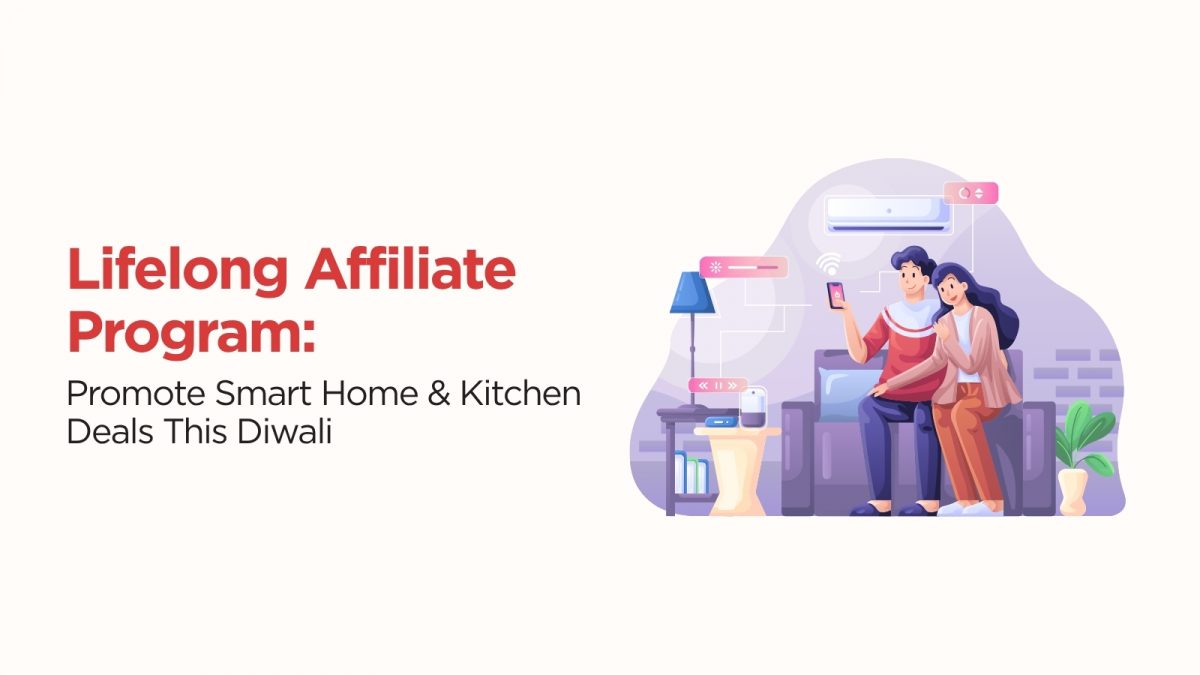
Let’s take a look at the Lifelong affiliate program and what affiliates need to know before promoting it.
About Lifelong
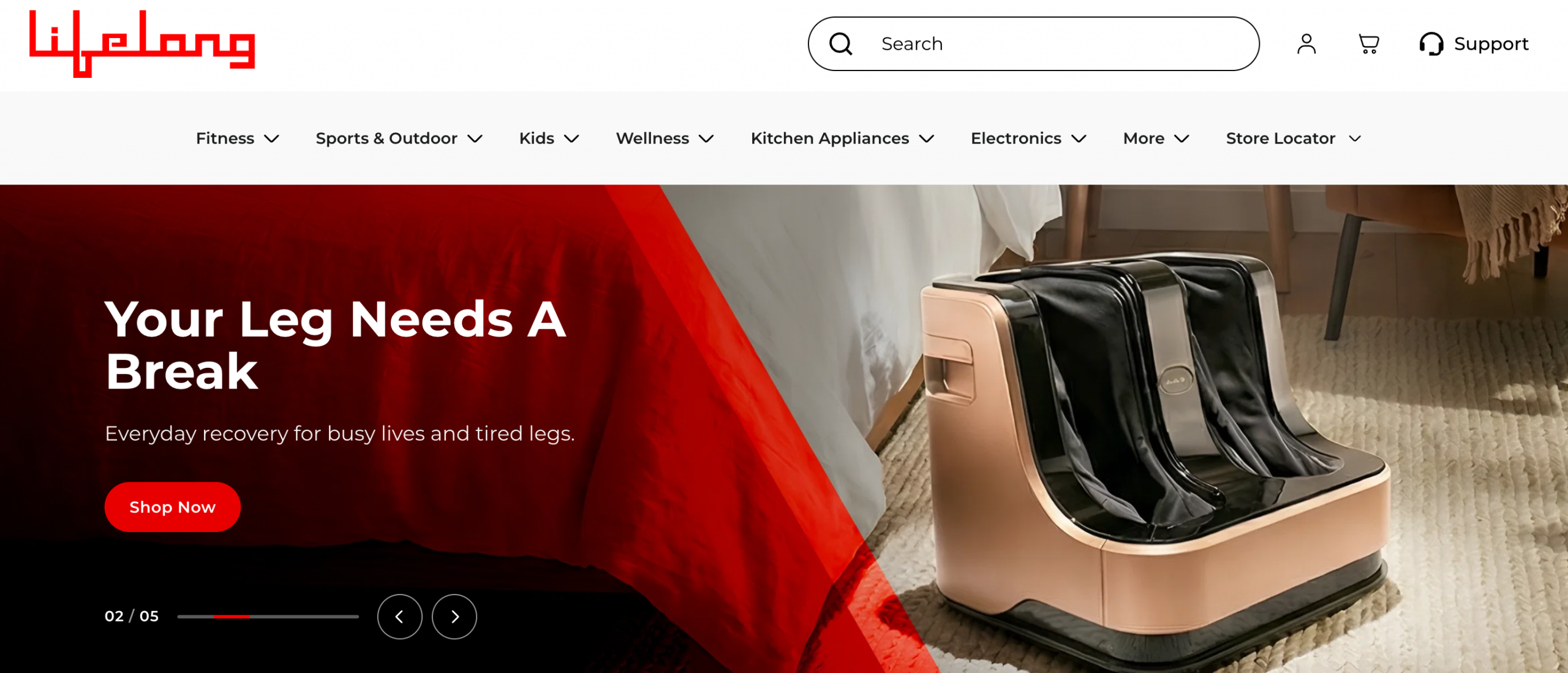
Lifelong is an Indian consumer brand that started with healthcare products and has grown into a wider home and lifestyle business. The brand sells products designed for everyday use, with a focus on making them accessible to Indian households.
Its product range has expanded into areas such as kitchen appliances, home improvement, fitness, etc. The brand has also built its presence around online shopping, with its own ecommerce store offering products across these categories, making it one of the Best Ecommerce affiliate programs.
Lifelong Campaign Details
The Lifelong campaign on vCommission works on a CPS model, with eligible sales tracked through the affiliate’s unique tracking link. Here are the main details affiliates should know:
Platform: Web and Mobile Web
Tracking: Realtime tracking
Cookie: 30 days
Deeplink: Available
Multiple conversions: Allowed
Validation: 30 days
Geography: Pan India
Promotion: Content, Coupon, Cashback, Telegram, Influencer, Native, Display, Sub Network, Pop, Push, Video, and Incent are allowed
Missing conversions: Affiliates can report missing sales through vCommission for the advertiser to review
With a 17.5% payout, the Lifelong affiliate program can be a relevant option for publishers exploring highest paying CPS affiliate programs in the ecommerce space.
Lifelong Products Affiliates Can Promote This Diwali
Lifelong’s product range makes it listed among the Best Ecommerce affiliate programs with a strong Diwali Home and Kitchen sale angle, with products suited to different types of festive shopping.
Air Fryers and Ovens: The range includes compact air fryers, digital models, dual basket air fryers, air fryer ovens, etc.
Mixers and Blenders: Lifelong offers mixer grinders with different jar configurations, along with nutri blenders, food blenders, and juicers.
Cooktops and Gas Stoves: The store has induction cooktops, portable induction models, infrared stoves, glass-top gas stoves, and more.
Cookware: The cookware range includes kadhai, woks, frying pans, griddles, saucepans, Dutch ovens, cookware sets, etc.
Kitchen Tools and Small Appliances: Affiliates can also promote products such as electric kettles, egg cookers, coffee grinders, chopping boards, and dish drying racks.
Home Appliances: Beyond the kitchen, the store features products such as garment steamers, irons, vacuums, fans, water heaters, and dehumidifiers.
Who Should Join the Lifelong Campaign?
The Lifelong campaign supports several promotion methods, so it can be promoted by different publishers, including:
Content Creators
Coupon Sites
Cashback Platforms
Telegram Channels
Influencers
Video Creators
Native & Display Media Buyers
Sub Networks
Incentive Partners
Monetize Diwali Shopping With Lifelong Deals!
Diwali brings strong attention to home and kitchen shopping, making this a timely period to add brands like Lifelong to your affiliate promotions. You can join the Lifelong affiliate program with vCommission and manage the campaign from your affiliate dashboard. vCommission gives you access to campaign tracking, conversion data, and reporting, so you can keep an eye on how your promotions are performing. You can also reach out to the affiliate management team if you need help with campaign-related queries.
“What should I buy for Diwali?” is often followed by another question. “Which card should I use?”
During the festive season, people spend more on phones, appliances, fashion, travel, and gifts. Before paying, many also check in case their bank or credit card has an extra offer.
This year, that spending is expected to rise further. India’s festive sales are projected to grow 25–29% in 2026, according to Datum Intelligence.
For affiliates, the rise in festive spending also creates opportunities beyond regular shopping campaigns. Someone planning a big purchase may also be looking for a new card, especially when banks are promoting festive offers.
This is where credit card campaigns for Indian affiliates can be worth exploring. Some campaigns offer payouts that are much higher than a typical ecommerce conversion.
Why Credit Card Demand Picks Up During the Festive Season
Festive sales also bring a flood of bank offers. A shopper looking for a new phone may see an instant discount on one card, while another card may offer cashback or reward points.
These Festive credit card offers can make people think about getting a card they do not already have. It is especially relevant for shoppers planning larger purchases, where even a small card benefit can make a difference to the final bill.
Banks also have more reasons to push their card products during this period. More people are actively shopping, checking offers, and comparing payment options.
For publishers, this creates a useful connection between shopping intent and financial products. Instead of promoting a credit card to a completely cold audience, they can reach people who already have a reason to consider one.
Top Paying Credit Card Campaigns for Indian Affiliates
The right credit card offer can be a valuable addition to an affiliate portfolio, especially when the payout justifies the effort needed to promote it. vCommission currently has several High paying CPA affiliate programs available for publishers.
Here are three high paying credit card affiliate programs for Indian affiliates-
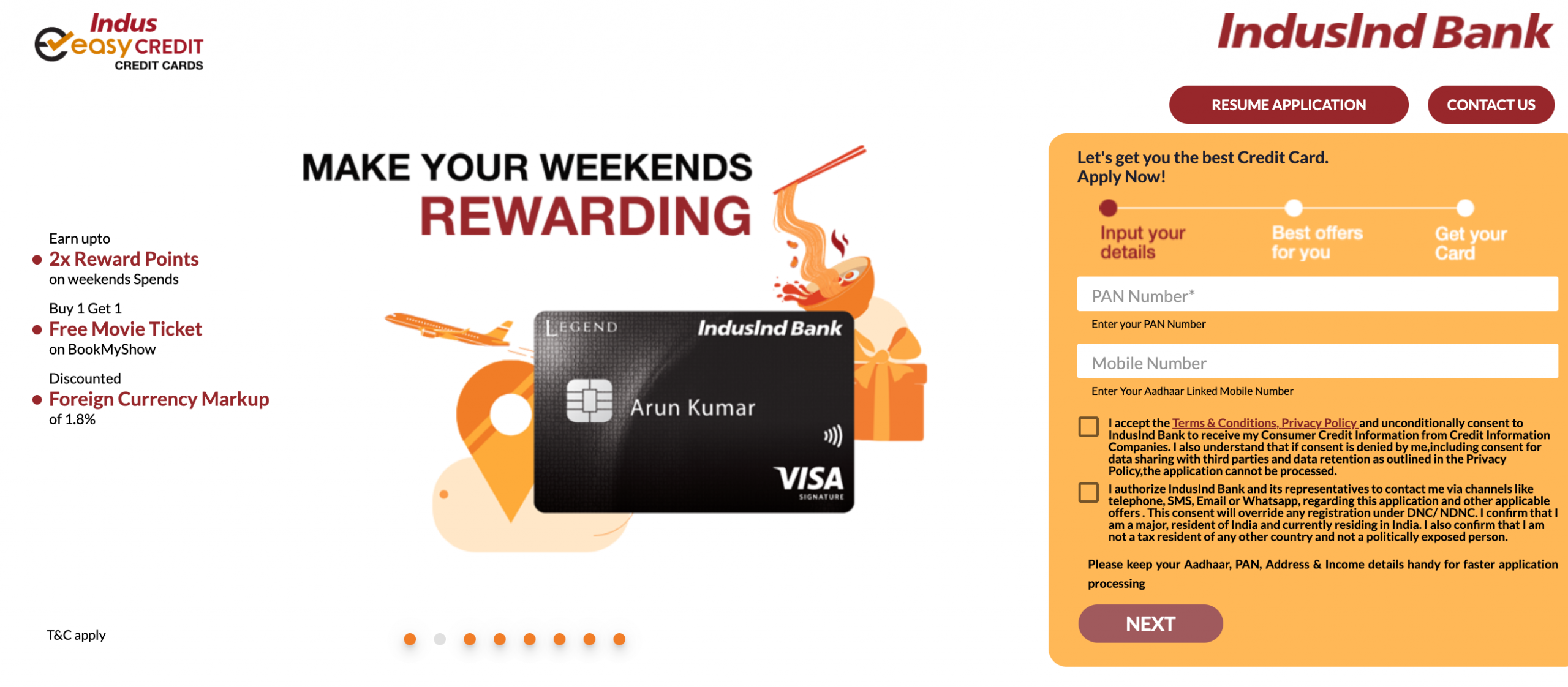
IndusInd Bank Credit Card
When choosing the best credit card campaigns to promote, the brand matters, but so does how easily it can fit into an affiliate’s existing promotion strategy. IndusInd Bank is a recognized private sector bank in India offering a range of banking products, including credit cards designed around everyday spending, shopping, dining, travel, etc. These Festive credit card offers can fit well with festive shopping, when people are already looking for extra value on their purchases.
The ₹1.4K payout makes this one of the highest paying credit card offers on the list. The card options include rewards on online spending and travel-related perks. Some variants also offer features such as Buy 1 Get 1 movie tickets and fuel surcharge waivers. The application process is digital, with instant approval highlighted for eligible applicants. This gives affiliates a useful point to highlight when targeting people who are considering a new card.
The campaign has a 30 days cookie duration, giving applicants time to return and complete their application after the initial visit. Reports are also updated twice a week, so there is regular visibility into conversions.
Some financial offers give publishers more room to work with than others. IDFC FIRST Bank is one such option, particularly for affiliates who use a mix of content and paid promotion.
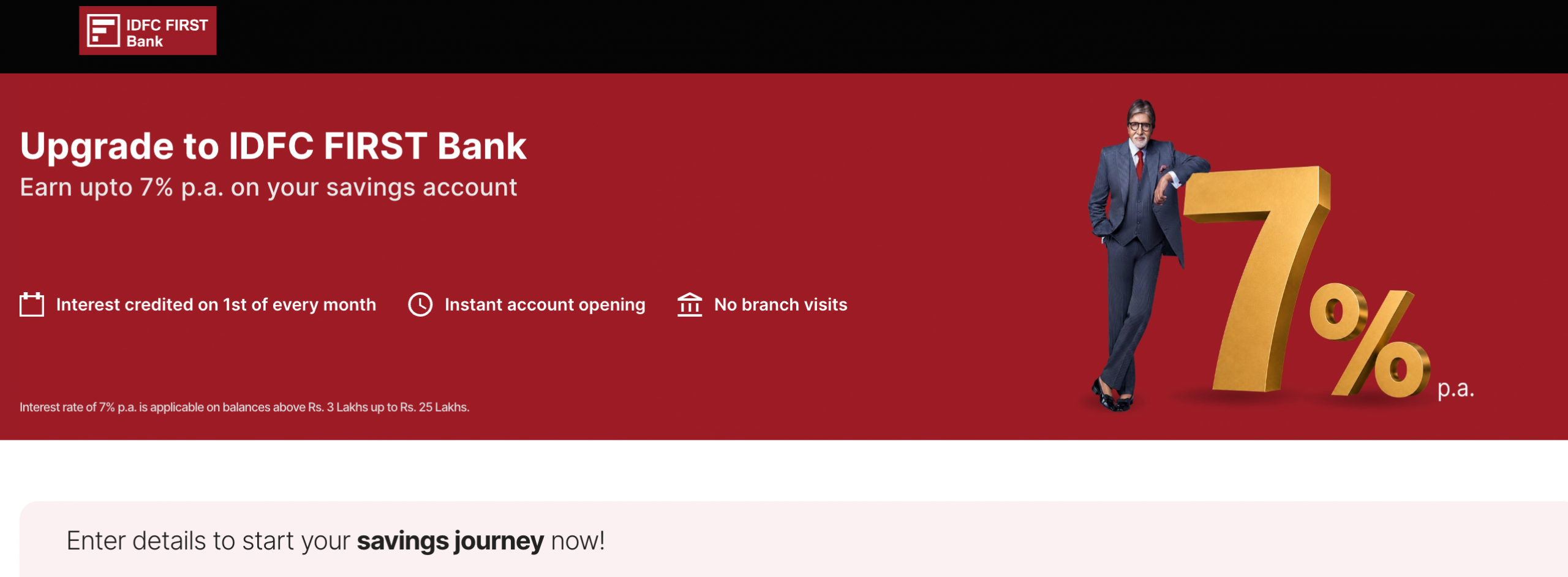
The bank has taken a digital-first approach to everyday banking. Customers can open eligible savings accounts instantly without visiting a branch, while qualifying balances can earn up to 7% annual interest with monthly interest credits. Its banking products also include features such as airport lounge access and purchase protection.
These benefits give affiliates room to position the card around real spending needs during the festive period, making it one of the high paying CPA affiliate programs. The campaign on vCommission offers a ₹1.02K payout, and can be promoted via Email, native, display media buying, along with sub-network promotion.
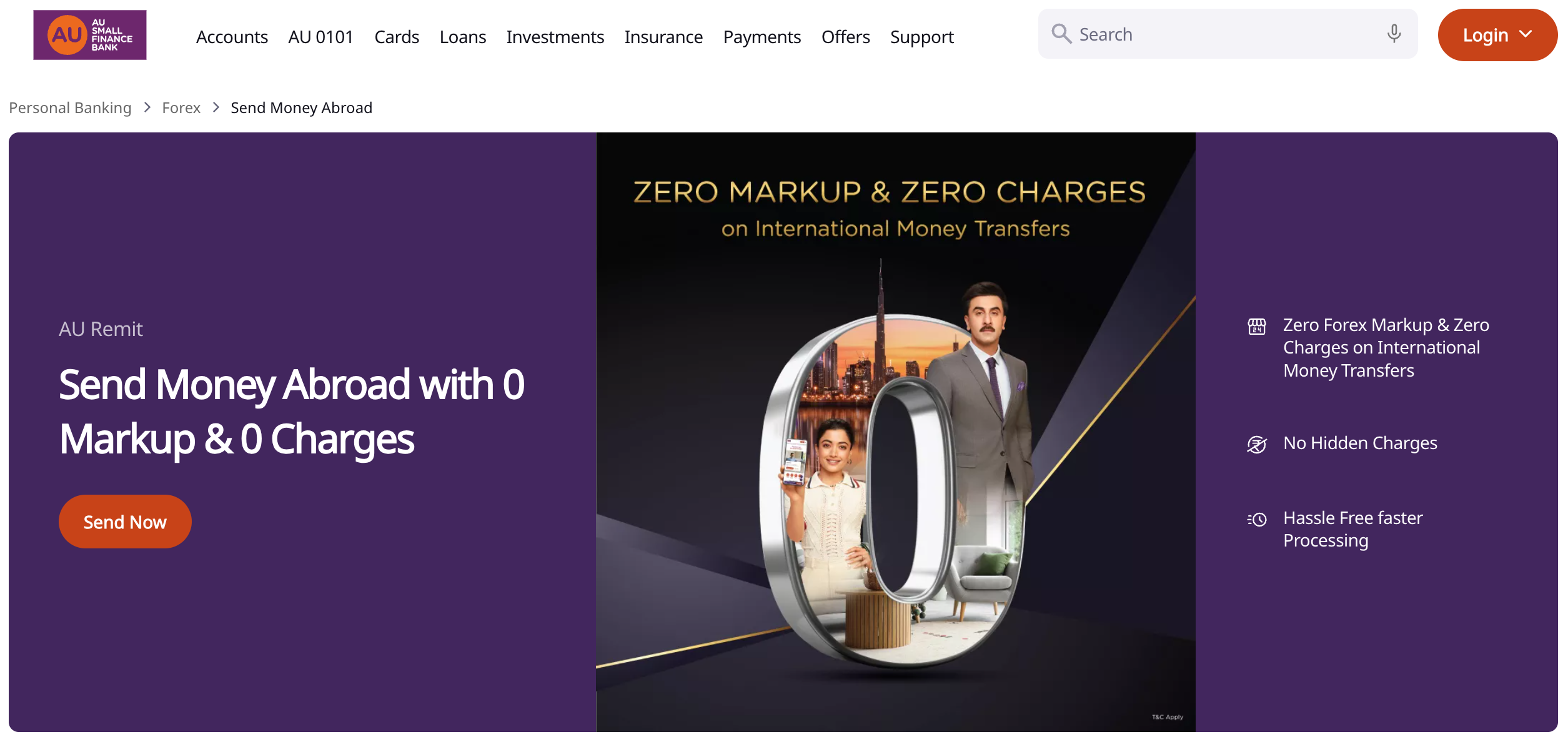
AU Small Finance Bank takes a slightly different position in the credit card space, with products aimed at customers looking for lifestyle benefits alongside everyday banking. Its credit card range around lifestyle and premium benefits. Its cards cover everyday spending, while options such as the Zenith+ Credit Card come with a metal card and Taj Epicure membership.
That gives affiliates a different angle for festive content. Instead of talking only about applying for a credit card, they can focus on shoppers looking for added perks on bigger purchases. AU also offers digital banking through its AU 0101 platform, which can fit content aimed at people who prefer managing their banking online.
It is available on web and mobile web, making it one of the best Credit card affiliate programs. Also, the campaign uses mobile OTP for verification. And promoted via email, display, media buying, and sub-network traffic.
Turn Festive Shopping Intent Into More CPA Revenue
Festive shopping does not end with choosing what to buy. For many shoppers, the payment method becomes part of the decision too.
That gives affiliates a chance to connect credit card offers with the purchase decisions already happening around them. With vCommission, publishers can add financial campaigns to the same affiliate mix as ecommerce offers and promote them through the channels permitted for each campaign.
For affiliates looking to move beyond standard product sales, credit card CPA campaigns can bring higher-value conversions into their festive promotions. Join vCommission to access the best credit card campaigns for Indian affiliates-
September is when the shopping mood starts changing. With major sale events such as Flipkart’s Big Billion Days and Amazon’s Great Indian Festival around this period, shoppers start revisiting products they had been waiting to buy.
And there is plenty of traffic to tap into. During the 2025 festive season, Amazon India recorded more than 2.76 billion customer visits, with 70% of them coming from non metro cities.
September 2026 is likely to bring even more attention to Indian e-commerce, with shoppers heading to major platforms for seasonal offers and everyday purchases alike. For affiliates, that creates an opportunity to earn from Indian ecommerce platforms that already have strong shopper demand.
So, let’s look at the best Indian ecommerce campaigns to promote during the September mega sale season.
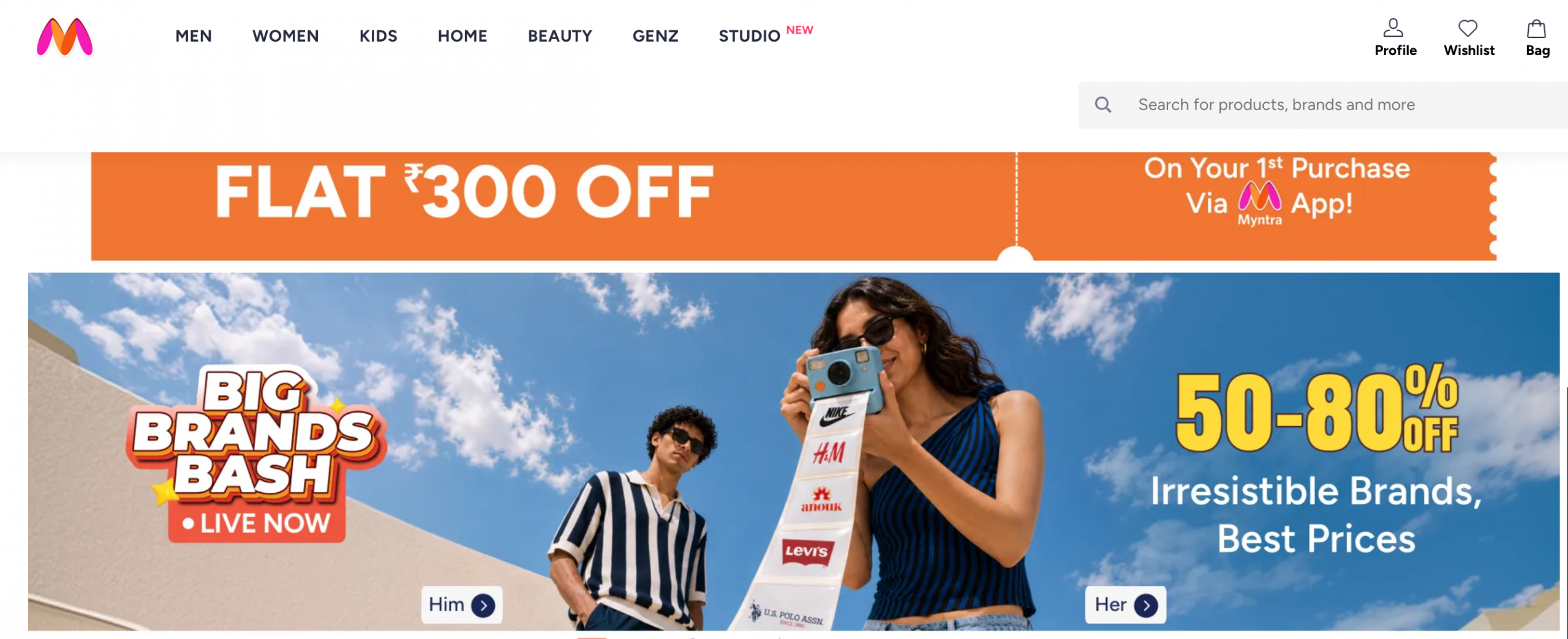
Myntra Affiliate Program
September is when Myntra starts getting more attention from shoppers preparing for the festive season. Its Big Fashion Festival has also become an important part of that shopping period. In 2025, the sale brought in 2 million new customers, with non-metro shoppers accounting for 70% of orders, according to Business Standard.
What stands out is the sheer range of shopping occasions Myntra covers. Its 2025 Big Fashion Festival featured more than 4 million styles across 15,000 brands, with demand spread across ethnic wear, western fashion, sportswear, beauty and personal care, accessories and home products.
That range gives affiliates enough to promote, but covering the whole platform is rarely the most useful approach. Fashion is not limited to occasion wear during this period. A shopper may be updating their wardrobe before Diwali or picking up beauty products while the discounts are running. That gives publishers several natural entry points instead of forcing every promotion into a broad “Myntra sale” post.
Myntra also knows how to create urgency around its biggest shopping events, making it one of the best Indian ecommerce affiliate programs. During Big Fashion Festival, the platform ran formats such as Deal O’ Clock and Prime Time Deals alongside limited-period offers. These moments give affiliates something more specific to talk about when a product or category gets a significant price drop.
The Myntra affiliate program is currently live with vCommission, and it offers up to 7% payout for new customers. Its 30-day cookie gives shoppers time to complete a purchase after clicking the affiliate link. The opportunity is bigger when the content is built around what shoppers are already searching for during the sale. With the September sale period bringing fashion and beauty into focus, sign up for the Myntra affiliate program and start earning-
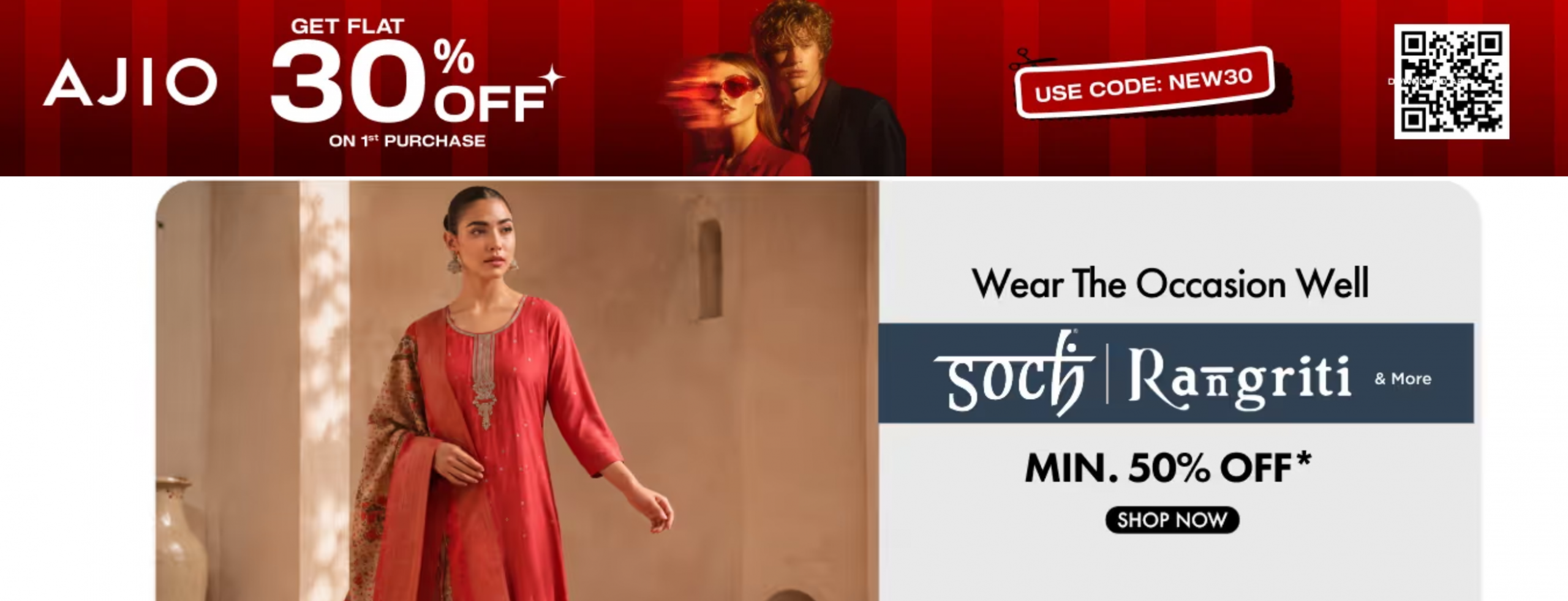
Ajio Affiliate Program
AJIO has built much of its identity around fashion discovery rather than being just another place to buy clothes. Alongside international brands, the platform has its own labels and a dedicated Indie section featuring handcrafted products from Indian sellers and artisans. Its catalog also moves between affordable fashion and premium collections through AJIO Luxe.
That mix becomes particularly useful during the September shopping period. Shoppers preparing for the festive months may not all be looking for the same kind of fashion. Affiliates can use these differences to make their AJIO promotions more interesting. Rather than sending everyone to the same sale page, content can be built around a particular shopping mood.
On top of that, the platform frequently creates sections around specific budgets, with current examples including tops under Rs 299 and kurta sets under Rs 599. These pages give publishers a strong point for budget-focused content without having to scan the entire catalog.
AJIO also combines its product discounts with additional coupons and bank offers. During a major shopping period, that can be useful when an affiliate wants to highlight an actual saving rather than simply announce that the platform is running a sale. The offer can be checked against the product price before the promotion goes live.
There is a commercial reason to test Ajio affiliate program in September too. Its current affiliate campaign with vCommission offers an 8.40% payout for new customers at the base slab, so sign up with the Ajio affiliate program to make the most of the September mega sale season-
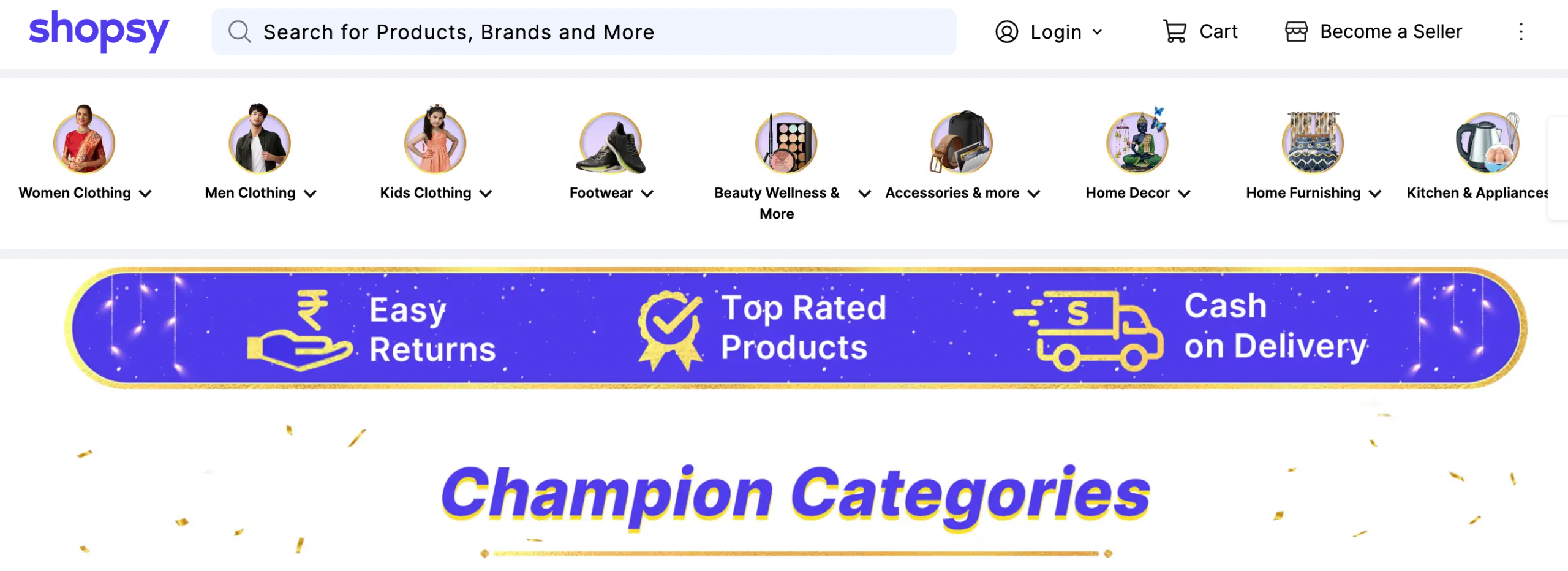
Shopsy Affiliate Program
Shopsy is more than simply a place to find inexpensive products. In May 2026, Flipkart repositioned the platform as an AI-powered, social-first shopping experience built around Gen Z and the next wave of shoppers from tier 2 and smaller cities. The new app puts more emphasis on product discovery, personalized recommendations, customer photos, autoplay videos, and rewards.
The better opportunity is to work with the way people discover products on the platform. A short video showing an interesting home find or a fashion product that looks more expensive than it is can create curiosity before the shopper decides what they want to buy. That fits Shopsy’s own move towards video-led product discovery much better than simply posting a banner announcing a sale.
Shopsy Affiliate program also has a strong Bharat-commerce angle. Shopsy says tier 2+ cities now account for 65% of new shopper growth in India, based on a Bain & Company report. The platform is specifically targeting value-conscious consumers rather than building its proposition around premium shopping.
Shopsy’s current scale also gives affiliates enough depth to keep testing different categories instead of depending on one seasonal product. The platform says it has more than 15 crore product listings, while its app listing highlights categories including fashion, beauty, mobiles, home and electronics.
For September, the Shopsy Affiliate program can therefore be approached as a product-discovery opportunity rather than another generic sale promotion. Sign up with vCommission to start exploring-
Make the Most of Indian Ecommerce Campaigns!
September is a useful month to start testing ecommerce campaigns before festive competition becomes much heavier. The opportunity is not simply in the number of shoppers visiting these platforms. It is in finding the right product and promotion angle while there is still time to see what gets clicks and conversions.
Before promoting any campaign, check the affiliate payout, cookie duration, validation period, and permitted traffic sources on vCommission. These details can shape your promotional strategy and help you focus on the channels with better earning potential.
The September sale period can therefore be more than a short-term push for commissions. It gives affiliates a chance to test products and content formats ahead of the heavier festive shopping months. Indian Ecommerce campaigns that show strong engagement now can help shape a more focused promotion strategy for October and beyond. So dont wait to join the Indian ecommerce affiliate programs with vCommission–
A good fragrance can turn into a very personal gift. During the festive season, shoppers are not just looking for something nice to give. They are also looking for gift sets that feel thoughtful without making the buying decision complicated.
Times OOH estimated festive spending in India at around $85 billion in 2025 across Diwali, Christmas, and New Year. With gifting becoming an important part of this spending, fragrance combos can give affiliates timely products to feature in festive content.
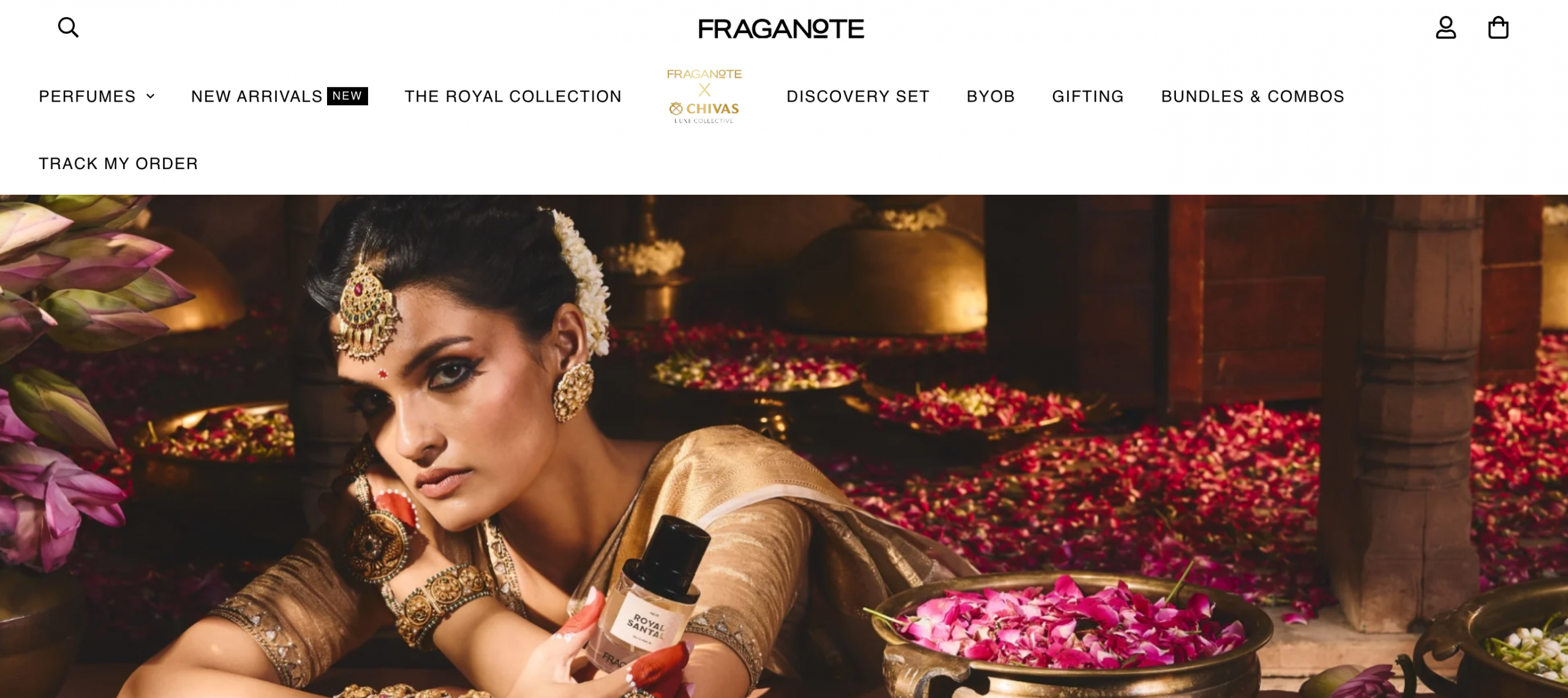
For publishers promoting the Fraganote affiliate program, the brand’s range of customizable perfume sets offers several products that can fit naturally into gifting-focused content.
About Fraganote
Fraganote is a fragrance brand built around making perfumes easier to explore and personalize. Its range includes individual perfumes, discovery sets, customizable combinations, and gift sets, giving shoppers the freedom to choose fragrances based on their own preferences or pick something for someone else.
The Fraganote Gifting combo collection is especially relevant during the gifting season. Shoppers can choose two or three perfumes together, build a discovery set with multiple 10ML fragrances or put together a larger gift set with 50ML perfumes. This gives affiliates several product angles to work with while promoting one of the best ecommerce affiliate programs.
Fraganote Gift Combos To Feature This Festive Season
Fraganote’s customizable sets give shoppers more room to choose what they actually want to gift.
One of the simplest gift sets is Buy Any 2 x 10ML Perfumes for ₹499.
For shoppers who want more variety, the Customize Your Discovery Set 4N x 10ML is priced at ₹999.
Moving into larger formats, the Customize 2 x 50ML Set – Two By Fraganote is priced at ₹1,899.
Another option is the Buy Any 3 x 50ML Perfumes for ₹2,599 Fraganote Gifting combo.
For a more gift-focused product, the Customize Your Explorer’s Gift Set 3 x 50ML is priced at ₹2,799.
Fraganote Campaign Overview
The Fraganote campaign on vCommission comes with the following campaign terms:
Cookie Duration: 30 days
Tracking: Realtime
Validation Period: 15 days
Deeplink: Available
Multiple Conversions: Available
With a 24.5% payout, the Fraganote campaign can also be a strong addition for publishers comparing best CPS affiliate programs.
Who Should Join the Fraganote Campaign?
The Fraganote campaign can work well for affiliates, including:
Beauty and lifestyle bloggers
Coupon and cashback publishers
Telegram deal channels
Creators and video publishers
Mobile app publishers
Social, native and display media buyers
Sub-networks and incentive publishers
These publishers can easily add the Fraganote campaign to their existing ecommerce affiliate programs and promote relevant perfume offers to shoppers during the festive season.
Cash In On Festive Gifting!
Fragrance gifting becomes particularly relevant when shoppers start looking beyond the usual festive purchases. Fraganote Gifting combo gives affiliates several ways to build content around the season.
You can explore the Fraganote affiliate program along with the Best CPS affiliate programs across multiple verticals on vCommission. Also, you can track campaign performance through the dashboard and reach out to an affiliate manager for campaign-related support.
There’s a reason jeans stay on a shopper’s wishlist longer than most fashion buys. The right fit is worth waiting for, but the right price can finally make the decision.
With Levi’s End of Season Sale offering up to 60% off, the campaign gives fashion publishers a timely offer to put in front of shoppers already looking for denim and everyday wear. That opportunity sits within a growing online fashion market in India, which Technavio expects to expand at a 21.1% CAGR between 2025 and 2030, with apparel remaining the largest product segment.
For affiliates, the focus can be on using the sale in places where their audience already looks for fashion deals-
About Levi’s
Levi’s has been closely associated with denim for generations, and jeans remain one of the brand’s most recognizable categories. Its appeal also goes beyond a single style, with shoppers coming to the brand for everyday clothing that fits easily into different wardrobes.
For fashion publishers, that gives the Levi’s End of Season Sale plenty of room for content. The current offers include up to 60% off and up to 50% off, along with an extra 10% off on new arrivals, making Levi’s affiliate program one of the Best CPS affiliate programs.
Rather than treating these as just discount figures, affiliates can use them to build timely content around the products their audience already follows. A creator might feature sale denim in a reel, while a deal publisher can spotlight the biggest markdowns as the sale picks up.
Levi’s Products Affiliates Can Promote
The Levi’s affiliate program covers a wide selection of products across men’s, women’s and unisex categories. Affiliates can promote:
Jeans
Shirts
T-shirts
Polos
Tops
Sweatshirts
Chinos and trousers
Cargos and other bottomwear
Accessories
Jeans are an obvious focus, with popular fits such as the 511 Slim, 512 Slim Taper and 505 Straight appearing in the sale range. Women’s styles such as the 724 High Rise Straight are also available.
This gives fashion creators an easy way to build content around specific fits rather than simply announcing that Levi’s is on sale.
Levi’s Sale Offers Affiliates Can Promote
Currently, Levi’s offers:
Up to 60% off
Up to 50% off
Extra 10% off on new arrivals
The biggest markdowns can be particularly useful for deal-led content. Instead of creating a broad post covering everything, publishers can pick products that make sense for their audience and show the actual savings.
Levi’s Campaign Details for Affiliates
With vCommission, publishers can see the key tracking details for the Levi’s campaign, including:
Web tracking
Mobile web tracking
Offline tracking frequency of 48 hours
7-day cookie duration
Multiple conversions
45-day validation period
Levi’s Affiliate Payout
The Levi’s campaign offers a default payout of 10.5%, with the rate increasing as the number of orders grows. Affiliates can earn:
0–1,500 orders: 10.5%
1,501–2,500 orders: 12.6%
2,501–3,500 orders: 14%
3,500+ orders: 17.5%
A payout of 17.5%, making it one of the highest paying ecommerce affiliate programs. Also, it gives publishers an added reason to keep the campaign active when they can consistently generate sales.
Who Should Join the Levi’s Campaign?
Fashion creators using Reels and styling content
Fashion websites and blogs covering denim and seasonal sales
Coupon publishers promoting Levi’s offers and sale prices
Email and SMS affiliates sharing sale alerts with subscribers
Telegram and push publishers sending timely deal updates
Display and pop affiliates with relevant fashion traffic
Sub-networks and incentive affiliates permitted under the campaign terms
Make the Most of the Levi’s End of Season Sale
The sale gives fashion publishers a timely reason to talk about Levi’s, so focus on content that fits how your audience already shops. If you’re already promoting fashion campaigns, you can sign up with vCommission and add Levi’s to your campaign mix.
And Levi’s affiliate program doesn’t have to be the only campaign in your mix. vCommission has ecommerce affiliate programs across fashion, beauty, electronics, travel, etc categories, so you can explore Best CPS affiliate programs that match your audience-
FAQs
What is the cookie duration for Levi’s?
The cookie duration is 7 days.
How long does it take for Levi’s conversions to be validated?
The validation period is 45 days.
Can I earn from multiple Levi’s conversions?
Yes. Multiple conversions are allowed under the campaign.
Can I promote Levi’s through social media ads?
No. Social media media buying is not allowed. Display media buying is permitted.
Which devices can I use to promote Levi’s?
The campaign supports all devices, with tracking available on both web and mobile web.
As summer draws to a close, fashion shoppers often start looking differently at pieces they had their eye on earlier in the season. A dress that felt like a splurge a few months ago can become much more appealing when it moves into sale territory. According to the McKinsey & Company report, over 60% of consumers in the US and UK try to save money on fashion often or as much as possible, with the figure reaching 75% in the US. Hill House is leaning into this buying behavior with its End of Summer Sale, giving fashion publishers a strong reason to feature the brand while customers are still browsing for dresses, swimwear and other warm-weather styles.
About Hill House
Hill House Home is known for its signature Nap Dress, but the brand has grown well beyond that one category. Its collection covers women’s clothing, swimwear, pajamas and robes, accessories, kids and baby products, and bedding and home.
That variety gives the Hill House affiliate program a wider audience to work with. A fashion-focused publisher can stay with dresses and clothing, while other audiences can be matched with other parts of the catalog.
Hill House End of Summer Sale
Hill House is currently promoting its End of Summer Sale with up to 75% off, with an additional 30% off automatically applied in the cart.
The sale includes a large selection of products. Dresses are particularly prominent, with current markdowns including the Lila Nap Dress at $99 from $228 and the Becca Dress at $59 from $248, before the extra 30% cart discount.
Content around the sale should focus on products that already have a clear reason to buy. Showing the original price, current sale price, and the additional cart discount gives audiences a much clearer picture of the deal.
Top Hill House Products for Affiliates to Promote
Dresses: Hill House’s strongest fashion category includes Nap Dresses and other occasion-ready styles. The sale currently features names such as Lila, Scarlett, Becca, etc.
Clothing: Tops, skirts, shorts, pants, jackets, and matching sets give fashion publishers options beyond dresses. Sale listings currently include pieces such as the Aiko Top and Miro Top.
Swimwear: Swim products are a natural fit for late-summer travel and holiday-focused content, particularly while warm-weather demand is still active.
Robes & Pajamas: Nightwear gives lifestyle publishers a different angle from seasonal clothing. Products such as the Bonnie Nightgown are currently included in the sale.
Kids & Baby: Family-focused publishers can move beyond women’s fashion and feature children’s clothing and accessories from the sale collection.
Accessories: Smaller products such as bows, hats, headbands, and cosmetic bags can complement fashion-focused content without requiring a full outfit feature.
Bedding & Home: Hill House also sells duvet covers, sheets, pillowcases, and other home products, making the campaign relevant to home and lifestyle audiences.
Hill House Campaign Overview
The Hill House affiliate program is live on vCommission, which offers a 5.6% payout, making it one of the highest paying CPS affiliate programs. The campaign also features:
Frequency: Real-time
Geo Targeting: Canada, United Kingdom, and United States
Cookie Duration: 30 days
Web: Available
Mobile Web: Available
Deeplink: Available
Validation Period: 55 days
Who Should Join the Hill House Campaign?
The campaign suits publishers whose traffic already has a strong connection to fashion or lifestyle shopping, including:
Fashion and lifestyle content websites
Cashback publishers
Mobile apps
Influencers and creator-led publishers
Telegram channels
Video publishers
Software publishers
Paid search publishers using generic keywords only
Social, native and display media buyers
Sub-networks
Push and pop traffic publishers
Resellers and incentive publishers
Several traffic restrictions are also important before the Hill House affiliate program promotion begins. Coupon, email, and SMS promotions are not allowed under the Ecommerce affiliate program.
Monetize End of Summer Sale!
The end of a season often gives fashion publishers a reason to revisit what their audience is already interested in. If Hill House fits the audience you already reach, the campaign gives you a relevant fashion offer to promote through the traffic sources that work best for your business.
Sign up with vCommission to join the Hill House affiliate program and explore other Ecommerce affiliate programs across different categories. You can use the vCommission dashboard to track your campaigns and reach out to your affiliate manager if you need help understanding campaign terms or promotion rules.
October to December is one of the busiest periods for online shopping in India. Festive occasions such as Navratri and Diwali add to the demand in October, while November sales bring shoppers back for bigger purchases. By December, gifting and year-end shopping create another wave of demand.
According to Datum Intelligence’s Festive Barometer 2025, India’s festive ecommerce market was projected to cross ₹1.2 lakh crore.
With shopping priorities changing through the quarter, affiliates need to choose ecommerce campaigns that match what their audiences are looking for at different points of OND. Here are the Ecommerce affiliate programs worth prioritizing for 2026.
Top Performing Ecommerce Verticals for Affiliates in 2026
The strongest opportunities in OND come from categories where shopping intent changes as the festive calendar moves forward. Here are the five verticals affiliates should prioritize for the 2026 festive season. All Ecommerce affiliate programs India featured in these categories are live at vCommission, so affiliates can start exploring those that best fit their audience and content strategy-
Fashion & Lifestyle
October is when fashion starts moving into festive mode. People are not only shopping for Diwali outfits but also looking ahead to weddings and other occasions in the following weeks. Redseer found that 59% of online fashion GMV came from Tier 2+ cities over the three years ending August 2025, showing how much online fashion demand now comes from beyond the biggest cities.
That gives fashion creators a wide range of stories to work with. Myntra and AJIO are among the best Ecommerce brands for affiliates that fit within festive sale content, while H&M and Levi work well when the focus shifts to styling beyond traditional festive wear. Baccabucci adds a footwear angle when putting together complete occasion looks.
Electronics is a category where shoppers often wait for the right price before making a purchase. November’s major sale events create that trigger, particularly for products such as smartphones and laptops. Counterpoint Research recorded 32.4 million smartphone sales during India’s 2025 festive season, up 11.5% year on year.
That demand opens up different angles depending on the audience. OPPO fits naturally into smartphone-focused content, while HP and Lenovo can serve audiences researching laptops and computing products. Cellecor and GoNoise give affiliates options for audiences looking at more accessible tech and connected gadgets.
Beauty shopping often begins with preparation. Someone getting ready for Diwali may be looking for makeup, while another shopper may be refreshing a skincare routine before the wedding and party season. Amazon reported 75% growth in Korean beauty during its 2025 Great Indian Festival, highlighting the strength of beauty demand during the festive period.
The campaign terms are another reason to consider this vertical. Some beauty campaigns on vCommission come with a good validation period, giving affiliates more time between the initial transaction and the final validation of a sale. That matters during OND, when order volumes can rise sharply and affiliates may be working with campaigns where returns and cancellations take time to settle.
Festive preparation does not stop at the wardrobe. Homes also get a refresh before Diwali, and shoppers often start looking at kitchenware, dining products, and furniture as they prepare for guests. Amazon reported a 500% increase in demand for festive lights and décor during its 2025 Great Indian Festival.
Cookie duration becomes particularly useful here. A shopper might click through while researching a product but take longer to complete the purchase, especially when the item carries a higher price tag. Affiliates should therefore pay attention to the cookie period of individual campaigns rather than looking only at the payout.
By December, shoppers are also buying for family and friends. Diwali gifting, weddings and year-end occasions create new reasons to look for watches, jewelry and personalized presents. Amazon reported 55% growth in premium watches and 390% growth in lab-grown diamond jewelry during its 2025 festive season.
IGP fits naturally when the story is about finding a personalized gift. Timex gives affiliates an option for watch-led content, while Jivisa can work when the focus shifts towards jewelry and occasion gifting.
Choose Best Ecommerce Affiliate Campaigns for OND!
OND should not be treated as one long campaign window. Shopping priorities change as Navratri, Diwali, and the November sale season pass, followed by year-end shopping in December. The campaigns you choose should have a clear reason to be promoted at that point in the quarter.
The best ecommerce affiliate programs are not always the ones with the highest payout. A campaign is more valuable when the product fits what your audience is already interested in. Fashion can work well around festive shopping, while electronics may get more attention during November sales. As December approaches, gifting campaigns are the best Ecommerce campaigns for affiliates.
26% of orders were returned in India last year, according to ShipNotes. For businesses using cash on delivery, that number points to a much bigger challenge than payment preference. A COD order can be generated and confirmed, yet still end up as a failed delivery if the customer refuses the parcel at the doorstep.
So, what can India learn from markets where COD has already become a mature e-commerce model?
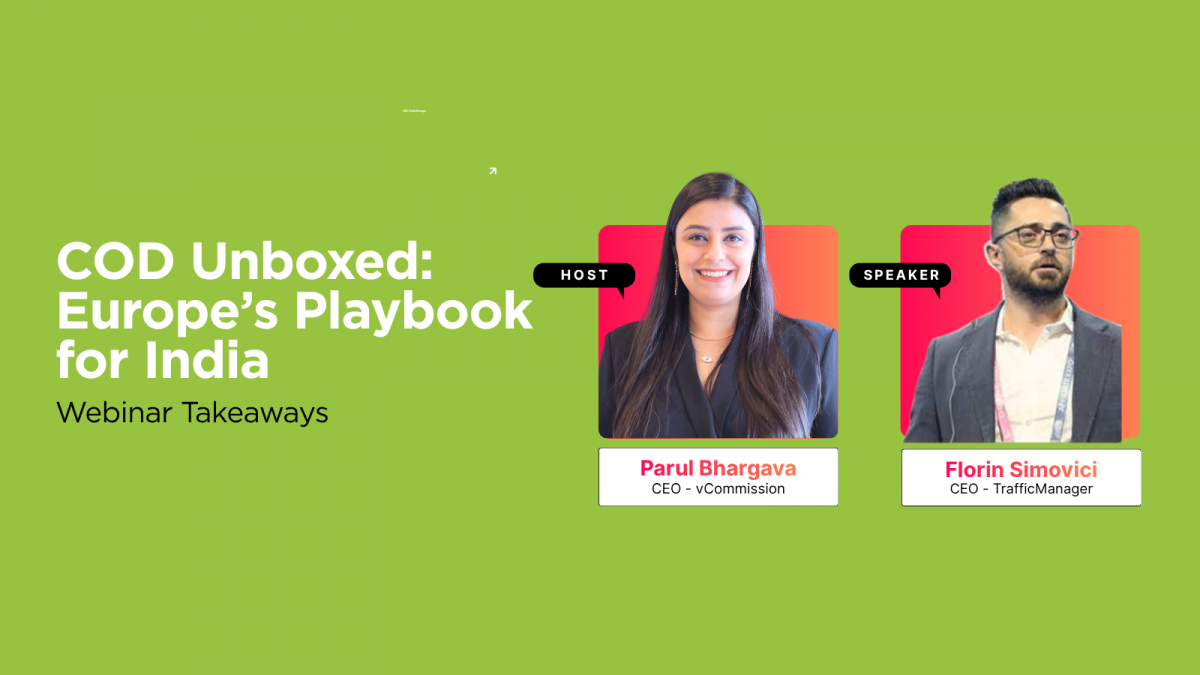
To explore this, vCommission hosted yet another exclusive webinar in association with affiliate social, “COD Unboxed: Europe’s Playbook for India,” featuring Florin Simovici, Co-Founder and CEO of TrafficManager, and Parul Mehta Bhargava, Co-Founder and CEO of vCommission. The discussion looked at how COD evolved in Europe, what makes the model work, and where India could take it next.
Modern COD Is More Than a Payment Method
Florin began with a simple point. COD may look like a payment method, but modern COD is actually an entire supply chain.
The process starts with a store or landing page, often built on Shopify, WooCommerce, or a dedicated product page. From there, the order moves into local fulfillment, where stock is already available in the target country.
Then comes order confirmation. A call center, either through human agents or AI-based systems, confirms the order and checks details such as the customer’s address. It can also identify suspicious or low-quality orders before they reach fulfillment.
The final step is payment at the door, where the customer pays the courier after receiving the parcel. Some COD models also allow customers to inspect the package before paying.
Behind all of this is the traffic source. Affiliates and media buyers bring customers to the offer and generate the orders that feed the entire system.
As Florin explained, COD was introduced in Switzerland as far back as 1849. What has changed is everything built around the payment itself.
How Flipkart Helped Popularise COD in India
Florin then took the discussion back to India.
Modern COD became a major part of Indian e-commerce around 2010, when Flipkart allowed customers to pay the courier after confirming orders over the phone. The company also built Ekart to strengthen its delivery network and manage the operational side of COD.
At the time, online payments were still unfamiliar to many consumers. Some shoppers did not have cards or bank accounts, while others simply did not trust entering payment details online.
COD removed that barrier.
Customers could place an order without paying upfront and hand over the money only when the product arrived. This helped e-commerce reach a much wider audience, particularly in Tier 2 and Tier 3 cities.
Amazon eventually adopted the model too.
The bigger lesson from this history is that India did not simply adopt COD as a payment option. It built an entire e-commerce ecosystem around it.
Why COD Still Works When Everyone Has Digital Payments
The role of COD has changed since 2010.
Florin explained that COD initially solved an access problem. Customers needed a way to shop online when cards and digital payments were not widely available.
Today, the problem is often trust.
A customer may have a credit card, UPI, or another digital payment option but still hesitate to pay a new brand upfront after discovering it through a Facebook or Instagram ad.
COD gives that customer another choice.
They can place the order, receive the product, and pay at the door.
For affiliates, this is an important distinction. COD can help reduce the hesitation around purchasing from an unfamiliar brand, particularly when the product is discovered through performance advertising.
How COD Spread From India to Europe
Florin then traced the journey of COD into Europe.
After expanding through parts of Asia and the Middle East, COD gained strong adoption in countries such as Italy and Spain.
There was a clear reason for this. Both markets had strong teleshopping industries at the time.
Television created huge demand for products that people saw in advertisements and demonstrations. But buying television advertising was expensive, and businesses needed fulfillment centers and call centers to manage the resulting orders.
Then digital advertising changed the equation.
Facebook and Google gave media buyers a cheaper and more measurable way to generate traffic. Instead of paying for expensive TV slots, businesses could buy traffic and measure the sales that followed.
COD had found a new growth engine.
COD vs Dropshipping: Why the Difference Matters
One of the most important distinctions Florin highlighted was between COD and traditional dropshipping.
A typical COD operation holds stock in a local warehouse. Customers can receive their products within a few days and pay the courier at delivery.
Classic dropshipping usually works differently. The product remains with a supplier, often in China, and is shipped directly to the customer after an upfront payment.
That creates a major difference in the customer experience.
COD usually depends on local stock, faster delivery, and payment at the doorstep. Dropshipping often depends on low product prices and longer delivery times.
The two models may use similar advertising channels and landing pages, but their underlying businesses are very different.
How Dropshipping Changed European E-commerce
Florin then explained how dropshipping challenged the COD ecosystem around 2015.
The combination of AliExpress, Oberlo and Shopify made it possible for almost anyone to launch an online store and ship low-cost products directly from China.
This model spread quickly across markets including France, Italy, Spain, Germany and the UK. It also gained ground in Central and Eastern European markets where local COD infrastructure was not yet as developed.
Customers were often willing to pay a low price and wait several weeks for delivery.
But the model faced a major change in July 2021, when the EU removed the €22 VAT exemption for low-value imports and introduced the IOSS system.
A study published in the Journal of Public Economics found that the reform was associated with a substantial decline in cross-border online sales from China to EU countries.
The change made the economics of very low-value cross-border parcels less attractive.
Businesses began looking for another approach. Many moved inventory into local European warehouses, bringing stock closer to customers.
COD once again became a stronger option for European e-commerce.
COD Became a Stronger Model Across Europe
Between 2021 and 2024, COD expanded further across Central and Eastern Europe.
The markets highlighted during the webinar included Greece, Bulgaria, Slovakia, Serbia, Lithuania, Poland, and Italy.
According to the ECDB figures presented in the webinar, COD was offered by 85.6% of online shops in Greece, 80.3% in Bulgaria, and 80.1% in Slovakia. Poland was also above 60%.
COD is not equally popular everywhere. Western Europe and Scandinavia generally have much lower adoption, while Central, Southern, and Eastern European markets continue to show stronger demand.
For affiliates these differences affect campaign performance. A strategy that works in Italy or Bulgaria may not perform the same way in Germany or the UK.
Which Products Sell Well Through COD?
Florin then moved from payment behavior to product categories.
COD tends to work best for products that can generate an impulse purchase and sit within a price range customers are comfortable paying at the door.
The webinar highlighted a typical range of around €30 to €60, although upselling can increase the final basket value.
The strongest categories include:
Nutraceuticals and supplements
Cosmetics and personal care
Wellness products
Smart home and kitchen products
Fitness and body-shaping products
Fashion and accessories
Pet care
Senior care and mobility products
Nutra and cosmetics were highlighted as two particularly strong categories across European COD markets.
For affiliates, product choice should also influence the content format. A product that can be demonstrated quickly may work better through a Reel, short-form video, or creator-led demonstration than through a text-heavy promotion.
How Affiliate Marketing Helped COD Scale
The next part of the webinar connected COD directly with affiliate marketing.
COD had already existed in Europe for years. What changed was the ability to track traffic and attribute sales to individual partners.
Once advertisers could measure which affiliates were generating orders, they could pay based on performance rather than simply buying advertising space.
Affiliate networks became an important part of this ecosystem.
Florin outlined three common structures.
Advertiser-led programs: The product owner runs its own store and works with affiliates, influencers, or an internal media-buying team.
Affiliate networks: Advertisers list their offers with a network, while affiliates promote those offers in return for commissions.
Internal media-buying teams: The company runs its own media-buying operation, with internal teams managing campaigns and performance.
The infrastructure behind these models often includes third-party tracking platforms, fulfillment centers, and call centers.
What India Can Learn From Europe
Florin eventually brought the discussion back to India.
The country already has many of the ingredients needed for COD at scale. It has a large online shopper base, established fulfillment networks, and extensive call-center capacity.
The opportunity now lies in improving the performance layer around COD.
Affiliate networks and advertisers need to understand not only how many orders an affiliate generates, but also what happens to those orders afterward.
Fingerprint-level tracking can help identify traffic patterns linked to poor-quality orders and connect information across the customer journey.
During the webinar, Florin also clarified that this does not automatically mean networks can see every advertisement an affiliate is running. Accessing the actual ads would require additional API integration.
The goal is to understand traffic quality and order outcomes more accurately.
What Affiliates Should Take Away From the Webinar
For affiliates, the European COD story offers a practical lesson.
COD campaigns should not be judged only by the commission or the number of orders generated. The quality of those orders matters just as much.
Promotional content should accurately represent the product and offer. Affiliates should avoid exaggerated claims that may generate clicks but increase refusals later.
It is also important to understand the market before promoting a European COD campaign. Payment behavior varies widely across countries, and product demand can differ from one market to another.
India’s COD ecosystem is already moving towards this more performance-focused approach. Through its India COD ecosystem, vCommission gives affiliates access to COD offers with visibility across the order journey, from the initial order to shipping and delivery. Sub ID tracking helps identify the traffic source, while post-order events provide a clearer picture of whether an order actually reaches the customer. For affiliates, that means performance is not simply about generating an order. The quality of that order can be tracked further down the funnel.
That shift is important for COD because the real conversion does not necessarily happen when the customer submits the order. It happens when the product reaches the customer and the order is successfully delivered.
FAQs
1. What technology helps identify poor-quality COD traffic?
Fingerprint-level tracking helps identify traffic patterns and link them to order outcomes.
2. Can this technology identify the ads affiliates are running?
No. That requires additional API integration.
3. Is COD equally popular across Europe?
No. COD is more popular in markets such as Italy, Greece, Bulgaria, and Poland than in the UK, France, and Germany.
4. How can affiliates start working in the European COD market?
They can join COD programs and attend industry events to learn about the market and build connections.
5. How can networks reward affiliates for quality traffic?
By tracking orders beyond confirmation and identifying affiliates that generate successfully delivered orders.
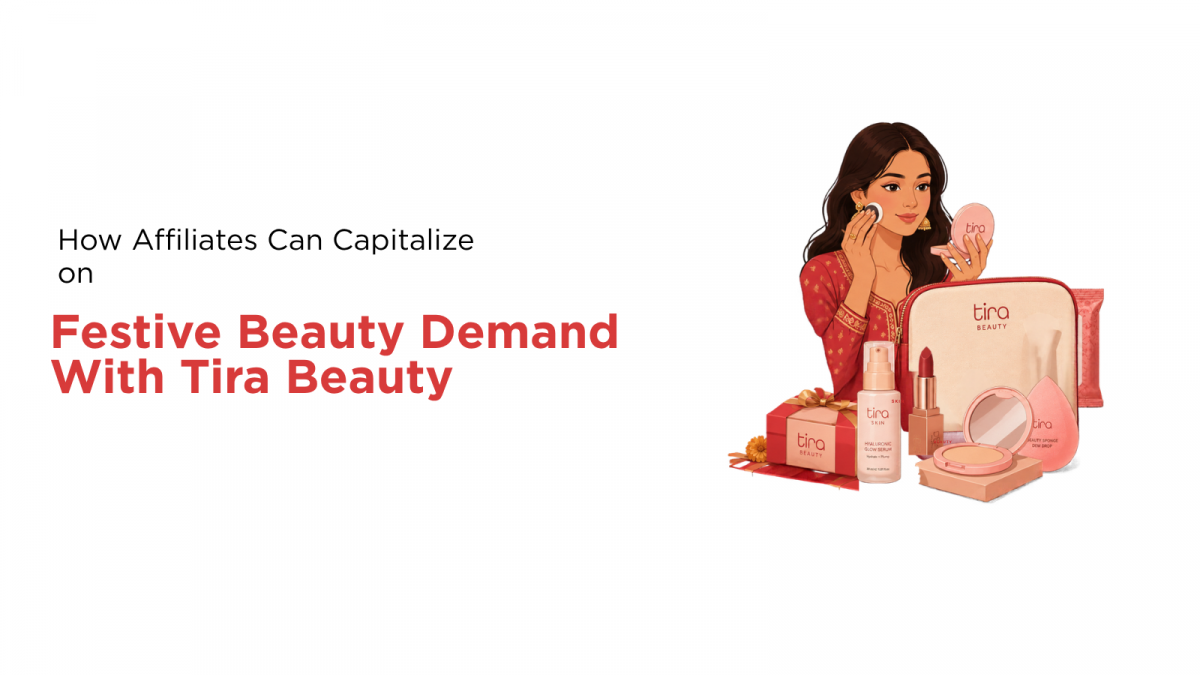
Festive shopping often starts with a small idea. Someone wants a new lipstick for an upcoming celebration or a fragrance for gifting. These purchases are also moving online at a rapid pace. India’s online beauty and personal care market reached ₹56,000 crore and grew around 35% YoY, according to Redseer. With festive occasions adding fresh reasons to shop, Tira Beauty affiliate program can be relevant for affiliates covering beauty and lifestyle.
About Tira Beauty
Tira Beauty brings together products across makeup, skincare, haircare, fragrances, and other beauty categories, giving shoppers plenty to explore when they are looking for something for themselves or a gift.
That broad selection also gives affiliates room to build content around specific festive needs. A creator can show a festive makeup look in a Reel or create a longer YouTube video focused on a specific beauty routine. A fashion creator can bring beauty products into festive styling content, while a deal-focused publisher can spotlight offers when shoppers are ready to buy.
Tira Beauty is currently offering up to ₹2,000 off, along with up to 40% off on selected products, giving creators and publishers specific offers to feature in their festive content.
Tira Beauty Campaign Snapshot
When affiliates promote Tira Beauty affiliate program with vCommission, they get access to:
Real-time tracking
Weekly reporting
30 days Validation period
Allowed promotional methods are content, Mobile App, Influencer, Media Buying (Social, Native, Display), Sub-Network, Video
Tira Beauty Commission Structure
The Tira Beauty affiliate program follows a slab-based CPS structure for new orders. As net GMV increases, the payout for new orders moves up as well.
New orders payout is ₹175 to ₹262.50 CPS, depending on net GMV
Old orders payout is ₹105 CPS across all slabs
New-order payouts start at ₹175 for the ₹1–₹7.5 lakh GMV slab
The payout rises with higher GMV and reaches ₹262.50 above ₹75 lakh, making Tira Beauty one of the highest paying CPS affiliate programs
Who Should Join?
Tira Beauty affiliate program fits publishers who already have an audience interested in beauty and fashion. Beauty creators can demonstrate products in videos, while lifestyle publishers can bring beauty into festive styling and gifting content.
Deal and coupon publishers have another angle through the available offers, while mobile apps and video publishers can use their permitted channels to reach shoppers closer to the purchase.
The range of allowed promotion methods makes it one fo the most preferred Ecommerce affiliate programs. It also means affiliates do not have to change the way they normally create content just to promote Tira Beauty campaign.
Cash In On Festive Beauty Demand!
The festive period gives beauty publishers a natural reason to revisit products people are already interested in. With Tira Beauty’s broad selection and current offers, affiliates can build content around specific shopping moments rather than simply adding another brand to a festive deals page.
Signing up with vCommission also gives affiliates access to campaigns across multiple verticals. You can explore ecommerce affiliate programs alongside opportunities in fashion, electronics, travel, etc, depending on what fits your traffic.
Once you start promoting, the vCommission dashboard lets you track campaign activity and performance. If you are unsure which campaign fits your audience or need help understanding campaign details, an affiliate manager is available to guide you.
How much commission can I earn from a new customer?
New-customer payouts start at ₹175 and can go up to ₹262.50, depending on the campaign’s net GMV slab.
Is the app install itself payable?
No. The install goal currently has a ₹0 payout. The payout is triggered when an eligible order is completed.
Can Influencers promote Tira beauty campaign?
Yes. Influencer promotion is allowed, provided all campaign terms and traffic quality requirements are followed.
Is retargeting allowed for Tira beauty campaign?
No. Retargeting is not allowed for this campaign.
What happens if an eligible conversion is missing from the report?
Affiliates can submit missing conversions by the 5th of each month.
How can I check whether my conversions are being tracked?
The campaign supports real-time tracking, with AppsFlyer used as the attribution platform. Affiliates can monitor their campaign performance through the available reporting and tracking data.
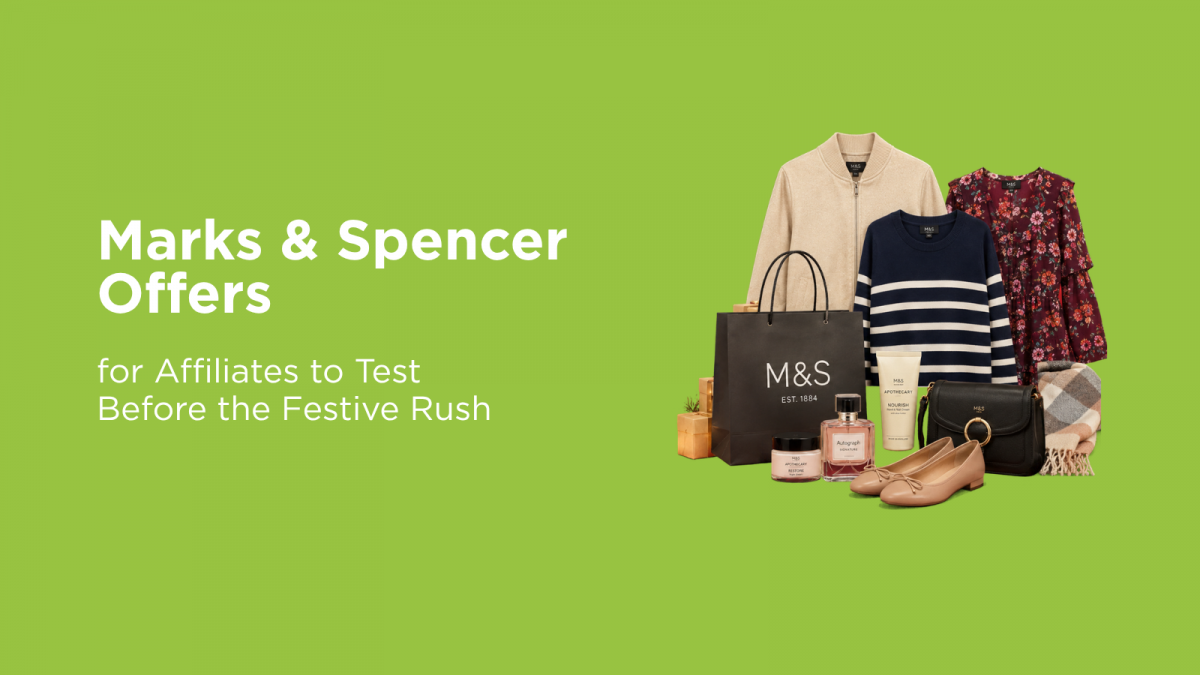
Some brands do not need much introduction when shoppers start planning what to buy for the festive season. Marks & Spencer is one of them. From clothing to beauty products, the retailer has built a shopping proposition that fits several parts of a customer’s festive plans. The scale of the business is reflected in its numbers too. According to Macrotrends, Marks and Spencer Group’s annual revenue reached around $23 billion in 2026, up 31% from 2025.
For affiliates looking ahead to the festive rush, that gives the Marks & Spencer affiliate program an interesting mix of brand familiarity and product choice to work with.
About Marks & Spencer
Marks & Spencer is a well-known British fashion retailer, known for its clothing, footwear and accessories across women’s, men’s and kids’ collections. Its wide product range gives shoppers several reasons to visit the brand during the festive season, from finding an outfit for a celebration to picking up beauty products, gifts or something new for the home.
That range also gives publishers different ways to approach the campaign. A fashion creator can focus on festive outfits, while a beauty creator can feature M&S products in reels, product demos or festive shopping videos. Home and lifestyle creators can bring selected products into their own content, while deal-focused publishers can highlight the latest discounts.
The current Marks & Spencer affiliate program adds another reason to take a look, with up to 60% off on selected products, making it one of the best Ecommerce affiliate programs.
What Can Affiliates Promote?
The Marks & Spencer offers give publishers room to choose products that fit naturally into the content they already create.
Affiliates can promote M&S products across categories such as:
Clothing and fashion
Footwear
Beauty and personal care
Lingerie and nightwear
Home and lifestyle
Gifts and seasonal products
A creator could show how an outfit comes together in a short-form video or use a deal-focused post to put the Marks & Spencer offers in front of shoppers. The format can change with the product and the audience instead of forcing every promotion into the same type of content for Marks & Spencer affiliate program.
Marks & Spencer Campaign Overview
Before putting the offer live, affiliates can check the campaign’s tracking setup and promotion terms on vCommission:
Frequency: Offline
Cookie Duration: 7 days
Deeplink: Available
Multiple Conversions: Available
Validation Period: 60 days
Payout: 16.97 %
The campaign supports several promotion methods, such as content, coupon, cashback, email, sub-network, push, and Incent. And with such a payout, the Marks & Spencer campaign is a strong option to consider when exploring best paying affiliate programs for the festive season.
Who Should Join?
The permitted methods give different types of publishers room to use the campaign in ways that suit their existing traffic.
Fashion creators can use reels or short-form video content to showcase M&S clothing and footwear before festive events.
Beauty creators can feature products through unboxings or product demonstrations, while fashion and lifestyle creators can bring selected M&S products into their regular content.
Coupon and cashback publishers can put the offer in front of shoppers actively looking for savings. Email and push publishers can share timely offers with an existing audience, while sub-networks and incentive publishers can promote the Marks & Spencer affiliate program within the permitted terms.
Make the Most of Festive Shopping Demand
The festive rush can arrive quickly, so affiliates have more room to test when they start before the busiest shopping weeks. With M&S, that could mean trying a few different products and content formats first, then putting more attention behind the ones that generate stronger engagement and sales.
Affiliates can sign up with vCommission to access the Marks & Spencer campaign alongside other ecommerce affiliate programs across multiple verticals. If your audience moves across fashion, beauty, electronics, travel, etc., you can explore campaigns that fit those interests instead of relying on a single offer throughout the season.
The vCommission dashboard also gives affiliates a place to monitor campaign activity and track performance. If campaign terms or promotion requirements are unclear, an affiliate manager is available to help. So, sign up for the best paying CPS affiliate programs-
FAQs
Is deep linking available for this campaign?
Yes. Deep linking is available
What is the payout offered by the Marks & Spencer campaign?
The campaign offers a 16.97% payout on the order sale amount.
What is the payment term for the campaign?
The payment term is 60 days.
How frequently are conversions reported?
The campaign uses offline tracking, with conversion data imported from the client CRM every 48 hours.
What is the expected average order value for the campaign?
Affiliates are expected to maintain an average order value between INR 2,000 and INR 3,000.