
Categories
Affiliate Marketing

Top Traffic Sources for Affiliate Marketers That Work Best in the Festive Season

The festive season is not all about lights, glitters, and celebrations – it is also a treasure trove for affiliate marketers. 

Every year, as the holiday buzz begins, something wonderful happens in the world of affiliate marketing: user intent soars, buying choices grow shorter, and customers are considerably more emotionally driven. Be it Diwali in India, Black Friday in the US, or Christmas globally, everyone’s purchasing, scrolling, and looking. But what separates top-performing affiliates from the rest during this lucrative period? It’s the traffic. Not just any traffic, but high-quality, ready-to-convert joyful traffic.

Let’s see how things are and what the source of the traffic. How can it be captured? And which channels are responsible for those high-commission conversions during the busiest time of year? We’ll go into great detail about the best traffic sources to use throughout the holiday season in this blog, including why some of them perform better than others while the lights and fireworks are on.

Social Media (Especially Instagram & Facebook): The Festive Wonderland

People are living on social media over the holiday season, in addition to shopping. Social media sites like Facebook and Instagram serve as inspiration and decision-making hubs for anything from gift guides to Diwali selfies and Christmas purchases.

Visual storytelling is king at this point in time. Consider influencer partnerships, carousel posts, reels, giveaways, and festive lookbooks—all of which capitalise on the audience’s elevated emotional quotient. When combined with affiliate links, Facebook’s store integrations and Instagram shopping tags assist expedite the purchasing process.

Affiliate marketers who provide carefully chosen content, such as “Best Skincare for Winter Glow” or “Top 10 Gifts Under ₹999,” get a tonne of clicks. Why? because such guidance is sought after by people. When you combine that with geo-targeted boosts and hashtags particular to the holiday, your content starts to convert rather than just be seen.

Google Search & SEO: Intent Is Everything

Never undervalue the power of search, particularly during a time when people are actually entering in terms like “top festive fashion under ₹2000,” “budget Christmas gifts for dad,” or “best Diwali phone deals.” This is the best kind of high-intent traffic.

Strong SEO material created far in advance of the holiday season gives affiliate marketers a significant advantage. Anticipate a consistent stream of organic traffic that is prepared to make a purchase if your site is ranking for brand-specific keywords, comparison guides, or product roundups. The finest aspect? When intent and content are aligned, this kind of traffic has the highest conversion rate and is free.

Here, timing is crucial. In order to allow Google to crawl and rank their pages right before the buying frenzy starts, savvy affiliates start promoting holiday-themed blog content a month or two in advance. Affiliates have a significant advantage in organic results because to targeted landing pages, product listings with schema markings, and clever interlinking.

Email Marketing: Festive Inbox, Higher CTR

Email marketing may be considered outdated, but guess what? Open rates for inboxes increase during holidays. Why? because consumers are searching for special offers, limited-edition drops, and customised gift recommendations. For recurring audiences who already have faith in your suggestions, this is particularly true.

Segment your list based on demographics, historical clicks, or interests if you’re an affiliate with a sizable list, then send them customised holiday content. Emails allow you to directly enter the user’s decision-making zone, whether it’s for a Christmas wish list, Black Friday countdown, or Raksha Bandhan gift suggestions.

Effective festive emails frequently include:

  • Curated bundles of affiliate products
  • Codes for early access (when brands grant them)
  • Temporary holiday discount codes
  • A direct call to action that directs users to your affiliate link

Indeed, a mobile-first design is essential, as the majority of festive buying takes place on phones and apps.

Influencer Collaborations & User-Generated Content

The holiday season is a time of desire and emotion. People want to buy what other people are talking about, not simply what they want to buy. Working with tiny or niche influencers might therefore improve your affiliate performance more than anything else.

A layer of relatability is added by influencer material, such as “Christmas Home Decor Tour” or “Get Ready With Me for Diwali.” Warm, engaged, and conversion-ready traffic is produced when users tag your affiliate links or highlight your offerings in stories, comments, or pinned posts.

Focus on micro-influencers if you’re an affiliate and cannot pay well-known influencers. Despite having smaller audiences, they typically have extremely high levels of trust. Even better, solicit user-generated content (UGC) from your current followers. Examples could include a present haul bought through your link or a festive outfit made with your suggested product.

Native Ads & Push Notifications: The Subtle Converters

During the holiday rush, native advertisements have a cunning and powerful quality. They frequently show up on news websites or entertainment portals where consumers are already in the consuming mode and mix in perfectly with editorial content.

Native advertisements with a festive theme, such “Top 5 Watches Under ₹1500 for Raksha Bandhan” or “Must-Have Winter Skincare Gifts,” appear editorial rather than commercial, increasing the likelihood that they would be clicked.

The festive months also show a spike in CTR for push notifications. Sending clever nudges with attention-grabbing callouts like these is ideal if you’re using web push technologies as part of your affiliate arsenal.

  •  Last day for 50% off on headphones!
  • Just dropped: Limited-time Diwali combo pack!

Because spamming pings ruin the festive mood, it’s important to coordinate your push schedule with active promotions and avoid sending too many messages at once

Telegram Channels & WhatsApp Broadcasts: The New-Age Affiliate Guards

If 2024 and 2025 have taught us anything, it’s that WhatsApp and Telegram have evolved into complete affiliate ecosystems rather than merely messaging apps.

In particular, Telegram channels are very popular during holidays. Users go to these communities, whether they are coupon channels or gadget deal groups, in search of up-to-date, concise information on flash discounts, discount coupons, and special affiliate drops.

Local or regional affiliate marketers find WhatsApp Broadcasts to be very effective. Lists can be divided into buyer personas, and links with pictures, timers, and product advantages can be sent. The finest thing? Unlike social media or even email, these venues offer you unparalleled open rates, often reaching 90%.

The true secret? Don’t be forceful; keep your tone helpful. “Hey, Diwali Sale Alert!” Come to mind. Instead of saying “BUY NOWWWWW,” say “Check it out here ” for 40% off JBL speakers.

YouTube & Shorts: Visual Traffic That Sticks

Demonstrations are typically necessary for festive buying. Whether it’s a haul, tutorial, or product unboxing, video content has a huge impact on consumers’ decisions.

YouTube and, more lately, YouTube Shorts come into play here. For weeks, a well-produced review video, holiday do-it-yourself project, or list of the “Top 10 Amazon Finds for Diwali” might bring in steady affiliate traffic. Shorts complement vertical buying behaviour because they are quick and mobile-first.

It is becoming commonplace to include affiliate links in overlays, pinned comments, and descriptions. Just make sure your material is timely, keyword-rich, and relevant, after all, nobody wants to watch a guide to Christmas gifts on January 5.

How to Win the Festive Traffic Game—And How We Help You Do It

You don’t have to follow every possible traffic channel when the holiday season arrives. The ones where your audience is most engaged and prepared to buy are the ones you should concentrate on. Smart affiliates go where conversions truly occur, whether it’s through influencer shoutouts, Telegram deal blasts, SEO-driven blog material, or buyer-intent email campaigns. You have the ideal opportunity to interact, try new things, and convert like never before during the holiday season.

At vCommission, we actively assist you in generating traffic that converts rather than merely providing you with links and crossing our fingers. In order to make your campaigns click-worthy, we collaborate with leading influencers on Instagram, YouTube, and Telegram and provide them access to special discount codes, creatives, and temporary festive deals. During Dussehra, Diwali, Black Friday, and Christmas, our internal tools monitor which traffic channels are most effective so you can focus on what’s working in real time. We give you the tools you need to effectively promote your items on reels, blogs, or broadcast groups.

You’re not alone this holiday season. You may convert holiday hype into actual income if you have the correct affiliate partner and traffic sources. Thus, establish a plan, choose your channels carefully, and allow us to assist you in making this the most lucrative affiliate season to yet.

Sign up with vCommission today and get early access to high-converting festive campaigns, premium offers, and expert support that’s built to help you achieve right when it matters most.

Categories
Affiliate Marketing

Affiliate Program Is Generating Traffic but Not Converting? 12 Common Reasons and Quick Fixes

Your clicks are bussin’, but your commissions have been MIA. Ever wondered why?

It is one of the oldest dilemmas of an affiliate marketer: you are doing everything right. Traffic is working smoothly like a well-oiled machine. You have promoted the campaigns, your content is killing it, and maybe you have launched paid ads. People are also clicking. But when you check for the conversions… It’s a no-show. No sales, no sign-ups, just a string of zeros. 

It does not feel fair, does it?  At the end, traffic means interest, right? Not necessarily, though. 

Well, the truth is, generating traffic is just the beginning of a much longer journey. The real work is when the commissions start getting in. This is what happens ‘after’ the click. If your affiliate program is not converting, then maybe the problem lies in your funnel, and not in the traffic. 

Let’s know about the 12 most frequent causes of your affiliate program’s traffic but low conversion rates, and more crucially, how you can quickly change that trend.

1. You Are Attracting the Wrong Kind of Traffic

Every type of traffic is different. Even if you have thousands of visitors, conversions won’t happen if they aren’t your target customers.

Perhaps your low-cost travel site is encouraging reservations at upscale hotels. Or perhaps your sponsored advertisement is aimed at a broad audience rather than specific consumers. One of the most frequent factors that kill conversions is the mismatch between the offer and the traffic source.

Quick Fix

Be very clear about who your audience is. Who are they? What are they seeking? Which problems are you resolving? Make sure your traffic sources and content are matched with offers that are relevant to them. Investigate who is clicking using analytics, then adjust your targeting appropriately.

2. Your Landing Page and Ad Message Don’t Match

Suppose you click on an advertisement that reads, “Get 50% Off Today Only!” and are taken to a page that discusses the features of the product without mentioning the offer. That ticket to a bounce is one-way.

Trust is destroyed by this kind of distance. Confusion, the adversary of action, is another effect it produces.

Quick Fix

Your content or advertisement should make a commitment. That promise should be immediately fulfilled by your landing page. From source to destination, align your headlines, images, and tone. Give the user the impression that they are at the proper place.

3. There’s Too Much Friction in the Funnel

Users won’t stay to discover the cheese if your funnel seems like a maze. Long forms, ambiguous instructions, or several pages before the action? In the modern world, that is too much effort.

Quick Fix

Examine your user experience. What is the number of clicks required to convert? Can you see your call to action above the fold? Can the user finish the task in less than a minute? If not, make the flow simpler. Make the following step easy for them to take.

4. Your CTA (Call to Action) Isn’t Doing Its Job

A weak or generic CTA is like asking someone to dance without offering your hand. Just adding “Click Here” or “Submit” in your CTA will definitely fail to get the attention of your audience. 

Quick Fix

Craft CTAs that are clear, actionable, and that resonate with your audience. “Claim Your Free Trial Now” should be used in place of “Learn More.” Make the action seem simple and satisfying, and make the benefit clear.

5. Your Offer Isn’t Just Compelling

Sometimes, despite excellent targeting and content, your audience isn’t excited by your primary offer. Perhaps the price isn’t competitive. The product may not be unique. Perhaps your commission rate is too low to make the effort worthwhile.

Quick Fix 

Try out several offers. Collaborate with affiliate networks that provide you with access to successful campaigns. To make the offer enticing, combine it with bonuses, special offers, or incentives that are only available for a limited time.

6. Trust Signals Are Missing or Weak

No matter how fantastic the deal is, people will leave if your landing page seems shady or strange. It is impossible to compromise on establishing confidence in a world full with scammers.

Quick Fix

Include things like social proof, trust badges, star ratings, and customer reviews. Make sure the design of your page is neat and expert. Confidence can be increased by even minor changes like HTTPS security and easily identifiable branding.

7. Your Site Looks Cluttered on Mobile

Mobile devices account for almost half of all affiliate traffic. Conversions will be lost if your landing page loads slowly or if the layout is not readable on small devices.

Quick Fix

Test on mobile devices first. Use the Mobile-Friendly Test tool from Google. Reduce the length of your forms, make buttons large enough to be tapped, and optimise the speed at which pages load. It won’t convert if it doesn’t look good on your phone.

8. Your Page Is Overwhelming or Distracting

Multiple CTAs, pop-ups, autoplay movies, and unclear menus all fight for users’ attention and cause confusion. Users stop or bounce when there is too much going on.

Quick Fix

Less is more. Clear the visual clutter. Concentrate on a single message and call to action every page. To create a distraction-free environment that encourages action, use white space, standardised typefaces, and straightforward navigation.

9. No Urgency, No Action

Procrastination is a natural human trait. Users will think, “I’ll come back later,” and the majority of them never will, if your page doesn’t evoke a feeling of urgency.

Quick Fix

Add a sense of urgency without becoming overbearing. Include phrases such as “Limited Stock,” “Only 24 Hours Left,” or “Ends Tonight.” To gently encourage visitors to take action right away, use countdown timers or real-time stock indicators.

10. Your Value Proposition Isn’t Clear Enough

It should be clear to visitors right away what they are getting and why it is important. Conversions will suffer if your landing page doesn’t respond to the question, “What’s in it for me?” inside the first five seconds.

Quick Fix

Don’t focus on features; lead with benefits. Make the headline about your values. For instance, use “Grow Sales 3x with Our Easy-to-Use CRM Tool” rather than “Best CRM Software.”

11. Slow Page Loading Times Are Killing Your Chances

Every second matters. According to studies, conversions can drop by 7% for every second that a website takes to load. Users won’t wait if your website is slow.

Quick Fix

To assess your load time, use programs like Google PageSpeed Insights or GTmetrix. Use a CDN (Content Delivery Network), reduce code clutter, compress pictures, and remove any extraneous plugins or scripts.

12. No Retargeting or Follow-Up Strategy

On their first visit, the majority of people do not convert. You’re losing money if you don’t have a way to get in touch with them again.

Quick Fix

Emails can be captured by using exit-intent popups. Create retargeting audiences on Google, Facebook, and other websites. Re-engage users with material that encourages them to finish the action, such as value-driven emails or coupon vouchers.

From Clicks to Conversions: Building a Funnel That Performs

The technology you’re depending on may be the problem if your affiliate program is generating traffic but not converting. vCommission fills that need. vCommission is more than just an affiliate network; it also gives you mobile-optimized landing pages, high-converting offers, real-time performance data, and committed affiliate managers that help you close funnel leaks. Our efforts, which range from travel and D2C to e-commerce and BFSI, are supported by strategic support and in-depth insights that convert visitors into buyers and purchasers into repeat customers.

Affiliate marketing now focuses on building a smooth click-to-conversion journey rather than merely increasing traffic. Using vCommission eliminates the need to guess what works. In order to increase the likelihood that each click will result in a commission, you’re utilising tried-and-true assets, optimised funnels, and methods supported by experts. After all, you want results that generate revenue, not just traffic that looks good on a dashboard. And we’re here to assist you in doing that.

Categories
Affiliate Marketing

Telegram Ads for Affiliates: Why It’s the Hottest Traffic Source in 2025

What if I told you that your next big affiliate win won’t come from Facebook, Google, or even TikTok, but from Telegram?

Yes, Telegram. In 2025, the chat app you most likely use to keep up with cryptocurrency news or participate in fan communities has subtly become a veritable treasure for affiliate marketers. Telegram has become a platform to execute affiliate campaigns that convert like wildfire because of its hyper-engaged audience and more than 1 billion active users worldwide.

This is your wake-up call if you’re not paying attention to Telegram ads. Because time is everything in the affiliate marketing industry, and Telegram is more popular than ever at the moment.

Let’s examine why your traffic strategy should prioritise this rising star.

Why is Telegram Built For Affiliates?

The ecosystem of Telegram is not built for just chatting, it is so much more to the affiliate marketers. Let me explain why:

  • Niche Communities Thrive Here: There are many close-knit groups and channels on Telegram, ranging from bookworms and cryptocurrency speculators to sneakerheads and fitness enthusiasts. These audiences are not your typical “spray and pray” crowds. They are devoted, involved, and very likely to believe what is said in their places.
  • Unfiltered Reach: TWith its simple content delivery, Telegram has a distinct edge. When you post something in a channel, all subscribers immediately see it. This is particularly useful for delivering affiliate content with high engagement potential because it guarantees consistent visibility without depending on algorithm-based distribution.
  • Privacy-First Vibes: Telegram users have greater trust in the platform than most others due to growing privacy concerns and ad weariness. If offers are presented correctly, this results in higher click-through rates and decreased scepticism.
  • Massive Global Growth: In markets where affiliate marketing is flourishing and cost-per-clicks are still reasonable, such as India, Indonesia, Nigeria, and Eastern Europe, Telegram has taken off.

Therefore, the conditions are ideal. However, how can one truly access it?

Telegram Ads: The Game Changer

Telegram lacked a native advertising option in 2021. In the year 2025, it finally does. Now you can insert native-looking advertisements into public channels with more than 1,000 users by using Telegram Ads, also known as Telegram Sponsored Messages. Given that these are excellent, pre-curated communities, that is significant. You’re integrating your message into pertinent conversations rather than merely blasting out advertisements.

Here what new and exciting Telegram Ads are about?

  • Precise Targeting: Targeting by interest, location, language, device kind, and even channel category (think e-learning, fashion, travel, ecommerce, nutra etc.) is now possible.
  • High Click-Through Rates: CTRs are said to be three to five times higher than on Instagram or Facebook Ads because of native placement and channel-level relevancy. With properly optimised creatives, some affiliate marketers are observing 8–10% CTRs.
  • Cost-Effective: Telegram’s CPMs are still less than those of more established platforms. Right now, you aren’t up against Fortune 500 companies. This implies that affiliates can still attract top attention without going over budget.
  • Message-Style Ads: Unlike banners or videos, Telegram Ads look like regular text posts, with a link at the end. Instead of a business shouting at you to buy something, it feels like a buddy making a recommendation. In terms of conversions and trust, there is a significant advantage.

Affiliate Niches Crushing It on Telegram in 2025

Although Telegram isn’t a platform that works for everyone, some niches are flourishing here more than anywhere else. You’re going to have a great time if you’re advertising deals in any of these categories:

  • eCommerce & D2C Brands: Consider promo codes, time-limited offers, or releases that are specific to Telegram. Nothing creates more urgency and excitement than this format.
  • BFSI (Banking, Financial Services, and Insurance): Telegram is a fantastic platform for affiliate offers pertaining to digital banking, personal loans, insurance policies, investing tools, and financial literacy materials because its users are very receptive to content about finance. Since more and more financial decisions are being made on mobile devices, Telegram offers a reliable and direct way to connect with customers where they are already interested.
  • Nutra & Wellness: Telegram’s wellness groups are popular for things like testosterone boosters, weight loss, and mental clarity. Compared to Facebook, where advertisements feel invasive, people are more likely to trust product links and peer recommendations here.
  • Education & E-learning: In Telegram study groups and professional channels, courses, digital downloads, and job upskilling offerings do remarkably well.
  • Adult & Casino: Content that would be prohibited or limited on conventional ad platforms is permitted on Telegram. It’s a safe refuge for affiliates in “taboo” or high-risk sectors.

Developing High-Impact Creatives for Telegram Ads That Drive Results

Generic ad copy should not be posted on Telegram because attention spans are short, and the audience is astute. Top affiliates are mastering their Telegram campaigns in the following ways:

  • Native Feel: Give the impression that your communication is from a peer or the channel administrator. Steer clear of salesy jargon. Try saying “I found this amazing deal you guys might love…” instead of “Buy Now.”
  • Short and Sharp: No one wants to read a novel. Keep your copy short and crisp – around 2 sentences max, with a clear CTA.
  • Test Multiple Variants: Smart affiliates are manually conducting parallel ads with various creatives because Telegram Ads cannot currently be A/B tested automatically. Your conversion rate can treble with even little adjustments.
  • Landing Page Speed: The majority of Telegram is mobile. You’re losing money if it takes longer than three seconds for your landing page to load.
  • Make It Exclusive: FOMO and trust are fueled by phrases like “Only for our Telegram members” or “Private offer for channel followers.

Community Building: Going Beyond Ads

Building your own Telegram channel is the long-term strategy, even though Telegram ads are effective.

Nowadays, a lot of affiliates make themed channels, such as “Daily Travel Deals,” or “Fitness Hacks,” and use them as tiny funnels. You don’t have to continue paying for traffic after you have a devoted Telegram following. You can consistently increase conversions by dropping offers at any time.

How do you grow such a channel?

  • Use Telegram Ads to directly market your channel
  • For shoutouts, work together with other Telegram administrators.
  • Provide incentives to encourage memberships, such as free guides or coupon codes.

When you own your audience, the affiliate model transforms into something more long-lasting. And you can accomplish that with Telegram.

Why Telegram Deserves a Strategic Spot in Your Affiliate Marketing Playbook

Telegram’s ability to provide privacy-first engagement, niche community reach, and cost-effective performance is what has caused it to quickly become a high-impact affiliate marketing traffic source. By 2025, astute marketers are including Telegram into their main plans, not as a test, but as a dependable medium with significant return on investment. Networks that enable Telegram advertising make it simpler than ever to get started and scale rapidly, without the guesswork, with organised campaign tools, tested ad creatives, and professional advice.

Telegram should be at the top of your performance marketing playbook if you want to reach highly engaged people and diversify your traffic mix. Now is the moment to investigate its possibilities, whether you’re starting your first campaign or branching out into new verticals. 

Start testing, start scaling, and get ahead while the opportunity is wide open.

Categories
Affiliate Marketing

Traffic Not Converting? 15 Streamlined Strategies Every Affiliate Should Know

Has it ever happened to you that you have been running campaigns, getting clicks, watching the traffic escalating, but when it comes to conversions, it is just “meh”? It’s frustrating, isn’t it? You feel like whatever you are doing is “right”, but when it comes to turning the traffic into sales or leads, it feels like a blank canvas. If this feels like your lore, then take a deep breath, you are not the only one. Every affiliate has probably hit this wall once in their lifetime. So, relax. 

Well, driving traffic is only half the game. The main battlefield is converting that traffic into sales or leads, and bringing money in. So, if the traffic is not converting, you should start digging deeper into your funnel, find the bottlenecks, and start optimizing like a pro.  

Let’s help you walk through 15 smart strategies you can use to make those page views into payday. 

1. It All Starts With Targeting the Right Audience

Hold up, before you start tweaking with your creatives and landing pages, you should take a step back and look into your target audience. You need to question yourself if you are attracting the right kind of audience that is benefiting from the offer. This can be the root cause of the issue. You could be sending a lot of people to a page, but they need to be the right fit; otherwise, it will never convert. For example, no matter how good your advertisement looks, it will not provide the desired results if you are marketing a high-end SaaS tool to kids who are browsing Instagram. 

All you need to do is fine-tune your audience targeting. Use analytics and ad platform insights, revisit your audience segments, and go deeper into psychographics. Understand who your offer is for, and make sure those are the people seeing it.

2. Not All Traffic Sources Are Created Equal

The source of your traffic matters a lot, even if you think that you are reaching the right kind of user. Higher purchase intent is frequently associated with visits from email lists or Google Search. Look at the traffic channels that are doing the poorest and adjust your budget if your conversions are low. Better traffic, not more traffic, should be the aim.

3. Identifying Conversion Bottlenecks: Is Your Landing Page Holding You Back?

Your landing page holds the make or break moment. Curiosity either dies softly there or becomes action. Here, a lot of affiliates make things too complicated. People will leave your landing page in a matter of seconds if it does not give off a mysterious vibe, because that is what gauges the attention of people. Or to make things simple, people won’t stay on your page if it is cluttered, unclear, slow, or fails to live up to the advertisement’s promise.

Examine your page carefully from the viewpoint of a user. Is the headline interesting? Does the value proposition make perfect sense? Is the layout clear and responsive? Are you asking people to do too many tasks too quickly? Simplify your message, clear out the layout, and make sure that all of the elements, text, graphics, and calls to action work together to help people reach a common objective.

4. Crafting CTAs That Actually Inspire Action

All of your hard work might be undone by a poor call to action. “Click here” or “Submit” are no longer sufficient. Your call to action must be both benefit-driven and emotionally appealing. Consider the true desires of your audience and address them. Phrases that are more effective than generic ones are “Get Instant Access,” “Claim Your Free Trial,” and “Download the Cheat Sheet Now.” Additionally, try several locations for the call to action (CTA); it doesn’t necessarily need to be at the bottom of the page.

5. Don’t Let Page Load Time Sabotage Conversions

We live in the age of instant thrill. People will leave without hesitation if your page takes longer to load, and if that happens on mobile, then people will leave without hesitation. Use tools like GooglePagespeed to identify and address problems. Reduce the size of your images, optimize your code, and remove any plugins that aren’t needed. A page that loads quickly can significantly improve your chances of conversion.

6. Keep Your Message Consistent From Click to Conversion

Disconnecting the ad from the landing page is one of the most frequent errors made by affiliates. Users will feel duped if your advertisement claims to offer a “Free Keto Meal Plan” yet the landing page immediately starts pitching supplements. This mismatch leads to bouncing and mistrust. Throughout the user journey, make sure the offer, graphics, and messaging are all consistent.

7. Add the Trust Factor With Social Proof

Humans are social creatures. We always take cues when it comes to making a decision. Conversions on your landing page can be significantly increased by including social proof. User reviews, star ratings, photos of client comments, or even a sentence that reads, “Trusted by 10,000+ happy users,” could be used to illustrate this. It eliminates hesitancy and instills confidence.

8. Creating Real-Time Motivation: Why Urgency and Localization Matter

When it is genuine, urgency works. Countdown timers, limited stock alerts, and expiry bonuses are examples of features that might help users make decisions more quickly when they might otherwise pause. However, genuineness is essential. False urgency is more detrimental than beneficial.

Use urgency in conjunction with language localisation to increase its effectiveness. When presented in the user’s preferred language, a time-sensitive offer seems more persuasive and relevant. These small details, such localised countdown messaging or translated call to action, can greatly increase engagement.

The takeaway? Create timely, high-converting user experiences by combining localised messaging with genuine urgency.

9. Stop Guessing: Start Testing

Your intuition isn’t reliable enough. Important information is being lost if you aren’t A/B testing your headlines, graphics, landing pages, and calls to action. A minor alteration to the layout, colour, or copy can occasionally increase conversions by double digits. Make decisions based on the results of testing one component at a time using programs like Google Optimise or VWO.

10. Mobile Experience Deserves More Attention

It’s probable that mobile devices account for over half of your traffic. Conversions are being lost in silence if your landing page isn’t responsive, that is, if buttons are difficult to tap, fonts are small, or load times are slow. Test your entire funnel across a range of gadgets. Make sure the mobile experience is quick, easy to use, and seamless.

11. Use Exit-Intent to Capture Last-Minute Leads

There is still hope if someone is about to leave your page. They may be given one last reason to stay by exit-intent popups. When the user approaches the navigation bar or close button, these popups appear. You may transform some of that traffic into a second chance by providing a discount, freebie, or lead magnet at that precise moment.

12. Understand Where the Funnel Leaks

Data is truthful. To determine precisely where users are dropping off, employ analytics tools. Are they bouncing right away after clicking on your advertisement? Do they complete half of the form but stop before clicking submit? Instead of assuming what’s wrong, you can make focused adjustments by identifying these choke points.

13. Bring Them Back With Smart Retargeting

It’s acceptable for the majority of users to not convert on their first visit. However, you’re losing out on warm leads if you don’t retarget them. Create retargeting campaigns on Google and Facebook, among other sites. Remind them of the product, present them with an improved offer, or just re-engage them with informative material. Your best converts are frequently retargeted users.

14. A Conversation Can Convert

Users occasionally only require a little assurance. Perhaps they are being held back by a straightforward query. You may convert those users in real time by including live chat or even a chatbot on your landing page. It instantly responds to criticisms, establishes trust, and adds a human touch.

15. Sweeten the Deal With a Stronger Offer

When all else fails, consider whether your offer is strong enough. Occasionally, traffic fails to convert because the user isn’t excited by the offer. Perhaps the value is unclear or the price seems excessive. Include a guarantee, give free delivery, add incentives, or package items in a unique way. The most frequently disregarded component of the conversion equation is the offer.

Driving Performance at Scale: How vCommission Empowers Affiliates to Convert Smarter

Traffic is ultimately meaningless if it doesn’t result in sales. What use is it to spend hours creating ad campaigns, adjusting creatives, and attracting visitors to your pages if no one is registering, clicking through, or making a purchase? Conversions are the aim, not only a bonus. Furthermore, they are the result of astute planning, ongoing improvement, and a thorough comprehension of your audience’s demands at each touchpoint.

vCommission is a performance partner that assists you in creating campaigns that are intended to convert right away, not simply another affiliate network. They provide high-performing offers that are ready to market and have already been tested and optimised, saving you the trouble of figuring things out on your own. Your visitors is always redirected to the offer that has the most chance of converting, depending on the device, geolocation, and audience type, thanks to smartlink technology, conversion-focused landing pages, and engaging creatives.

vCommission’s practical assistance is what really makes them stand out. In close collaboration with you, their account managers fix campaign challenges, enhance targeting, and examine data to determine what is effective. You’re optimising under supervision, not speculating. Success in today’s affiliate market requires accuracy more than just hustling, and having vCommission on your side can help you scale more quickly and convert more intelligently..

Therefore, don’t freak out if your traffic isn’t converting. Optimize, modify, and enhance. And above all, don’t attempt to do it alone. Connect to systems, rely on knowledge, and collaborate with those who share your passion for achievement.

Because conversions are not guaranteed in the realm of affiliate marketing, they must be earned.

And with your side of vCommission? You’re halfway there already.

Categories
Affiliate Marketing

How to Get Approved for Affiliate Programs: 6 Tips to Increase Acceptance Rate

Have you ever submitted an affiliate program application, waited days, and then received a vague email rejection, or worse, no response at all? You’re not alone in this. Getting accepted into affiliate programs might sometimes feel frustrating; it is as if you are trying to unlock a door without knowing where the key is. 

The good news is that, with the correct approach and presentation, you can raise your acceptance rate. Regardless of your level of experience, these ten practical suggestions can help you establish credibility, look more professional, and gain access to the programs that are most important to your area.

Let’s break it down.

1. Niche Down Your Focus

Advertisers are curious about your target audience. A travel blog submitting an affiliate application for a skincare company? Not likely to be accepted.

It’s easier for affiliate managers to identify how their product suits your audience when you position yourself within a specialty, such as gaming, tech devices, parenting, wellness, or luxury fashion. Stay consistent across platforms and be explicit about your niche.

2. Have a Clean and Professional Website

Although you do not have to be a designer, your website should:

  • Be responsive to mobile devices.
  • Quick loading
  • Avoid broken links.
  • Clearly identify your niche in the tagline or headline of the webpage.
  • Maintain a “Contact” and “About Me” page.

Affiliate managers do not want a badly designed blog to feature their brand. Spend some time making things appear orderly and deliberate. For those that are just starting out, use platforms like WordPress, Webflow, or even Carrd.

Own a website, even if it’s only a basic one. Being an affiliate is more important than simply knowing where to send visitors. A simple website serves as your online CV. A polished homepage featuring a “About Us” page lends immediate credibility, regardless of whether you are a media buyer or manage a subnetwork. Your website should include a brief overview of who you are and what you do, emphasise your best work or prior experiences, and explain your marketing strategies.

3. Prove You Can Drive Value Before You Apply

Applying without demonstrating any relevant content or conversion potential is one of the most frequent reasons affiliates get turned down, especially by prestigious platforms like Rakuten. Consider this: if a brand is unable to observe how you currently sell anything, would they still trust you to offer their product?

Make sure you have a solid foundation of information that shows genuine value before you even consider clicking the “Apply” button. This might consist of:

  • Five to ten expertly written blog entries, product evaluations, comparative pieces, or videos that are relevant to your niche
  • Using SEO strategically, creating compelling calls to action, and creating content forms that inform or convert
  • a demonstrable history of audience participation, whether through blog posts, social media shares, or video exchanges

For instance, your material should already demonstrate that you have assessed equipment, made training schedules, or talked about wellness practices if you are targeting fitness brands. Because you’re actually doing the job and not simply applying, this makes it simpler for marketers to say yes.

4. Add a Disclaimer Page

This cannot be negotiated.

In addition to being required by law in many places, it also demonstrates to affiliate networks that you are abiding by the rules. A straightforward statement such as “This post contains affiliate links, and I may earn a commission at no extra cost to you” can have a significant impact on your blog postings.

Additionally, having a comprehensive disclosure page or disclaimer immediately increases your credibility.

5. Use the Right Email Address

No, you shouldn’t use a Gmail, Yahoo, or Hotmail account to apply for affiliate programs. Obtain an email with a custom domain, such as [email protected]. It demonstrates your investment in your brand and immediately adds a level of professionalism.

This minor element can have a significant impact on how affiliate managers view your level of commitment.

6. Write a Strong, Product-Focused Application Note

There is typically a line on affiliate program forms that reads, “Tell us how you plan to promote our product.” And this is where a lot of affiliates make mistakes, either entering something ambiguous like “I’ll promote it on my blog” or leaving it blank.

The fact is that this section serves as your initial sales pitch to the advertiser. This is your chance to demonstrate that you have done your research and that you are knowledgeable about their inventory or product. Don’t waste it.

Instead, write a note that includes:

  • The type of content you’ll create (reviews, comparisons, tutorials, etc.)
  • The audience insights you bring (demographics, interests, region)
  • Links to similar content you’ve already published
  • A clear reference to the product category or brand inventory

For example:

“I manage a blog about smart home technology that emphasises useful, affordable enhancements. Recently, I have written comparison evaluations of thermostats and smart plugs, and your line of voice-activated smart lights would be ideal for my upcoming editorial. Homeowners in the US between the ages of 30 and 45 make up my main audience. Additionally, my “Weekly Smart Buy” roundups are frequently viewed by my 4,000+ email subscribers. I would be pleased to provide example articles or send reports.

Can you see the difference? Your chances of being approved are significantly increased because you’re not simply expressing purpose; you’re also matching your content strategy with their product focus.

Final Thoughts: Get Approved, Get Promoting 

Getting accepted into affiliate programs is a game of professionalism, placement, and preparation rather than some enigmatic lottery. Affiliate managers begin to view you as a possible partner rather than just another candidate when you arrive with a solid web presence, a defined niche, high-quality content, and the appropriate attitude.

Platforms like vCommission are crucial in this situation.

vCommission actively supports your journey from application to activation, regardless of your level of experience as a media buyer scaling campaigns or a novice creating your first content site. Not only do they give you a list of programs and wish you luck, but they also assist you apply wisely and improve your chances of being accepted more quickly with their committed affiliate managers, beginner-friendly deals, and pre-approval advice.

In reality, if your niche and content fit the advertiser’s objectives, you can get explicit approvals for a lot of vCommission campaigns. You thereby receive genuine guidance, genuine help, and genuine momentum rather than merely waiting around or speculating about what has to be fixed.

Building trust with your audience and the businesses you represent is ultimately the key to getting into top affiliate programs. If you’re prepared to commit to affiliate marketing, refine your message, heed our advice, and allow a network such as vCommission to open meaningful doors.

Go ahead and apply with confidence, work with platforms who genuinely want you to succeed, and promote with a reason. A few wise moves could lead to your next approval (and commission).

Categories
Affiliate Marketing

How Apple’s iOS Privacy Changes Are Reshaping Affiliate Marketing Strategies for Marketers

Do you remember the days when you could track every click, impression, and every user behaviour across the web with accuracy? Well, Apple just hit a reset button on that.

As an affiliate marketer or performance marketer, you have undoubtedly been shaken by Apple’s iOS privacy changes, particularly App Tracking Transparency (ATT) and its expanding list of user-first privacy features. The entire affiliate ecosystem is being disrupted by these changes, which go beyond simple technical adjustments. Everything is being redefined, from targeting and campaign optimisation to monitoring and attribution.

It’s not all bad news, either. There may be a lot of opportunities in the new adjustments if you’re prepared to change course and adapt. Let’s examine the current situation, its significance, and how you can modify your affiliate marketing tactics to not just endure but also prosper in the post-iOS privacy era.

What Changed with iOS?

With iOS 14.5, Apple implemented App Tracking Transparency (ATT), which mandates that apps obtain user consent before sharing user data with other apps and websites. Now, users are presented with the straightforward pop-up, “Allow App to Track Your Activity?” It should come as no surprise that most users select “Ask App Not to Track.”

What does that signify? It implies that unless the user gives their express agreement, device identifiers such as the IDFA (Identifier for Advertisers), which were previously required for tracking conversions and user behaviour, are no longer allowed. The majority don’t, spoiler alert.

It didn’t end there, either. With Mail Privacy Protection, iCloud Private Relay, and SKAdNetwork, a privacy-friendly (although constrained) mobile attribution solution, Apple doubled down on privacy. This has altered the rules of the game for performance marketers, particularly if you’re managing affiliates or executing sponsored ads through mobile-heavy platforms.

The Fallout: How This Impacts Affiliate Marketing

So, what does all this mean for affiliate marketers? In one word: adaptation.

Here’s a closer look at the ripple effects:

1. Tracking and Attribution Are No Longer Straightforward

Prior to iOS upgrades, it was simple to measure user behaviour over several sessions and attribute conversions using third-party cookies or pixel tracking. A significant portion of this data vanished after ATT, making it more difficult to determine which affiliate led the transaction, who clicked, and who converted.

Both last-click and multi-touch attribution are impacted by this, particularly in verticals that are mobile-focused, like apps, gaming, and dating.

2. Retargeting Has Taken a Hit

In the past, retargeting served as the foundation for many affiliate campaigns. Using behavioural data, marketers would create unique audiences and re-engage users online. However, retargeting on iOS is now far less successful due to the absence of IDFA and the fall of cookie-based targeting.

Therefore, instead of depending solely on precision retargeting, affiliates should invest more in top-of-funnel methods and contextual targeting to engage new users.

3. Data Gaps Are Forcing Marketers to Rethink Optimization

Data is instrumental in campaign optimization. Granular performance measurements, such as which ad version performed best or which publisher produced high-quality leads, are now hazy or nonexistent due to Apple’s modifications.

A/B testing has become more challenging as a result, and marketers are sometimes going blind. The outcome? It is more difficult to track ROIs and manage budgets effectively.

The Shift: What Smart Affiliate Marketers Are Doing Differently

Not all of the news is bad. The most astute performance marketers are already coming up with new tactics and workarounds that support Apple’s privacy-first policy.

Here’s how to maintain your lead:

1. Transitioning Toward First-Party Data

First-party data, such as phone numbers, emails, and direct user interaction, has become extremely valuable. Astute affiliates are developing landing sites that directly collect this information by means of quizzes, lead magnets, or gated content—and then follow up with email or SMS to nurture those leads.

In this manner, you control the connection and don’t need outside platforms to connect with your audience.

2. Embracing Server-Side Tracking

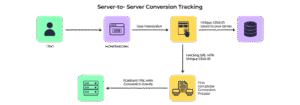
Server-side tracking is gaining traction as an alternative to browser-based methods. Bypassing iOS’s browser restrictions, it enables you to send event data straight from your server to websites like Facebook, Google Ads, or affiliate tracking services.

Although it requires additional setup work, it provides superior performance insights and cleaner attribution.

3. Prioritizing Contextual Targeting Over Behavioral

Contextual targeting has become popular again as behavioural monitoring has weakened. This entails displaying advertisements according to the website’s or app’s content (rather than the user’s behaviour).

For instance, promoting health products on fitness-related material or putting skincare affiliate links on a beauty site are examples of resurfacing. Old school? Perhaps. Successful? Of course.

4. Testing SKAdNetwork and Privacy-Safe Attribution Tools

Although its granularity is restricted, Apple’s SKAdNetwork is nevertheless helpful for affiliate marketing mobile apps. In the meanwhile, a number of affiliate networks are spending money on attribution models that respect privacy, whether they use probabilistic modelling, predictive analytics, or aggregated data.

It’s worthwhile to invest in tracking solutions that are compatible with SKAdNetwork if you’re working with mobile-heavy offers or advertising apps.

The Role of Affiliate Networks: Why You Need the Right Partner

The days of affiliate marketing being plug-and-play are over. To successfully navigate the post-iOS landscape, you need partners who are knowledgeable about it and can provide resources, advice, and assistance. Premium affiliate networks are useful in this situation.

Seek out networks that:

  • Provide sophisticated postback integrations or server-to-server (S2S) tracking.
  • Use privacy-compliant attribution to support campaigns that prioritise mobile.
  • Offer audience insights, fraud detection, and real-time analytics.
  • Assist you in expanding the sources of your traffic beyond Google and Facebook.

How vCommission Is Helping Affiliate Marketers Thrive in the Post-iOS Era

Traditional affiliate tracking and targeting may have been disrupted by Apple’s iOS privacy rules, but performance marketers are known for their ability to quickly adjust. Your success in this new era depends on selecting the appropriate technologies, data strategies, and partners who genuinely understand the changing situation.

vCommission, being one of the leading affiliate networks in India, has been actively assisting affiliates in making the shift to a privacy-first marketing environment.

We don’t just offer campaigns, we offer solutions:

  • For improved attribution in settings without cookies and with IDFA restrictions, use S2S (server-to-server) postback tracking.
  • Mobile ads that respect privacy and adhere to GDPR and iOS guidelines.
  • Dashboards for real-time data, so you can never guess the source of your conversions.
  • Above all, consulting support that guides you through new targeting techniques, monitoring technologies, and verticals in a world where the old rules are no longer relevant.

To put it briefly, vCommission isn’t merely responding to Apple’s upgrades; rather, we are developing alongside them, providing affiliate marketers like you with the technology, data transparency, and advice they need to remain competitive.

Therefore, embrace the change rather than fight it. Realign your efforts with more intelligent, privacy-first affiliate methods, rethink your targeting, and reimagine your tracking. 

If you’re ready to future-proof your affiliate marketing strategies, vCommission is the right place to be. Sign up now and start building campaigns that are built for the privacy-first era.

Categories
Affiliate Marketing

Nutra Media Buying Decoded: Create High-Converting Ads, Master Mobile Traffic & Stay Compliant

Have you ever paused your scrolling when you saw an advertisement for a “1 simple trick to melt belly fat”? Yes, we all have. That’s the magic of properly executed Nutra media buying campaigns. 

Welcome to the fast-paced world of Nutra marketing, a thriving affiliate marketing industry where products like sleep aids, testosterone boosters, weight reduction pills, and health supplements are the most popular items on online stores.

A wide range of wellness products created from natural ingredients is referred to as “Nutra,” short for nutraceuticals. Examples of these include vitamins, herbal extracts, functional meals, and over-the-counter medications that promote improved health and lifestyle objectives. There is a Nutra product for almost every need, from athletes wanting performance boosters to regular customers seeking improved sleep or radiant skin.

And this sector is booming for precisely that reason. As more individuals look to the internet for alternative wellness products and natural health treatments, Nutra has emerged as one of the most popular and lucrative affiliate marketing categories. The audience is worldwide, the margins are high, and the demand is steady. The catch is that it’s not as easy as running an advertisement and waiting for the sales to come in. Strict ad platform restrictions and creative compliance are only two of the particular difficulties that come with Nutra media buying.

We’ll explain how to conquer Nutra media buying in this article, including how to create click-worthy advertisements, optimise mobile-first funnels, and, above all, stay compliant to prevent your campaigns from being shut down.

Therefore, Nutra is a goldmine that is just waiting to be discovered if you’re a media buyer or affiliate marketer trying to scale high-ROI campaigns. Nutra delivers the ideal balance of widespread appeal and substantial compensation, from mobile-first funnels that convert like crazy to swipe-worthy advertisements that encourage impulsive clicks. But in order to truly prosper, you must become an expert at media buying while adhering to stringent ad platform regulations. You’re in the perfect place if that sounds like your next big opportunity.

What Makes Nutra So Irresistible (and So Risky)?

Quick solutions, attractiveness, and health are the three areas of human psychology that Nutra delivers. Who doesn’t want six-pack abs, improved sleep, and radiant skin without having to spend three hours at the gym?

The hitch is that this emotional draw is accompanied by intense scrutiny. TikTok, Facebook, and Google all have stringent rules for advertising health-related goods. You run the risk of being banned or, worse, blacklisted if you make even one incorrect move, such as making an unfounded benefit claim, posting a dodgy before-and-after photo, or making an overstated claim.

In short: high rewards, higher risks. That’s why smart Nutra media buyers know how to ride the line between attention-grabbing and compliance-safe.

Swipe-Worthy Ad Creatives: The Science of the Scroll-Stopper

Ads for Nutra are more than just eye-catching headlines. They are deliberately designed to arouse feelings of urgency, desire, and curiosity without drawing attention to themselves.

Top media buyers are aware of the following:

  1. The Hook Is Everything

Because viewers only have a few seconds before scrolling past, the introduction of your advertisement needs to capture their interest right away. Among the best methods for doing this? Pose a query that piques interest or deals with a typical problem. For instance:

  • “Why is this fruit banned in the U.S.?”
  • “Doctors hate her for revealing this wrinkle-fighting secret!”
  1. Show, Don’t Just Tell

Consider before-and-after photos (within compliance restrictions), films of people applying the cream, or recordings of them putting droplets under their tongue. User-generated content (UGC) in the vein of TikTok performs crazily well here.

  1. Social Proof is Gold

Put those 5-star reviews on top of them, add client endorsements, or ask influencers to discuss “what worked for them.” People have faith in other people.

  1. Keep It Native

In Nutra, native advertisements that are integrated into a website’s content perform well. Instead of shouting “AD!” they mutter, “Psst… this might help.”

Successful ad formats? Consider advertisements like “A Mom’s Journey to Better Sleep After 40” or listicles like “5 Supplements You Didn’t Know Your Body Needs.”

Mobile Wins: Because Your Audience Lives on Their Phones

Nowadays, mobile devices account for more than 80% of Nutra traffic. You’re losing a lot of money if you don’t optimize for that audience that is constantly on and thumb-scrolling.

To win mobile-first, follow these steps:

  1. Make Sure Your Landing Page Loads Fast

Bounce rates increase dramatically if your page takes longer than two seconds to load. Utilize designs that are lightweight and reduce the size of photos without sacrificing quality.

  1. Tap-Friendly Design

Buttons should be fat-finger-friendly. No tiny “Buy Now” CTAs hiding in the corner. Also, make sure your checkout flow is as short as possible.

  1. Language That Feels Native

The advertisement is in English, yes. Does it, however, sound like the speech of your target audience? Make your creatives age- and region-specific.

Traffic Channels That Actually Convert

For the sake of simplicity, several websites and ad platforms prohibit Nutra advertisements due to their stringent policies about content related to health. Platforms such as Google, Facebook, and TikTok may restrict Nutra items that make claims regarding weight loss, anti-aging, or energy enhancement that aren’t supported by substantial data.

These platforms aim to shield users from inaccurate or deceptive health information. They have strict guidelines for Nutra advertisements because of this, and if you don’t follow them, your ads may be rejected or, worse, your account may be banned.

1. Native Ads (Taboola, Outbrain, Revcontent)

Native ads are a popular traffic channel where your ads appear as part of the content on news websites, blogs, or recommendation widgets (like Taboola or Outbrain). Because these advertisements blend in with the website rather than seeming like typical banners, they receive more hits.

2. Push Ads

Push advertisements are alerts that appear on a user’s computer or phone without them having to visit a particular website. These communications feel personal and are difficult to ignore since they resemble alerts you could receive from apps or system updates.

Push advertisements can be very effective for Nutra offerings because they immediately capture attention and are excellent for presenting temporary sales or wellness advice. Additionally, they are affordable; you can reach a large audience without shelling out a lot of cash.

Push advertisements typically have a higher engaged audience because they are permission-based (users must opt in). Additionally, you have a larger chance of getting clicks because the message falls directly on their device. This is especially true if your material is succinct, easy to understand, and contains a compelling call-to-action, such as “Try this today” or “Get your free sample now.”

3. TikTok + Instagram UGC

Video content that is worthy of being swiped flourishes here. However, using influencers with specialised audiences and constantly checking your scripts for compliance are crucial.

4. Email + SMS Retargeting

Nutra’s covert tool. On their first visit, the majority of users do not convert. Use testimonials, deals, and instructional materials to retarget them.

5. Search Arbitrage

Purchase inexpensive traffic from Yahoo or Bing, reroute it to a post that follows SEO best practices, and then send it to your Nutra offer. It merely requires finesse; it’s not dead.

Staying Out of Trouble: Compliance Isn’t Optional

We understand how attention-grabbing terms like “one easy trick” or “doctor’s secret” might be. They are well-liked in Nutra advertisements because they pique interest and encourage clicks.

The issue is that you could have major issues with ad platforms if you use these kinds of terms without carefully considering the promises they make. By “using it loosely,” we imply making audacious claims without supporting evidence, such as promised cures or immediate outcomes. Platforms like Facebook, Google, and TikTok may reject your ads or possibly suspend your account because that raises a serious red flag.

Therefore, obviously, attention-grabbing headlines are effective, but they must adhere to reasonable and legal guidelines.

The truth about Nutra compliance is as follows:

1. Don’t Promise Miracles

Steer clear of terms like “cure,” “guaranteed results,” and “instantly.” Choose “may support,” “could help,” or “based on studies” instead.

2. Before-and-After? Tread Carefully

If you have to use them, be honest and include disclaimers. Avoid Photoshopping or using deceptive images.

3. Watch Those Testimonials

They have to show normal outcomes. Not everyone will lose thirty pounds in two weeks just because one person does.

4. Country-Specific Ads

In Germany, something that is acceptable in India could not be. Always use geography to localise your statements and creatives.

5. Include Trust Badges and Disclaimers

To evade scrutiny as well as to increase credibility. Although legal copy isn’t glamorous, it keeps you alive.

Master Nutra Media Buying with Smart Strategy

Let’s face it, purchasing Nutra media might feel like balancing on a tightrope. You want traffic that scales, mobile funnels that convert, and creatives that make people stop scrolling. However, if you engage with untrustworthy networks or fall into compliance traps, all of that might come apart.

Working with an reliable partner like vCommission is therefore not just wise, but also necessary.

Everything Nutra media buyers require to succeed in 2025 is compiled by vCommission:

  • Nutra’s premium, high-EPC products are designed for Tier 1 and Tier 2 markets.
  • Performance-driven funnels and landing pages optimised for mobile
  • Compliant, pre-approved creatives that keep you out of ad jail
  • Advanced tracking to keep an eye on each conversion, lead, and click
  • Global reach through regional efforts in Europe, Asia, and Latin America
  • Above all, committed affiliate managers who receive Nutra

They assist you in creating lucrative, long-lasting Nutra campaigns that you may grow without burning out or facing bans, in addition to making offers.

In a sector as complex and cutthroat as Nutra, your partners can make the difference between winning and losing. Therefore, let vCommission take care of the backend—compliance, payments, support, and scale—while you concentrate on making mobile-friendly advertising and making them swipe-worthy.

Are you prepared to begin scaling and to quit speculating?

Allow vCommission to assist you in converting that traffic into measurable outcomes.

Take your Nutra marketing from dangerous to unstoppable by signing up with vCommission now.

Categories
Affiliate Marketing

Mastering Push & Native Ads for High-Intent US Lead Gen Offers: 2025 Trends & Performance Benchmarks

Have you ever had the impression that you’re receiving a lot of clicks but very few actual leads? As if you’re spending a lot of money on advertising campaigns and seeing them light up dashboards, but the conversions are simply not happening? You’re not alone, and if you work in the fiercely competitive lead generation market in the United States, you are all too familiar with this battle. The good news? Push alerts and native advertising, two frequently underappreciated ad forms, present a new chance to change things in 2025.

Push and native ads are subtly making a huge comeback, while paid search and social ads still have to contend with growing CPCs, platform limits, and tracking restrictions. For a fraction of the price, astute performance marketers are already using these channels to capture high-intent leads. When properly implemented, these ad forms are not just reasonably priced but also strong, scalable, and unexpectedly engaging.

This blog is your guide to handling push and native advertising in 2025, regardless of whether you’re targeting homeowners in Florida, insurance searchers in Texas, or seniors searching for Medicare supplements throughout the country. We’re delving into performance standards, trends, and optimization techniques.

So, What Exactly Are Push Ads and Native Ads?

Let’s quickly go over the fundamentals before moving on to strategies.

Push ads are alerts that show up on a user’s desktop or mobile device even when they aren’t actively surfing. They are straightforward, up-to-date, and ideal for attracting immediate attention with offers that are time-sensitive, such as free quotes or consultations.

Conversely, native advertisements are integrated into news or publisher websites’ content feeds. They resemble standard articles but direct readers to funnels, such as pre-sell pages or quizzes, which makes them perfect for offers that require education or trust-building.

Push is scalable and quick. Native is interesting and nuanced. The secret to converting clicks into quality leads in 2025 is to become proficient in both.

The Smart Play: Combining Push and Native Ads

The dual-format strategy, which uses native for depth and push for volume, is one of the most intriguing concepts for 2025. While native ads cultivate warmer prospects and increase LTV, push ads provide instant traffic and early lead volume.

Push ads, for instance, can be used by a financial services company to direct consumers to a short-form lead capture page where they could check their credit score. They can also publish native articles informing readers on how enhancing their credit can lead to loan approvals. Email or perhaps another push notification campaign is used to segment, retarget, and upsell those leads over time.

When combined, push and native ads can help you reach more quality leads and scale more quickly. They become a potent tactic for any lead gen marketer when paired with the appropriate tools, such as tracking, segmentation, and lead scoring.

Native vs Push: Which One Wins?

Honestly, it depends on your campaign goals, budget, and funnel complexity.

Criteria Push Ads Native Ads
Best for Fast traffic, quick opt-ins Long-form storytelling, trust-building
Average CPL Lower ($5–$12) Higher ($8–$15)
Creative fatigue Fast Slower with variations
Funnel type Short-form, lead-gen pages Advertorials, quizzes, multi-step funnels
Lead quality Moderate Higher when qualified

Pro tip: Use push ads for volume and native ads for quality, especially if you’re running a dual traffic strategy and need scale without sacrificing LTV.

How to Optimize for High-Intent Leads in 2025

Now that you’ve got the formats down, here’s how to fine-tune for intent:

1. Creative Hooks That Match the Funnel

Native headlines like “This 59-Year-Old Unlocked $25K in Benefits—Here’s How” or push titles like “You May Qualify for Free Dental Insurance” are purpose clues rather than clickbait. Align your creatives with the user’s motivation for converting.

2. Pre-Qualifying Questions

Make use of lead forms that include screening questions about homeownership, insurance status, age, and income. In addition to enhancing quality, this helps provide your retargeting pool with accurate data.

3. Smart Bidding Strategies

Use systems that provide micro-conversion events (such as scroll depth or quiz completion) or CPA-based bidding to ensure that you are paying for intent rather than just clicks.

4. Retargeting with Email + Push Combos

Using native funnels to collect emails? Users can be added to a push list. Not a lead but a click? Within 24 hours, retarget them with a reminder push.

2025 Trends: What’s Hot (and What’s Not) in Push & Native Advertising

Push and native aren’t just surviving in 2025; they’re changing. Performance marketers are using these forms with far greater intelligence, speed, and intentionality this year. The days of “prayer and prayer” have passed. These days, platform behaviour, context, and personalization are crucial.

The move towards hyper-personalized communications is one significant trend in push advertising. Ultra-specific hooks, like “Texas Homeowners Could Save on Solar with This Simple Form,” are replacing broad, generic content like “Check Your Loan Eligibility.” Better click-through rates and, more crucially, stronger leads are being produced via behavioural segmentation, device-specific copy, and geotargeting. Due to users’ increased relaxation and propensity to interact during downtime, delivery windows in the evening and on weekends are also showing promising results.

The largest trend in native advertising is the use of long-form content channels. Showing a link to a landing page and a teaser headline is no longer sufficient. These days, the most successful advertisements incorporate multi-step experiences that captivate people before they ever ask for information, such as quizzes, personal narratives, or articles based on data. To maintain high engagement without creative fatigue, we’re really witnessing an increase in AI-assisted headline testing and dynamic content rotation on native platforms.

The increasing focus on targeting that complies with privacy regulations is another significant trend in both formats. Marketers are turning to contextual targeting and first-party data, such as retargeting based on quiz completions or landing page scroll depth, as third-party cookies become less common.

Performance Benchmarks: What “Good” Looks Like in 2025

Knowing what KPIs to target is crucial when running push and native efforts, and fortunately, this year’s figures appear to be encouraging.

Push Ads

It has been demonstrated that push notifications have very high engagement rates. Retail verticals are experiencing an average CTR of about 2.97%, with iOS devices delivering 2.48% and Android smartphones delivering 3.01%, according to Business of Apps.. If you’re reaching that 2% CTR, this works out to roughly $10 for 20,000 impressions at a normal CPM bid of $0.01. These numbers and actual campaign data show that, when combined with optimised funnels, U.S. lead-generation campaigns typically generate CPLs of $5–$12 and lead-to-qualified rates of 15%–25%, according to Business of Apps, Pushhubnet, and more.

Native Ads

Standard display advertising continues to lose ground to native formats. According to Zebracat, native advertisements perform better at 1.13% CTR than display ads, which average 0.71%. With strong engagement from people who are actively reading material, other case studies, such as MVF’s, indicate that CPCs on native platforms can be up to 7× less expensive than on social media. This puts CPLs in the $8–$15 range in a typical high-intent vertical, with lead-to-qualified ratios typically ranging from 18–30%.

Best Practices for Winning at High-Intent Lead Generation

Eliminating shortcuts is crucial if you want push and native to be effective for lead generation in 2025. These are tactical instruments, not panaceas. The top marketers are converting clicks into commissions in the following ways:

First, align your creatives with the level of your funnel. Be bold and direct while addressing cold audiences on the push. headlines that read, “You Could Be Eligible for Free Dental Care” or “Low-Credit? “Check Your Loan Options in 60 Seconds” piques interest and promotes prompt interaction. Use the storytelling method for natives. The headline “This 59-Year-Old Saved $300 a Month on Health Insurance—Here’s How” seems like a personal breakthrough. Telling a story that flows organically into your funnel is more than just selling a service.

Second, rather than being a barrier, utilize pre-qualification as a tool for conversion. This stage rejects low-quality leads and mentally commits visitors to the journey, regardless of whether it’s a straightforward 3-question quiz or a form that requests information like age, ZIP code, or insurance status. When qualified users believe they have already begun, they are much more likely to finish the next step.

Third, keep a close eye on everything and optimize thoroughly. To determine what is effective and double down, use device-level data, event-based attribution, and pixel tracking. Significant changes in CPL or conversion rate might result from minor adjustments to the creativity, delivery schedule, or CTA copy.

Lastly, experiment creatively while optimising ruthlessly. Avoid becoming overly connected to your first successful headline. Rotate, retest, and continue to evolve in response to the results. What was successful in January might not be so in July. The most successful campaigns are responsive, flexible, and performance-driven.

Final Take: Why Push & Native Are the Future of Lead Gen 

The world of lead generation is changing quickly, and those that can adjust will succeed in 2025. Push and native ads are now essential components of every successful plan and are no longer merely substitutes for traditional traffic. When combined, they provide the ideal balance of clicks and conversions, speed and depth, and scalable volume with high-quality leads.

However, it takes more than just traffic to run these campaigns properly. Strong offers, well-designed funnels, precise tracking, and a thorough comprehension of the factors influencing high-intent behaviours are all necessary. vCommission can help with that.

By giving partners access to premium CPL offers, pre-tested creatives, and a tracking infrastructure that eliminates uncertainty, vCommission is assisting them in mastering the push and native ecology. Our affiliate managers collaborate with you to convert unqualified traffic into qualified, revenue-generating leads, whether you’re scaling an already-existing campaign or trying something new.

Now is the moment to take action if you’re prepared to quit chasing pointless clicks and begin turning genuine intent into income. You’re not just keeping up with the trends in lead generation in 2025 when you have vCommission as your growth partner; you’re setting the standard. We can assist you in making every click matter, whether you’re a brand trying to scale quality leads or access performance-ready funnels. Together, let’s develop.

Categories
Affiliate Marketing

Live Commerce Meets D2C: Leveraging Instagram to Drive Conversions and Scale

You’re viewing a live stream on Instagram. The host is positive, sharing personal anecdotes, showcasing a skincare kit, and offering temporary coupon codes. People are leaving comments. When someone enquires about the ingredients, others respond, “I just bought it!” Without a sales funnel, pop-up, or follow-up email, a product is sold in real time. That’s how Instagram Live works! 

Additionally, D2C brands now use it as a revenue-generating and community-building tool rather than as an experimental strategy. Instagram is the most appealing platform for the fusion of commerce and content because it combines social proof, influencer credibility, and live video to create frictionless conversions. To remain competitive in 2025 and beyond, B2B professionals who engage with D2C brands, whether in marketing, affiliate relationships, or performance analytics, must know how to take advantage of this market.


Why Instagram Live-Shopping Works So Well for D2C Brands

Instagram Live has evolved from a light-hearted social media tool to a vital platform for commerce, particularly for direct-to-consumer (D2C) firms. Its unadulterated, real-time quality is what makes it appealing. There isn’t a high-end studio or well-written advertising. Just a product, a person, and a group of prospective customers all interacting at once. The magic happens there, and that’s also when strategising starts.

The first thing any direct-to-consumer firm trying to use Instagram Live to boost sales must understand is that this isn’t broadcasting. Commerce is ingrained in its interactive content. The host transforms from a spokesperson into a closer, educator, and entertainer all at once. Whether it’s a skincare specialist conducting a Q&A, a micro-influencer conducting a live unboxing, or a business creator outlining product benefits, the focus is always on establishing a two-way dialogue. A degree of trust that static advertisements just cannot equal is established by this dynamic engagement.


Building Pre-Session Momentum and Driving Live Engagement

Just as important as the content you intend to present is the build-up before you ever press the “Go Live” button. Every live-shopping session should be treated with the same enthusiasm as a small-scale product launch or special occasion. You can’t just show up without warning and hope people will come. The room must be warmed up.

A few days beforehand, start promoting it by posting countdowns on Stories, sending out teaser emails, teasing it with influencer shoutouts, and arousing curiosity. That kind of pre-live excitement is what motivates people to actually turn up and remain engaged in today’s world of endless scrolling and vanishing attention spans. And the work doesn’t end when you go live. Real-time shoutouts, organic storytelling, and product demos that demonstrate how your product works in real life rather than merely showcasing its capabilities can help you maintain the momentum. Make it feel more like a hangout where buying is a joyful aspect of the experience rather than a sales pitch.

The utilisation of exclusivity and urgency is what really sets successful Instagram Live-shopping sessions apart. First-come, first-served coupon codes, product debuts that are exclusive to live viewers, or limited-time deals that are dropped during the stream can all significantly boost engagement and conversion rates. A passive observer becomes an engaged buyer because of this. Not wanting to miss out on the product is more important than simply viewing it.


Timing, Talent, and Authenticity: The Holy Trinity of Live Success

Another important but frequently disregarded element is timing. Streaming live during peak audience engagement greatly increases engagement and viewership. Weekends and evenings are typically high-engagement times for many D2C brands; however, this varies by vertical. The correct people will see live-shopping sessions at the right moment if Instagram analytics are used to identify peak hours.

Furthermore, it is impossible to exaggerate the importance of authenticity. Instagram audiences are extremely observant. They are able to distinguish between a scripted and real host. For this reason, in addition to having product knowledge, live-selling hostesses need to be at ease on camera, able to manage live queries, and adept at maintaining a positive attitude. When chosen properly, influencer collaborations can increase live session traffic and trust. The effectiveness of influencer-led live-shopping is especially high because audiences are more inclined to interact with someone they already follow and appreciate.


Repurposing Content and Extending ROI Post-Session

Another strategic layer that progressive D2C marketers are employing to boost outcomes is post-session content repurposing. One 30-minute Instagram Live can be included into FAQs, carousels, and reels that encourage interaction and sales long after the live event concludes. This guarantees that the material produced doesn’t disappear at the end of the session but instead becomes a part of a longer-term ecosystem for branding and sales.

In this area, a number of direct-to-consumer brands are already at the forefront. Glossier and other beauty and wellness brands have transformed live product demonstrations into personal brand interactions. Try-on sessions are a real-time way for fashion-forward players like Fabletics to showcase fit and flexibility. Lifestyle companies like MyMuse are also successfully using humour, personality, and product storytelling in the Indian market to increase sales and cultivate a devoted following. Although the tactics may vary, the fundamental idea is always the same: conversions are influenced by value, urgency, and authenticity.


Measuring What Matters: KPIs That Define Live-Commerce Success

Another essential element of an effective Instagram Live-shopping plan is measurement. Merely looking at the quantity of live viewers is insufficient. Additionally, brands should monitor the number of people who watched the replay, utilized the exclusive promo codes, clicked on purchase links, or left comments. Brands can now immediately link live sessions to revenue outcomes using tools like Instagram Insights, Google Analytics, and affiliate tracking platforms. This gives marketing and performance teams the information they need to support future live-commerce investments.


Last Shots – Why Instagram Live Is Shaping the Future of D2C Sales?

With the growing popularity of live-shopping, it’s becoming more and more obvious that Instagram Live is a powerful sales tool rather than just a flashy new marketing tool. Live-shopping provides a potent combination of community-building and conversion for direct-to-consumer (D2C) marketers that value emotional storytelling, direct audience participation, and frictionless shopping experiences. Nowadays, it’s more important to show up in real time with a voice, a face, and a value proposition that your audience can rely on than it is to broadcast polished material from behind a logo.

Live social commerce is the way of the future. On platforms they already use on a regular basis, consumers demand interactivity, authenticity, and immediacy. Instagram Live provides all of this, and the outcomes can be revolutionary if supported by a well-thought-out plan. However, a live-shopping campaign’s success frequently hinges on more than simply excellent content; it also needs accurate campaign tracking, smooth performance optimisation, and access to the relevant influencers. vCommission can help with that.

vCommission, is dedicated to promoting D2C products and assists partners in realizing Instagram Live’s full potential. vCommission transforms live content into quantifiable results by giving access to top-performing producers who have a track record of successfully live-selling, handling the technology underlying deep linking and real-time tracking, and enabling performance-based reward structures. With the support of pre-event buzz, influencer alignment, and post-live analytics that link views to revenue, their ecosystem enables direct-to-consumer (D2C) advertisers to go live with purpose.

Instagram live-shopping is the channel to watch if you’re prepared to abandon static product posts and conventional advertisements in favour of a dynamic, engaging, and really community-driven approach to selling. Additionally, you’re not just going live when vCommission is your strategic partner; you’re going live with a strategy, a goal, and the kind of performance analytics that propels genuine D2C growth.

Ready to turn your Instagram audience into paying customers? Start leveraging live-commerce campaigns that convert, with expert support and influencer partnerships that drive results.

Partner with vCommission today.

Categories
Affiliate Marketing

How Partners Can Monetize Pay-Per-Call Offers Through Multi-Channel Strategies

Remember when newspaper ads could drive sales with just one headline and a phone number? 

In today’s world, that just does not cut anymore, given our shrinking attention spans, and it is difficult to gain that trust. 

Because pay-per-call marketing offers real-time, trust-building conversations that convert considerably better than clicks, it is making a big comeback. To fully realise its potential, however, you need a clever multi-channel approach that reaches users wherever they are and encourages them to call.

Pay-Per-Call (PPC) advertising has developed into one of the most effective performance marketing strategies as of 2025. Why? Because a prospective consumer is typically prepared to make a purchase when they answer the phone. And such intention is genuine gold.

The hitch is that signing up for a Pay-Per-Call affiliate marketing alone is insufficient. You must use more than just simple traffic tactics if you truly want to unlock those high commissions. In order to generate high-quality calls that convert, multi-channel strategies combine a variety of offline and online marketing techniques.

This blog serves as a comprehensive guide for making money off of Pay-Per-Call campaigns through a variety of channels that are high in conversions. Whether you’re a media buyer, affiliate, or performance marketer, we’ll break down what scales, what works, and how to put everything together so that commissions keep coming in.

Why Pay-Per-Call Is Booming in 2025?

Before we dig deeper into the world of multi-channel strategies, let us understand why PPC campaigns are so hot right now. 

  • High Intent Leads: Callers are five to ten times more valuable than typical web leads since they are frequently prepared to make a purchase.
  • Real-Time Connections: Instant chats lower the friction of back-and-forth messaging and boost trust.
  • Offline and Online Play: Performs admirably in fields where a human touch is still important, such as law, insurance, home services, and healthcare.
  • Better Tracking & Attribution: You may now precisely link phone calls to particular advertisements, keywords, or even creatives thanks to contemporary call tracking tools.
  • To put it briefly, PPC is the conversion king and not simply another lead generation technique. However, even the best offers fail if they are not fed by the proper channels.

    What is a Multi-Channel Strategy in Pay-Per-Call?

    Using a variety of marketing channels, including search, display, social media, email, native advertisements, offline media, and even influencer marketing, to generate targeted phone calls to a business is known as a multi-channel strategy.

    The objective? Provide several points of access for prospective clients and direct them towards a single action: dialing that call.

    You diversify rather than depending just on one source of traffic (such as SEO or Google Ads). Why? Due to:

    • Different demographics live on different platforms.
    • Some niches convert better on mobile search, while others do well through Facebook.
    • Algorithms change, and diversification minimizes risk.

    Let’s now dissect the primary channels that pay-per-call advertisers now use.

    1. Paid Search Ads (Especially Google Call-Only Ads)

    You are losing out on money if you are not using Google Ads for your PPC offers.

    This is the reason search ads, especially call-only campaigns, are created. When users see your advertisement, they select “call” directly from the SERP rather than clicking through to a landing page.

    • Use highly commercially focused keywords, such as “auto accident lawyer in NYC” or “emergency plumber near me.”
    • We use advanced tools like Ringba and Invoca to set up conversion tracking, and later provide you with a detailed affiliate dashboard to monitor every call, click, and commission in real-time.
    • Since smartphones are used for the majority of calls, optimize for mobile.

    Why it works: You’re catching users right at the moment they need help, and giving them the fastest way to act.

2. Social Media (Organic + Paid)

Social media is now a great tool for generating phone calls, particularly when the offers are emotive or local.

“Tap to Call” CTA buttons are a great addition to Facebook and Instagram ads. These are excellent for:

  • Consultations in healthcare
  • Quotes for insurance
  • In-home services

Use testimonials, carousels, and movies to establish credibility before requesting a call.

Organic Tactics

  • Make TikToks or reels that highlight the benefits of your service.
  • In your pinned comments or profile, include your call tracking number.
  • Answer frequently asked questions live and encourage viewers to contact you for further in-depth assistance.

3. Native Ads & Content Marketing

Native ads are paid advertisements that seamlessly blend in with the form, feel, and function of the platform they appear on, making them look and read like regular content rather than traditional ads. When done well, they don’t feel like advertisements at all and instead become part of the user experience.

You can write articles with an instructional bent, such as:

  • “The Importance of Consulting a Lawyer Following a Fender Bender”
  • Do You Think Your Water Heater Is Killing You? When to Call an Expert: A Guide

Finish with a compelling call to action that includes your tracking number or a click-to-call button.

Bonus: Seniors or less tech-savvy customers who prefer phone calls over forms respond very well to native ads.

4. Email Marketing

Email marketing can be a sleeper hit for pay-per-call advertising, despite not being the most visually appealing channel. 

Assume you have created or purchased a list of potential customers in a particular market (such as home improvement or Medicare leads). Ask them to call right now for immediate answers rather than filling out a form.

Magic is the result of a strong subject line, a succinct, snappy email body, and a “Call Now” call to action.

Pro Tips: 

  • Schedule emails at busy times (e.g., legal in the mornings, healthcare in the evenings).
  • To monitor performance, use dynamic phone numbers.

When paired with other channels, such as generating opt-ins from social media or search, this strategy performs admirably.

5. SEO and Local Listings

Search Engine Optimisation (SEO) can develop into a viable strategy for earning Pay-Per-Call commissions without investing in advertisements if you’re looking at the long term.

Here is what to concentrate on:

  • Make landing pages that are extremely targeted for terms like “free case evaluation Miami” or “roof repair Bronx.”
  • To add click-to-call functionality to your Google listing, use schema markup.
  • To appear in the local pack results, register your website or brand on Google Business Profile.

Local SEO is powerful for verticals like: 

  • Locksmiths
  • HVAC services
  • Car accident attorneys
  • Pest control

Once your pages rank, calls can come in like clockwork.

6. Influencer & Niche Community Marketing

If you believe that influencers are just used by fashion brands? Rethink again.

Micro-influencers in the home, financial, and health sectors might get calls from devoted followers based on trust.

Consider a reputable influencer in elder care saying, “Call this number, I’ve personally screened them, if your loved one needs assistance enrolling in Medicare.”

The effect? Instant traffic that is ready to convert.

Try specialised forums like Quora, Reddit, or particular Facebook groups as well. Provide insightful responses along with a gentle call-to-action. Make sure it doesn’t seem spammy, though.

Why Multi-Channel Pay-Per-Call Works—And How vCommission Helps You Turn Calls into Commission

This is the most important lesson to learn from this guide: Successful marketers create whole ecosystems that generate high-quality calls from various directions rather than depending only on one channel. Every channel, including email blasts, Facebook advertisements, TikTok videos, native content, and Google search, has a distinct function in generating intent-driven phone calls that result in conversions.

However, you need more than just traffic to scale that kind of campaign. To ensure that every call is worthwhile, you need the appropriate resources, deals, and assistance. That’s precisely what vCommission is for.

As one of the most trusted affiliate networks, vCommission equips you with:

  • Specifically designed for high-converting geos like the US, premium pay-per-call campaigns are available in high-performing verticals like legal, home services, healthcare, and insurance.
  • You can precisely track each call back to its original source, be it a particular keyword, traffic channel, or campaign, with sophisticated call monitoring solutions like Ringba and Invoca.
  • With deep linking capabilities, you may drive consumers from blogs, native advertisements, or social media creatives to certain service flows.
  • Multi-Channel-Ready Support, providing campaign insights, creatives, and compliance advice on all of the main advertising platforms.
  • Devoted Partner Managers that actively assist you in testing, fine-tuning, and optimising across several touchpoints in order to maintain a robust and steady ROAS.

In 2025, how can one always succeed at promoting PPC offers?

You use many channels. You change up your approach. And you work with a partner like vCommission that provides you with the infrastructure and knowledge to scale them expertly in addition to giving you access to fantastic incentives.

Because those high-intent phone calls don’t just arrive, they convert when you have a multi-channel strategy and vCommission as your partner.

Are you prepared to convert calls into commissions? Get access to high-converting PPC ads, real-time tracking, and professional assistance to expand across many channels by partnering with vCommission right now. Now is the time to start making more intelligent money!