
Categories
Affiliate Marketing

Which Affiliate Marketing Verticals Are Outperforming in 2025

Affiliate marketing continues to be one of the most powerful ways to generate passive income in 2025. With the right vertical and the latest affiliate marketing trends, you can convert a side hustle into a full-time venture. According to Statista, the projected growth of the affiliate marketing sector is $17 billion as of 2025, and it is expected to grow to $40 billion by 2030. The icing on the cake? vCommission, the most preferred network for affiliates, is here to help you choose the right vertical by offering the best affiliate program across multiple niches.

In this blog here, we are going to concentrate on those affiliate marketing verticals that are performing well in 2025 so that you can leverage them to make big money.

Top 5 Affiliate Marketing Verticals You Shouldn’t Miss

Here are the five top-performing affiliate marketing verticals of 2025, all of which offer exciting opportunities for affiliates.

1. E-commerce

E-commerce has spread like wildfire in the past few years, and in 2025, it is still dominating the retail space across the globe. Be it B2C or B2B purchases, e-commerce is a highly profitable affiliate marketing niche. With numerous online shops such as Amazon, Shopify, and niche-based e-commerce sites having an affiliate program, it is highly probable to earn decent commissions in this niche.

Affiliates have the freedom to market sub-niches of e-commerce such as fashion, electronics, health, wellness, and even eco-products. High-ticket sales potential is enormous, and one can earn commissions from high-ticket products such as electronics, furniture, and luxury goods.

Market Size: According to Statista, the global e-commerce market is projected to reach US$5.89tn in revenue by 2029.

2. Travel

Travel suffered the worst impact of the pandemic, but in 2025 the industry is thriving and back to the way things were. Whether luxury travel, adventure travel, or ecotourism travel, traveling is a very profitable affiliate marketing vertical. With there being so many online platforms such as Airbnb, hotel booking sites, and travel agencies that all have best affiliate program, making a lot of money in this vertical is very simple.

Affiliates have the freedom to market sub-niches in travel such as budget travel, solo travel, pet vacationing, and sustainable tourism. There are high-ticket sale possibilities involved in travel affiliate marketing through airlines, accommodations, and package tours, meaning each time an affiliate makes a sale, he makes substantial commissions.

Market Size: According to Zion Market Research, the global travel market size has already hit the $11,39 trillion mark and is set to grow further.

3. Utility

The utility industry, consisting of essential services like electricity, water, natural gas, and sewerage, is the cornerstone of contemporary infrastructure. In 2025, this vertical is a profitable one, and it offers affiliate marketers lucrative opportunities. With increasing numbers of utility organizations embracing digital platforms and subscription models, affiliates have the opportunity to earn good commissions for promoting utility services like renewable energy solutions, smart home utility services, and energy-efficient products.

Sub-niches like solar power, water conservation systems, and green energy projects can be marketed by affiliates. Growing concern about sustainability and the incorporation of smart technology has led to demand for high-ticket purchases in the niche, opening doors to it being a revenue-generating pipeline for marketers.

Market Size: As per the utilities global market research, the market is expected to grow at a compound annual growth of 6.0 % by 2029.

4. Fashion and Beauty

The beauty and fashion vertical is one of the evergreen affiliate marketing trends. Regardless of any economic downturns, individuals will always want to look their best. This vertical offers a vast array of products ranging from skincare products to cosmetics to fashion. Even the global skincare market alone is estimated to be close to $190 billion by 2025, which is a highly profitable vertical, making it the future of affiliate marketing.

Fashion and beauty affiliates can promote everything from clothes and accessories to skincare routines and tips. The vertical receives repeat buys, which translate into an ongoing stream of income. YouTube, Instagram, and Pinterest are great places to use in selling fashion and beauty items and aesthetics, and from which affiliates can build a following and earn commissions.

Market Size: The beauty market is expected to reach approximately $580 billion by 2027 as per a McKinsey report.

5. Technology

With do-it-all-faster times, the tech world is among the most lucrative verticals in affiliate marketing. With the newest phones, gadgets, and software, technology just keeps growing, and customers are always looking for the next greatest thing. As per Statista, the demand for mobile applications alone will reach $673 billion by 2027, offering a humongous opportunity for affiliates.

SaaS (Software as a Service), VPN services, and security software are just a few of the sub-niches that affiliate marketers in this industry might target. SaaS solutions, for example, can have large commissions (up to $500 per transaction), which makes this a very lucrative market. There are many of chances to make money from your platform if you’re interested in tech products.

Market Size: The information technology spending is expected to exceed $5.26 trillion worldwide, according to Gartner.

Other Important Affiliate Marketing Verticals

There are several other lucrative affiliate marketing niches that are thriving in 2025, including:

1. Finance and Wealth-Building

In the affiliate marketing trends, the finance and wealth building vertical is a perennial winner. The need for financial information, courses, and tools is higher than ever due to increased interest in crypto, real estate, and investments.

In 2025, affiliate marketers can focus on promoting products related to financial education, trading platforms, investment apps, and even cryptocurrency services. The wealth-building vertical is vast, and even if you aren’t a financial expert, there are many products that give significant rewards to affiliates who promote them.

Market Size: As per Research and Markets, the financial market will grow to $35.85 trillion in 2025.

2. Health and Fitness

Health and fitness are global subject matters making it the best affiliate program. By 2025, this market is still considered to be among the most profitable affiliate markets. Whether for weight loss drugs, exercise gears, supplements, or gym enrollment, individuals continually search for new methods of health improvement.

One of the most profitable sub niche in this vertical is the weight loss and anti-ageing niche, which is anticipated to keep on growing. Consumers are willing to pay for products that make them look and feel good, and it is a great vertical for affiliate marketers. Products like yoga mats, gym gear, and fitness software also offer profitable potential for affiliates.

Market size: The global healthcare market will reach $665.37 billion by 2028.

3. Online Education and Lifestyle

Online education is becoming increasingly important, especially in the post-pandemic era. The business is rapidly expanding, with offerings ranging from lifestyle coaching to skill development courses. Affiliates can sell lifestyle products, productivity software, self-help books, and online courses. 

Learning online is currently a mainstream reality for millions of people, and selling high-quality learning content has the potential to generate massive affiliate commissions. The vertical is equally diverse, permitting marketers to zero in on narrower verticals, be it professional development or self-development.

Market Size: By 2027, the online education market alone is forecasted to reach $53.13 billion.

4. Hobby and Leisure

Individuals operating in the hobby and leisure sector have a great opportunity to market very passionate verticals. Whether photography, gardening, or adventure sports, this vertical has a myriad of sub-niches that could give a significant return. 

For example, specialised hobby products like photography, music composition, or even vertical hobbies like home brewing and urban agriculture are gaining popularity. Micro-influencers who specialise in vertical hobbies are more likely to thrive because they have a vertical, highly engaged audience. 

Market Size: The number of users in the hobby market is expected to amount to 1.4bn users by 2029.

5. Pet Care

The pet industry is doing well with pet owners always eager to provide the best to their pets. Right from high-quality pet food and pet grooming to pet accessories and pet health care, there are quite a number of affiliate opportunities in this vertical. You can promote as a pet owner training accessories, health supplements, toys, and travel accessories for pets.

In reality, pet care is a fantastic vertical for affiliate marketers with animal passions. Selling quality products that enhance the lives of pets can cause affiliates to have a loyal audience and stable income. It’s a growing vertical because people overspend to treat their pets. 

Market Size: According to Bloomberg, the pet care market size will reach almost $500 billion by 2030, making it the future of affiliate marketing.

6. Sports

It is hard to overestimate how ubiquitous and valuable sports are. While some go to the gym to keep themselves in shape, others aim at developing muscles or simply playing soccer for entertainment’s sake. And even those, who don’t actually do much, easily make the gym into their New Year’s resolutions agenda. Sport makes up a part of an active lifestyle, and this market actively develops.

One of the latest affiliate marketing trend in this vertical is the increasing popularity of wearables. Smartwatches and fitness trackers are becoming the norm, and some new products, like smart rings, join the market. Home gyms are another trend – after the pandemic, people are more interested in having a space to work out at home.

Market Size: The sports industry is one of the growing affiliate marketing trends as the revenues surpass $2.65 trillion.

7. Food and Beverages

The food and beverage is the best affiliate program that accounts for around 10% of the world’s GDP. Subscription boxes, organic food subscription plans, and drink clubs have created an entirely new space for affiliates to earn money.

Affiliates are free to sell anything from organic treats and monthly wine subscriptions to gourmet coffees and ethnic gift food gift baskets. Owing to the vast product offering, affiliates access a vast group of customers readily and can profit through commissions for inexpensive as well as pricey merchandise.

Market Size: The global market size of food and beverages is projected to reach $7,464.2 billion by 2027.

Boost Your Affiliate Earnings with vCommission!

As we move towards 2025, the e-commerce, technology, travel, beauty, and utility verticals are turning out to be among the most lucrative verticals for affiliate marketers. If you are new to this game, selecting a vertical that you are interested in will give you better opportunities for success.

For those seeking a reliable affiliate marketing platform to access their earning potential, vCommission provides diverse opportunities across many verticals. Additionally, to succeed in the world of affiliate marketing you can follow the best practices published by IAMAI

Join vCommission today and start earning big with the best affiliate marketing programs!

Categories
Affiliate Marketing

The Best Practices for Affiliate Marketing in India – IAMAI Research Insights with vCommission

Affiliate marketing has been emerging as a very popular method of earning money online, especially in India. More and more companies are attempting to sell goods and services over the Internet, and affiliate marketing is a powerful way of acquiring new customers. With a spending of around 331 million USD, it is expected to grow to 420+ million USD in 2025. To ensure sustainable growth of affiliate marketing, the Internet and Mobile Association of India (IAMAI) framed and published the Best Practices for Affiliate Marketing in India.

These practices are a result of a year-long effort of a task force established by IAMAI in October 2023, comprising eight affiliate marketing companies, including vCommission. Understanding best practices in affiliate marketing will help marketers and businesses perform well in this competitive market. In this blog, we are going to discuss IAMAI’s research insights, its objectives, and the affiliate marketing best practices in India.

Introduction to IAMAI

The Internet and Mobile Association of India (IAMAI) is a not-for-profit industry association with 583 members, including Indian and multinational corporations and start-ups. IAMAI facilitates the development of India’s digital economy by advocating fair competition, progressive policy, and consumer trust and safety. Its mission involves policy advocacy, research, and support to start-ups with a focus that guiding the affiliate marketing industry towards transparency and ethics through the best affiliate marketing strategies.

Objectives of IAMAI’s Best Practices for Affiliate Marketing

IAMAI’s Best Practices for Affiliate Marketing are intended to promote the ethical and sustainable development of the industry. The major goals of affiliate marketing strategies are:

    • Standardisation: Providing transparent guidelines for effective and ethical campaigns.
    • Trust Building: Promoting communication and transparency among all the stakeholders.
    • Compliance Guidance: Assisting stakeholders in complying with legal and ethical processes.
    • Performance Optimization: Providing monitoring and optimising tools for campaign performance.
    • Risk Mitigation: Minimizing disputes with transparent contracts and terms.
    • Industry Growth Support: Assisting companies to expand in accordance with the industry.

Best Practices for Affiliate Marketing in India

Here are some of the important affiliate marketing best practices that have to be implemented by marketers and businesses:

1. Know Your Target Audience

Knowing the target market is the secret to successful affiliate marketing. It will allow you to choose the right products to sell and make your marketing a success.

    • Know the Demographics: Get to know where your audience is, what gender, age, and interests they possess. Having knowledge of your audience allows you to create focused campaigns that appeal to them.
    • Analyze Behavior: Identify how your audience acts—what they are looking for, what kind of content they engage with, and what problem they are attempting to solve. Targeting their problem-solving, you can create content that stands a greater opportunity to convert.

Tailoring your campaigns to your audience’s needs and interests is crucial for success in affiliate marketing.

2. Choose the Right Affiliate Program and Network

One of the crucial choices you will make as an affiliate marketer is choosing the appropriate affiliate networks and programs. Effective affiliate marketing strategies give you the resources, tools, and assistance you require to be successful. 

    • Partner with Trustworthy Networks: One of the top affiliate marketing networks in India is vCommission, which gives users access to premium campaigns and advertisers. Affiliates who work with a reliable network have access to top-notch programs, prompt payments, and knowledgeable support.
    • Examine the Commission Structure: Prior to entering any program, learn the commission structure. Various affiliate programs have different models of compensation including cost per click (CPC), cost per lead (CPL), cost per sale (CPS), or cost per install (CPI). Select the model that best suits your objective and provides the maximum opportunity for income.
    • Identify High-Converting Products: Choose programs with high-converting products. High conversion rate means that your marketing efforts have higher chances of converting to sales, and subsequently higher profits to you in the form of commissions.

Choosing the right affiliate marketing tactics will give you the highest possible chance of success and making profits.

3. Ensure Transparency and Compliance

In order to safeguard customers and prevent unfair practices, affiliate marketing is subject to many rules in India. It’s wise for affiliate marketers to abide by these laws in order to build reader trust and use ethical affiliate marketing tactics

    • Disclosure of Affiliate Links: Be truthful. Always make clear that you’re making use of affiliate links. Tell your audience that you’ll receive a commission if they purchase something through your link. This fosters trust and compliance with legislation such as the Consumer Protection Act 2019.
    • Avoid Deceptive Claims: Do not make false impressions about the products that you are selling. Be true to your review and offer only those products in which you have confidence. Deceiving your consumers can ruin your reputation and will cause long-term loss to your affiliate business.
    • Follow Data Privacy Laws: India’s Information Technology Act, 2000, and the coming Personal Data Protection Bill require affiliate marketers to protect the privacy and security of user information. Gather and keep data ethically.

Being transparent and compliant will establish you with a reputable relationship with your audience and prevent any legal complications.

4. Track and Optimize Your Campaigns

It is essential to monitor and measure the performance of your affiliate campaigns. If you don’t monitor, you won’t know which campaigns are performing and which are not without monitoring. IAMAI’s report highlights the importance of leveraging analytics tools to monitor and measure all key metrics and make informed decisions.

    • Use Tracking Links: All affiliates should utilize different tracking links so that clicks, conversions, and sales can be tracked. This way, you can see directly which marketing channels are producing outcomes.
    • Monitor Analytics Intermittently: A mere campaign setup is not enough. Monitor your performance intermittently using the help of analytics tools. With the help of metrics like click-through rate (CTR), conversion rate, and average order value (AOV), you can identify the areas of improvement.
    • Split Testing: Test various strategies and discover what works best. Headline, image, and call-to-action A/B testing can enhance your campaigns and increase conversion rates.

Tracking and analytics will help you learn about your audience’s behaviour and improve your affiliate marketing campaigns with time. 

5. Create Engaging and Authentic Content

Quality content is the backbone of any successful affiliate marketing campaign. Whether you are writing blog posts, videos, or social media updates, the content that you use to promote your affiliate products is the deciding factor that makes the conversions.

    • Provide Authentic Reviews: Provide authentic, quality reviews of the products you’re selling. Say what you know about them, point out advantages as well as disadvantages, and offer authentic suggestions. Your visitors will be grateful to you for this because it might generate more confidence and conversions.
    • Create Helpful Guides and Tutorials: Aside from reviews, creating guides and tutorials on how to apply the products that you are providing can be helpful to your customers. For example, in the event that you are providing a device, you can create a tutorial on how to use it in the most effective way possible.
    • Leverage Video Content: Video is a precious asset for conveying to your audience. You can make video tutorials, reviews, or unboxings for showing off the products which you are reviewing. Video content performs better with enhanced engagement as well as possibly enhanced conversions.

The more and higher-quality content you produce, the higher is the chance that your crowd will have faith in your site and buy through your affiliate link.

6. Optimize Your Campaigns for Mobile Users

Mobile usage is at its highest-ever level in India. Because most internet users access the internet via mobile devices, affiliate marketers must ensure that their content is responsive.

    • Responsive Websites: Make your landing page or website responsive. This indicates that the page should load quickly and that the layout should be compatible with various screen widths.
    • Quick Loading Speed: Slow websites frustrate users and increase the bounce rate. To ensure that users have a satisfying experience, make sure your website is optimised to load quickly.
    • Mobile-Friendly Content: You need to make sure that your emails, advertisements, social media posts, and website are all responsive. Conversion rates and user interaction may increase as a result.

You can prevent losing a significant portion of your audience by optimising for mobile and using other affiliate marketing tactics.

7. Test and Optimize Regularly

Affiliate marketing is a continuous process that requires preparation. If you want to increase your performance and remain competitive, you must be prepared to test and refine advertisements. 

    • A/B Testing: Try out various versions of your campaigns, e.g., changing headlines, call-to-action buttons, or even product descriptions. Testing will tell you what works and what doesn’t.
    • Learn from Analytics: Make better decisions by using the information you collect. For instance, alter the offer or promotion plan if a specific affiliate link isn’t doing well.
    • Stay Up-to-date: The world of Internet marketing is always evolving. Keep yourself updated with new trends, technologies, and techniques to keep your affiliate marketing campaigns fresh and effective.

Routine testing and optimisation will allow you to improve your campaigns and help ensure that you’re always optimising for the best possible results.

Best Practices for Advertisers in Affiliate Marketing

Just like affiliates, advertisers also need to implement best practices to ensure success through their affiliate marketing campaigns. IAMAI research picks out major best practices for different campaign formats including Cost per Visit (CPV), Cost per Lead (CPL), Cost per Sale (CPS), and Cost per Install (CPI).

      1. CPV Campaigns: Advertisers aim to drive traffic to their landing pages. They should use UTM parameters, auto-report, and segment the audience to ensure traffic is performing efficiently.
      2. CPL Campaigns: Advertisers compensate affiliates for generating leads. To ensure quality leads, designate payable and non-payable leads, real-time tracking, and a minimum campaign duration.
      3. CPS Campaigns: Advertisers reward affiliates for driving sales. Use real-time tracking and backend reporting to attribute correct sales.
      4. CPI Campaigns: This model focuses on driving app installations. Apply mobile measurement partners (MMPs) and properly set campaign objectives to deliver app installations.

These policies assist advertisers in inducing the most ad campaign optimization, achieving actual performance measurement, and obtaining more investment returns.

Drive Affiliate Marketing Growth with vCommission

Indian affiliate marketing is evolving rapidly, and it has very promising potential for businesses and marketers. Based on IAMAI’s research affiliate marketing best practices, you can create successful affiliate marketing campaigns that yield actual returns. Keep in mind that the key to success is affiliate marketing strategies like knowing your audience, selecting the finest affiliate programs, being open and honest, monitoring your progress, producing high-quality content, and optimising for mobile devices. 

One of the most effective ways to implement these tips for affiliate marketing success is by partnering with a leading affiliate network like vCommission. We provide useful tools, a variety of top affiliate programs, and great support to help you earn more while ensuring fair payments and transparency. Join vCommission today and start planning a successful year ahead in your affiliate business!

Categories
Affiliates

Data-Driven Decisions for Explosive Affiliate Marketing Growth

Data-driven strategies are essential in today’s digital world for assessing the effectiveness of affiliate marketing campaigns. The days are long gone when affiliates were promoting goods and services only on guessing or intuition. Now, affiliates need to base their judgments on data, to better understand their target audience, optimise their efforts, and boost conversion rates.

The internet has completely transformed the way customers interact with brands and purchase products. By leveraging analytics tools and employing a data-driven approach, affiliates can optimise their work and boost profitability. In this blog, we will discuss how a data-driven strategy can assist affiliates in increasing revenue and achieving success.

What is Data-Driven Affiliate Marketing?

Data-driven affiliate marketing is the use of actual data and analysis to drive campaigns. It is different from the guesswork used by traditional affiliate marketing as it allows marketers to make decisions based on customer behavior and performance metrics. Affiliate marketers are able to monitor conversions, clicks, and audience interests in order to be in a position to better tailor their marketing strategies. This leads to more accurate targeting, higher conversion rates, and a higher return on investment (ROI). 

Affiliates can use data to construct effective, targeted marketing efforts that appeal to their target demographic. Through vCommission’s robust affiliate dashboard, you get access to real-time reports that help you make informed choices and sharpen your strategy for better results.

Why Data Matters: vCommission’s Value for Performance Affiliates

Affiliates oversee several platforms, channels, and verticals concurrently. Campaign management becomes complicated as a result. The procedure is made simpler by vCommission. The software offers easy-to-use tracking features and transparent reports. Affiliates may concentrate on what actually influences performance and profit.

1. Better Targeting

Affiliates can get helpful information about user demographics, device types, and traffic sources with vCommission. They might make tailored advertisements that target the appropriate users at the appropriate moment by using these facts. Affiliates can target individuals who are already exhibiting interest or intent to purchase rather than promoting to a broad, general audience.

For example, if a user has engaged with a similar offer or visited a landing page multiple times, you can focus your efforts there. This kind of precision improves your chances of generating high-quality leads. In short, better targeting leads to better results, and vCommission helps make that possible.

2. Real-Time Optimisation

One of the key advantages of partnering with vCommission is the ability to obtain real-time performance information. You don’t have to wait days or weeks to find out if a campaign is successful. Real-time metrics such as click-through rate (CTR), conversion rates, and leads generated are displayed.

This immediate access lets you make quick adjustments. If an ad isn’t converting, you can change the creative, update your call to action, or shift your targeting. By making these changes instantly, you avoid wasting ad spend and stay on top of what works. With vCommission, affiliates are always equipped to optimise their campaigns on the go.

3. Smarter Budget Allocation

Affiliates may monitor which platforms, verticals, and campaigns are making the most money with vCommission. This facilitates the process of choosing where to invest your funds. You might focus more on what is working and less on what isn’t if you don’t allocate the same amount of money to each channel.

For example, you can adjust your ad budget if your analytics indicate that traffic from Instagram generates more conversions than traffic from YouTube. Allocating funds wisely like this increases productivity and returns on investment. These choices are made easier and with greater accuracy because of vCommission’s transparent reporting.

Key Data-Driven Affiliate Strategies with vCommission

Affiliates who use data well may scale more quickly and intelligently. You may use vCommission’s tracking and reporting features to fine-tune your campaigns and maximize earnings.

1. A/B Testing

A/B testing is a simple yet powerful way to improve performance. It involves running two different versions of a campaign to see which one performs better. Affiliates can test different headlines, images, CTA buttons, or landing page formats to see what drives more clicks and conversions.

vCommission supports this kind of testing by offering real-time data and performance insights. If you’re running a skincare product promotion, try one landing page with a discount and another with free shipping. vCommission’s reporting tools enable you to compare results quickly and choose the version that converts the best.

2. Analyzing Traffic Sources

Making wise decisions requires knowing where your traffic is coming from. Affiliates may determine which channels provide the highest money by using the comprehensive data that vCommission offers, which breaks out the sources of traffic.

With this knowledge, you may concentrate your efforts where they are most effective. You can adjust your budget if the data indicates that paid search advertising are generating more conversions than social media traffic. Affiliates don’t have to speculate thanks to vCommission’s tracking tools; they are aware of exactly what is effective and why.

3. Applying Predictive Analytics

Affiliates can remain ahead of market trends with the aid of predictive analytics. They can forecast what kinds of deals or verticals would do well in the future by looking at historical performance data. This enables them to schedule campaigns ahead of time and start them at the appropriate moment.

For instance, you can produce pertinent creatives and landing pages in advance if your past campaigns demonstrate a boost in sales of health and wellness products during the first quarter of the year. With vCommission’s access to performance trends across many verticals, affiliates may scale faster and act on them more readily.

4. ROI and Attribution Tracking

Knowing which parts of your marketing strategy are actually driving conversions is crucial. vCommission enables precise attribution tracking so you can see which touchpoints, such as blog posts, email newsletters, or paid ads, lead to the most conversions.

This data empowers affiliates to double down on the highest-performing channels and fine-tune underperforming ones. If email marketing generates more conversions than sponsored ads, you can reallocate your spending. You always have control over your return on investment because of vCommission’s transparent tracking, which simplifies performance analysis.

Conclusion

Data is more than just helpful in today’s cutthroat affiliate market. It is the cornerstone of more intelligent decision-making, more effective targeting, and improved outcomes. Affiliates may optimize their strategy, increase revenue, and enhance conversions by employing a data-driven approach.

With vCommission, affiliates are able to find high-converting channels, track user behavior, and track success. You may effectively build your campaigns and safely concentrate on what works if you have clear insights and precise reporting.

If you are looking to scale your affiliate marketing efforts with performance-focused support, look no further than vCommission!

Categories
Webinar

The Rise of Affiliate COD Ecommerce in India: Exclusive Insights from Our Webinar with Google

The evolution of the COD Ecommerce model in affiliate marketing has been revolutionary in the past few years. This trend has created a new wave of opportunities for both brands and affiliates, providing an efficient, profitable, and scalable means of generating sales and developing businesses. 

Recently, Parul Bhargava, Co-Founder & CEO of vCommission, hosted an insightful webinar with affiliate social featuring two professionals from Google: Shrey Kapoor (Affiliate Partnership Lead) and Gunjeeta Jaju (Affiliate Partnership Manager). The session, titled “Rise of Affiliate COD ecommerce,” explored the growing trend of COD in the Indian market and how affiliates can capitalise on it.

This blog takes you through the key takeaways from this session, highlighting the benefits for brands and affiliates, the proven profitability of the COD model, and how Demand Gen can further optimize campaigns. Let’s dive in!

The Birth of COD Ecommerce in India

India’s ecommerce ecosystem has been growing at a fast pace, with a distinct emphasis on the COD model. Although online payments initially became an obstacle for consumers, the entry of India COD ecommerce introduced a smooth trajectory for buyers to pay only after receiving their products. Not only did this minimise the fear of fraud, but ecommerce also became more popularised, particularly in smaller towns and rural regions where credit cards were not widespread.

Cash on delivery in ecommerce helps gain customers’ trust while increasing the company’s customer base. This was further supported by the increasing use of affiliate marketing to attract more customers. Affiliates could promote products via multiple channels and earn commissions on COD sales.

Advantages of the COD Model for Brands

India COD ecommerce has several benefits for brands. By having the products sold by affiliates, companies can expand rapidly and tap into more consumers without the expense of upfront marketing fees. How it works:

  1. Low Consumer Risk: Because the customer only pays once they have already received the product, consumers are protected against scam orders or non-payment by choosing cash on delivery in ecommerce.
  2. Ability to Access a Large Base: By leaving the promotional work on marketing through multiple platforms (social sites, blogs, websites) for affiliates, the brands get access to large bases that could not be covered otherwise.
  3. No Upfront Investment Needed: Conventional ad models require a payment upfront, but COD-based affiliate marketing enables companies to pay after the sale has been completed. This saves them capital and brings in higher profitability.
  4. More Leeway in Campaigns: Having fewer limitations with the Cash on delivery in ecommerce than other payment options present, brands have the freedom to try innovative campaigns, including video-centric campaigns, offer-based promotion, and bundles, to get sales.

Advantages of the COD Model for Affiliates

Affiliates have a lot to benefit from marketing COD ecommerce products. Among the major advantages are:

  1. Greater Profitability: The COD model provides an effective and profitable solution for affiliates. Since payment is made on delivery, affiliates are more assured of generating sales without fear of payment fraud or delay.
  2. Fewer Policy Problems: There are fewer payment dispute and rule conflict issues in the COD model compared to CPS models. This makes it easier for affiliates to optimise their campaigns without dealing with complex policies or compliance matters.
  3. Less Competition: Since the COD ecommerce model is relatively new in certain areas, there’s not as much competition among affiliates. This allows newcomers to establish a niche for themselves and begin earning commissions without having to deal with considerable competition from well-established marketers.
  4. Simple Tracking and Optimization: COD order tracking allows affiliates to track orders in real time. With transparency in order staging, affiliates can simply track orders from the moment they are ordered, confirmed, and shipped until the moment they arrive on the customer’s doorstep. Such transparency in India COD ecommerce facilitates the optimisation of campaigns and performance.

vCommission’s Breakthrough Solution for COD Ecommerce

vCommission offers a breakthrough solution for affiliate marketing, particularly for India COD ecommerce. Here’s what vCommission does differently:

  1. Direct Linking & URL Tracking: vCommission supports direct linking and transparent URL tracking, which means that affiliates can easily track sales and conversions.
  2. Sub ID Tracking: Sub ID tracking is available for affiliates to track their campaigns in detail through simple yet efficient sub ID tracking, which allows for improved management and optimization of their marketing campaigns.
  3. Order Staging: vCommission provides an open order staging system:
    1. Step 1: Order placed
    2. Step 2: Order confirmed & shipped
    3. Step 3: Order received 
  4. Fast Payment: vCommission provides fast bill processing, wherein affiliates receive their payments within 7 days after the delivery acknowledgement.

Three Key Affiliate Models for COD Ecommerce

Shrey Kapoor, during the webinar, elaborated on three key models that are popular among affiliates in the India COD ecommerce space:

  1. Shopify Site Model: This model focuses on creating simple ecommerce sites with 5-10 high-converting products. The approach is video-heavy, and affiliates typically target niche markets that respond well to visual content.
  2. Coupon/Promo/Comparison Sites for Search-Heavy Traffic: Affiliates targeting search-heavy traffic often create coupon websites that offer discounts or special deals. By incorporating cash on delivery in ecommerce as a payment option, these sites can effectively convert visitors looking for great deals into paying customers.
  3. Advertorial Style Pages (Video-Heavy): These pages focus on combining editorial content with product promotions. Video plays a key role in engaging the audience, making it easier for affiliates to drive action and sales.

These models allow affiliates to experiment with different strategies and target audiences more effectively. With the flexibility of video-heavy campaigns, affiliates can create compelling content that resonates with consumers and drives higher engagement.

Google’s Video Action Campaigns: A Game Changer for Affiliates

One of the most exciting takeaways from the webinar was the power of video action campaigns (VAC) in driving conversions. Shrey Kapoor discussed how VAC leverages Google and YouTube’s tech capabilities to help affiliates reach their target audience, drive action, and measure success. The platform enables affiliates to run video-driven campaigns that can be automated for greater efficiency.

Shrey said that VAC campaigns will soon be upgraded to Demand Gen campaigns in April 2025. Demand Gen combines Google’s search engine and YouTube’s advanced technologies, making it easier for advertisers to create and convert demand. 

Shrey shared that advertisers who added Demand Gen to their search or Performance Max campaigns saw an impressive 14% increase in conversions on average.

Some of the additional features that make Demand Gen more powerful than VAC for affiliates include:

  1. Channel Control: Affiliates can control where their ads appear, ensuring they reach the right audience.
  2. Image Ads: In addition to video ads, affiliates can include image ads to diversify their creatives.
  3. Audience Targeting: Lookalike segments allow affiliates to reach the most relevant audience.
  4. Maximising Click Bidding: The platform provides tools to optimise bidding strategies for better ROI.
  5. Creative A/B Testing: Affiliates can test different creatives to determine which ones perform best.
  6. AI-Generated Image Ads: Google’s AI can now generate image ads based on text prompts, allowing affiliates to create visually compelling ads quickly.

Demand Gen Best Practices for Affiliates

Gunjeeta Jaju took a deep dive into how affiliates can leverage Demand Gen to run successful campaigns. Here are some of the best practices she shared:

  1. Minimum Viable Requirements for Google Auctions: Build campaigns that meet the minimum requirements to serve in Google auctions. This ensures your ads will be shown to the right audience.
  2. Optimised Targeting: Use lookalike segments or optimised targeting to increase your chances of reaching the most relevant users.
  3. Bid and Budget: Set a daily budget of over $100 to enable your campaign to achieve maximum reach and performance.
  4. Creative Diversity: Utilize at least one image and horizontal and vertical videos to support different devices and ad formats.
  5. Conversion Tracking: Implement conversion tracking on every page of your website to monitor the success of your campaigns accurately. Additionally, using data-driven attribution (DDA) helps optimise conversions.
  6. Campaign Optimization: Allow for at least 50 conversions before exiting the learning phase. Also, limit bid changes during the campaign to avoid disrupting the process.

Landing Page Hygiene Guidance

Gunjeeta further emphasised the importance of landing page hygiene, including:

  1. Affiliates must ensure that their landing pages are well-designed and free from issues such as broken links or redirects, 404 errors or pages that don’t load properly, and inaccessible navigation.
  2. Ensure the domain owner and the paying entity match in the account.
  3. Have a detailed privacy policy page that includes all user data that is being collected.
  4. The website must have the name of the registered company along with an authentic address and phone number.
  5. A website should not be an exact replica of another website owned by the same or a different company.
  6. All the information on the footer should be clearly visible.
  7. Must-Have- Shipping Times, Return & Refund policy mentioned.
  8. Use corporate email IDs for all business-related communications.
  9. Include trademark symbols only if you have a valid certificate.
  10. Check that your Google Tag implementation is functioning properly.

Concluding Thoughts

India COD ecommerce growth is generating a treasure trove of opportunities for affiliates. Affiliates are well-positioned to benefit from this new market because of the low level of competition, the significant potential for revenue, and the effectiveness of tools like Google’s Demand Gen. Implementing best practices and keeping up with the latest technologies can assist affiliates in optimising their campaigns, constructing conversions, and maximising their revenue potential in 2025 and beyond.

This is the ideal moment for affiliates who want to be successful in this field to use the powerful tools provided by platforms like Google, optimise their landing pages, and embrace the potential of video-driven campaigns. 

Key Questions Asked in the Webinar

Q. What’s the basic structure for launching new campaigns?

Answer- Shrey Kapoor suggests that one should launch several campaigns for several products. Demand Gen allows you to upload all creatives to one campaign, and the system will optimise and test them automatically. If a creative does better, it gets promoted to a higher rank. With Demand Gen, most of the optimisation is done by the system.

Q. When you refer to company information, does it mean the company of the product?

Answer- No, Shrey explained that it’s not the company that produces the product but the owner of the domain and the paying account in the Google Ads account. The affiliate marketing campaign needs to be set as the affiliate as the paying account and the owner of the landing page.

Q. Do you recommend testing products with a $ 100-per-day budget for 2-3 weeks?

Answer- Shrey recommended that testing a product with a $100 per day budget is best to get sufficient data. For products with lower volumes of conversion, testing 2-3 products can provide better learning.

Q. Can we test Demand Gen for health products? Any restrictions?

Answer- Gunjeeta Jaju reaffirmed that any product’s vertical policy does not change. You must be careful to comply with the guidelines while running health-related campaigns. Health insurance addressed to the United States must hold a G2 certificate, though search campaigns could be used when moderately restricted health products are available, although differences might apply. 

Categories
Webinar

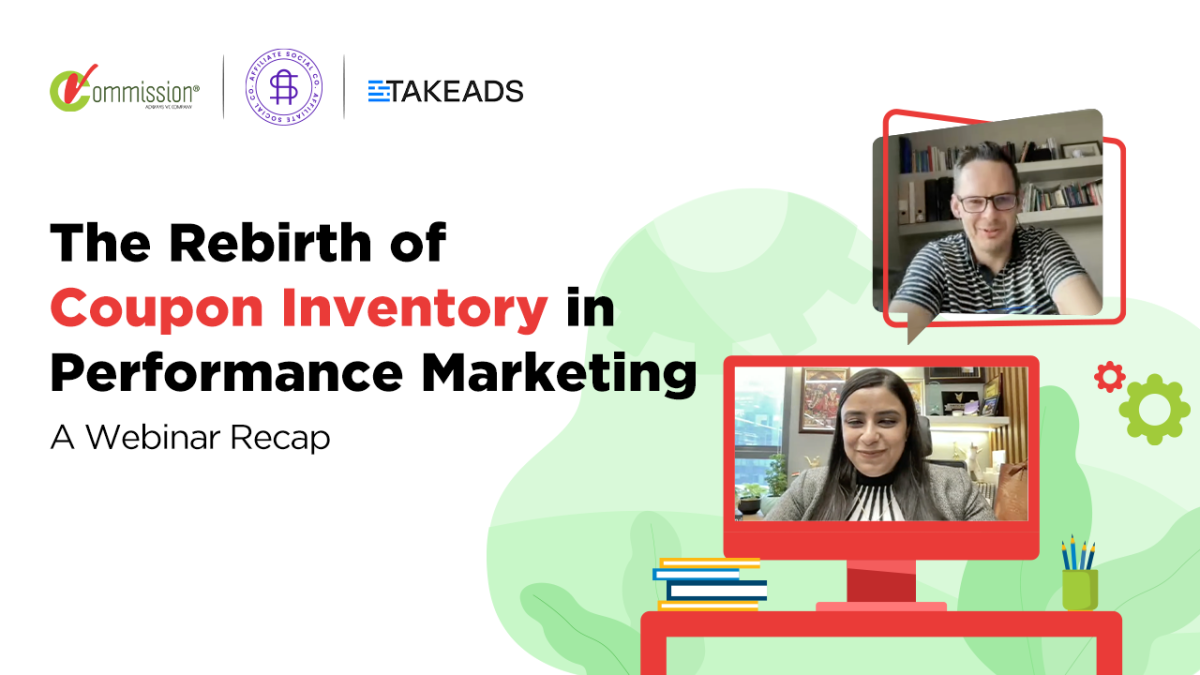
The Rebirth of Coupon Inventory in Performance Marketing: A Webinar Recap

Coupons have long been a popular tool in the world of performance marketing, and their popularity is on the rise once again. As the market continues to evolve, coupon code affiliate programs are gaining significant traction, offering brands and affiliates new opportunities for growth and engagement.

Parul Bhargava, the CEO and co-founder of vCommission, hosted an insightful webinar with the industry expert Paweł Mazurek, CEO of Takeads. Paweł Mazurek has spent more than 20 years working to expand European brands abroad and has added a wealth of knowledge to the discussion, especially on the current and potential future of coupon code affiliate marketing.

In this blog, we will discuss the wealth of insights Pawel shared about how coupons’ rebirth could change the performance marketing game.

The Changing Perception of Coupons

Paweł began by questioning the notion that coupons are archaic. Coupons have been avoided by many brands in the past, as they were afraid that they would cut their profits if they were overused or abused. Paweł argued that affiliate coupon codes could be an effective tool in the hands of a marketer if properly managed. 

He emphasised that coupons had to be incorporated into all phases of the customer journey rather than being relegated to the bottom of the sales funnel. They can be used strategically at each stage of the sales funnel, such as awareness, interest, consideration, intention, conversion, and retention.

It will help engage customers, drive purchases, and encourage long-term loyalty. “The biggest challenge with coupon code affiliate programs is their misapplication,” stated Paweł. Coupons can damage a brand’s reputation if they are fake, irrelevant, or outdated.

However, affiliate marketing coupon codes can increase awareness and conversion if applied correctly.

Benefits of Coupons in Performance Marketing

The popularity of coupon code affiliate marketing is not without its benefits. Below are some of the major advantages for brands and marketers:

  1. Cost-Effective Conversions: Coupons lower total acquisition costs by simplifying the buying process for consumers.
  2. Higher Consumer Interaction: Consumers seek out and interact with affiliate coupon codes offers, which creates greater interaction and, in turn, increased conversion rates.
  3. Improved Customer Retention: Providing special coupon offers to return customers can hold on to present customers and foster long-term brand loyalty.
  4. Enhanced Exposure: Coupon websites, particularly those involving integration with social networks, subscription to email lists, and search engines, can expose your company more.
  5. Higher Average Order Value: By providing a discount against a higher order volume, you may be able to raise the average order value (AOV).
  6. Improved Data and Tracing: Affiliate coupon codes and the users’ activity are tracked by companies, making it easier to gauge the needs of the target population and market to them more efficiently.

Creating a Better Coupon Strategy

Paweł went on to say that businesses usually abuse coupons by offering steep discounts, which reduces returns. Rather, he suggested that marketers focus on coupon distribution in a more controlled and targeted way. To make sure the discount is proportionate with the intention of the customer, key strategies encompass affiliate coupon codes monitoring and authentication, study of user behavior, and communication with the relevant service providers.

Important figures were also presented by Paweł, who pointed out that:

  1. Around 2 out of 10 consumers utilise coupon and deal websites to find new products
  2. 3 in 10 use social media data to influence new product purchases.
  3. 34% of American shoppers use social media platforms to find coupons. 
  4. In addition to social media, customers also use search engines, websites, rebate specific apps, and email subscriptions to discover coupons.
  5. On average, most online shoppers spend about 5-10 minutes searching for a coupon.
  6. These coupons were most likely to work about 10-30 percent of the time.

These results highlight the increasing need for affiliate marketing coupon codes, particularly in Western Europe and the US, where customers actively look for sales to help them make wise decisions.

The Secret to Successful Coupon Use

In order to get the most out of coupon marketing, Paweł and Parul talked about some key practices:

  1. Use Coupons Wisely: Utilize coupons only when required, and never give them throughout the year. Select the proper time and the proper product to give discounts that provide value.
  2. Choose a Reliable Provider: Brands must select reliable platforms and affiliates after careful consideration. It will ensure that affiliate marketing coupon codes reach the right people without any compromise on quality.
  3. Monitor, Validate, and Test: Monitoring coupon performance is important, and it is also important to delete expired or useless codes in order to retain credibility and responsiveness in the market.

To Sum Up

The comeback of coupon code affiliate marketing presents a special chance for affiliates and brands to increase conversions and foster deep consumer connection. When used carefully and intelligently, coupons can be a potent weapon that increases brand recognition, fosters consumer loyalty, and optimises returns, as Paweł Mazurek and Parul Bhargava emphasised in the webinar.

Businesses may develop effective campaigns that provide long-lasting effects by using coupons across the whole customer journey, deploying them strategically, and making sure they are relevant. Additionally, your discount promotions will continue to be trustworthy and successful if you apply sophisticated tracking tools, rigorous monitoring, and validation.

Whether you are a brand looking to expand your reach or an affiliate network looking to drive outcomes, vCommission possesses the right expertise and technology to help you thrive. vCommission is an affiliate marketing platform that allows affiliates to earn commissions by promoting products and sharing coupon codes. 

To learn more about affiliate marketing, read.. Affliate marketing guide for beginners.

FAQs

As the webinar concluded, Paweł and Parul answered some burning questions from the audience. Here are some key takeaways:

Q: Should a brand use generic or exclusive coupons for affiliate marketing?

Pawel: It depends on the brand and its objectives. If you’re looking to scale quickly, generic coupons might work, but always ensure that they’re valid and trackable.”

Parul’s Perspective: “For new brands looking to grow quickly, generic coupons can reach a wider audience. But exclusive coupons, when used correctly, can build brand loyalty.”

Q: What’s the best strategy—flat discount coupons or order-specific coupons?

Pawel: “If your goal is to increase average order value, order-specific coupons (e.g., above $100) work well. But make sure they’re targeted to the right audience.”

Parul’s Insight: “I concur with Paweł. It is all about recognizing your customer’s average order value. Target 30% higher value to improve conversions without overdoing it at the margin side.”

Q: When should affiliates start planning for event-based promotions such as Christmas or Black Friday?

Pawel: “The earlier, the better. We started calling our customers in October to be ready for sales in November. Providing sufficient time guarantees the promotion will be successful.”

Parul’s Perspective: “Preparation is key. We start early to ensure we have enough time to strategise and ensure the campaign is effective.”

Q: What is your opinion on coupon tracking, especially in the face of challenges like cookie tracking?

Pawel: “Coupon tracking should be as robust as possible. We use QR codes and unique tracking links to measure coupon effectiveness, which helps overcome cookie tracking issues.”

Parul’s Take: “We focus on capturing the full user journey. With the use of multiple measures of tracking, we can guarantee solid attribution, delivering crisp insights about campaign performance.” 

Q: How do brands react to coupon payout offers made by affiliates that expect a lowered payout on traffic generated through coupons?

Pawel: “Coupon traffic should not be undervalued. While discounts reduce margins, the value they bring to both the brand and the affiliate is significant. It’s important to maintain fair compensation for all involved.”

Categories
Affiliate Marketing

Why Affiliates Should Capitalize on India’s Booming COD Ecommerce Market

India’s online shopping market has experienced explosive growth over the past few years, and one of the most striking aspects of this growth is the increasing demand for Cash on Delivery (COD) as a payment option. As more and more customers choose COD in online purchases, affiliate marketers have a golden chance to ride this hot trend. In this blog article, we shall discuss why India’s COD ecommerce market should be affiliates’ focus, the way the trend is making future e-commerce possible in India, and the way affiliates can cash in on the profitable area.

The Rise of Cash on Delivery in E-Commerce

India’s online shopping scene is special in comparison with the world. Whereas most nations have adopted digital payment systems such as credit cards, debit cards, and online wallets, India prefers Cash on Delivery (COD) in e-commerce payments. Based on several reports, COD is the most favored payment mode, with over 50% of e-commerce transactions in India.

There are several reasons why COD is so well-received in India. Firstly, much of the Indian population is still not banked or underbanked, and hence digital payments are out of reach for many consumers. Secondly, there has been a lack of trust in online payments with fears regarding fraud or security breaches. Many urban and rural area consumers are apprehensive about payment only when they receive the goods in hand and hence Cash on Delivery has struck such a massive chord.

In addition, the availability of smartphones, inexpensive data plans, and greater internet penetration in rural and semi-urban regions have supported the expansion of e-commerce in India. But as numerous consumers are reluctant to pay online via digital modes, COD ensures a sense of security and confidence. Consequently, e-commerce heavyweights such as Flipkart, Amazon India, and Myntra still provide Cash on Delivery as a mode of payment.

Why Should Affiliates Pay Attention to COD Ecommerce?

The India COD commerce market offers a profitable avenue for affiliate marketers. With increasing consumers opting for the convenience of COD, it offers affiliate marketers an opportunity to access a large and expanding market. Here are some reasons why affiliates should take advantage of this trend:

1. Extensive Consumer Acceptance

Cash on Delivery has become the norm in Indian e-commerce, especially among first-time consumers. Although younger, more technologically advanced generations might be more willing to embrace digital payment methods, older generations and those in rural areas prefer the physicality of COD. As an affiliate marketer, you can tap into a wider audience by marketing products and services that appeal to this preference, maximizing your conversion potential.

2. Lower Cart Abandonment Rates

One of the biggest problems in e-commerce is cart abandonment. Research indicates cart abandonment rates in India tend to be higher than elsewhere, mostly because of payment issues. COD ecommerce transactions assist in solving this problem by decreasing the perceived risk involved in internet shopping. Since customers pay only when they get the product delivered, they are more likely to finish making their purchase instead of abandoning their cart.

For affiliates, this means higher conversion rates. With a simpler payment structure in place, customers will be less likely to hold back or cancel their purchases at the checkout stage. As such, marketing products with COD options can result in more successful transactions and increased affiliate revenue.

3. Expanding E-Commerce Market

India’s e-commerce market is growing at a tremendous pace with projected market size of $200 billion by 2026. This massive growth is also driven by the rapid penetration of mobile internet and increasing comfort with online shopping among India’s huge population. As the number of online consumers increases, affiliate marketers have an opportunity to create long-term, scalable businesses in a market that is in its nascent phase.

With both urban and rural consumers converging to e-commerce websites, the demand for Cash on Delivery will keep increasing. With more e-commerce websites addressing this demand, affiliate marketers will have enough opportunities to promote COD-based offers.

4. Targeting Niche Segments

The other reason affiliates need to concentrate on COD ecommerce is that it allows them to target specific niche segments of India. As discussed above, COD is highly popular in smaller towns, rural India, and among older generations who are less comfortable with making online payments. Affiliates can leverage this data to craft customized campaigns that directly address these groups.

For example, affiliates can target particular product categories that are in high demand in COD e-commerce, including clothing, mobile phones, electronics, beauty products, and household items. With proper promotional strategies, affiliates can attract these consumers and generate sales through reliable COD payment options.

Strategies for Affiliates to Tap into India’s COD Ecommerce Market

Now that we realize the significance of the COD e-commerce space in India, let’s find out some techniques affiliates can leverage in order to reach this burgeoning segment effectively.

1. Partner with Trusted Affiliate Marketing Networks

To tap into India’s COD ecommerce market, affiliates need to concentrate on becoming partners with trusted networks like vCommission. We connect affiliate marketers with e-commerce brands and businesses that support various payment methods, including COD. Through becoming an affiliate partner with vCommission, affiliates can earn commission by marketing their products to consumers who prefer Cash on Delivery.

2. Create Targeted Content for COD Shoppers

Affiliates can produce content that is specifically tailored for COD consumers, like blogs, videos, and social media updates that speak to the advantages of COD in online shopping. Such content can inform potential customers about how COD operates, its benefits, and alleviate worries regarding delivery times or the authenticity of products. By offering comprehensive and helpful information, affiliates can establish credibility with their audience and increase conversions.

3. Take Advantage of Social Media and WhatsApp Marketing

Social media sites such as Facebook, Instagram, and WhatsApp are very popular in India. Online shoppers find products through these sites, and word of mouth contributes substantially to the purchasing decision. Affiliates can benefit from this by developing shareable content, performing targeted advertisements, and advertising special promotions relevant to COD purchases.

WhatsApp, for instance, has a significant base in India, and companies are increasingly employing it as a distribution channel. Affiliates are able to leverage WhatsApp to connect directly with customers, respond to queries, and lead them towards COD-based sales.

4. Offer COD Specific Promotions and Discounts

To draw customers, affiliates can partner with e-commerce sites to provide unique COD-specific deals, including cashback, free shipping, or other rewards for paying via Cash on Delivery. Providing such incentives can make COD a more viable payment method, even more boosting conversions.

Final Thoughts

India’s COD business market is booming and offers a great prospect for affiliate marketers. With its large, varied population and burgeoning e-commerce market, affiliates have access to a highly profitable market through the promotion of products that provide Cash on Delivery. Through emphasizing consumer tastes, providing personalized content, and taking advantage of targeted marketing practices, affiliates can create profitable ventures while contributing to increasing the presence of COD ecommerce in India.

If you are an affiliate marketer, now is your time to partner with vCommission to promote products that have COD options for consumers, and earn commissions based on successful conversions.