
Categories
Affiliates

How Walmart Promotions Deliver 3X Affiliate Commissions During Flash Sales

In eCommerce, revenue doesn’t scale evenly; it spikes around moments of concentrated demand. Major retail platforms engineer these spikes through time-bound promotions, where user intent intensifies, and purchase decisions accelerate within hours rather than days.

Walmart’s flash sales sit right at the center of this pattern. These aren’t random bursts of activity but structured, high-intent windows where buyer behavior shifts sharply. When your affiliate content is already live and positioned, conversions require minimal persuasion because the demand is already in motion.

Here’s how it actually works.

Why Walmart’s Scale Makes It a Unique Affiliate Opportunity

Walmart is one of the world’s largest retail corporations, operating a massive network of physical stores alongside a rapidly expanding eCommerce platform. Known for its wide product range, from groceries and essentials to electronics and fashion, it serves millions of customers every week. Its scale, pricing strategy, and strong brand trust make it a dominant force in global retail. For affiliates, this translates into consistent traffic, high purchase intent, and reliable conversions.

Understanding the baseline is helpful before delving into the flash sale strategy. Walmart’s affiliate program enables publishers to capitalise on its annual revenue of over $600 billion in 2023 by marketing a variety of products, including electronics, clothing, home goods, groceries, and more.

Walmart is the largest retailer in the world, with over 275 million customers visiting it each week. Affiliates inherit this existing confidence as soon as they post a Walmart link, since consumers are far less reluctant to click through than they would be for a lesser-known retailer, given their familiarity with the brand and trust in its pricing.

Campaign Details:

  • Vertical: Ecommerce
  • Category: Ecommerce
  • Geo: United States
  • Tracking: Realtime
  • Validation Period: 60 days
  • Cookie Period: 72 hours
  • Promotional Channels: All
  • Promo Methods: Content, Coupon, Cashback, Mobile App, SMS, Telegram, Influencer, Media Buying (Social, Native, Display), Sub Network, Push, Video, Reseller, Incent, Smartlink

Promote the campaign!

How Flash Sales Multiply Affiliate Earnings on Walmart

The “3X” lift is an observed pattern in affiliate campaigns during high-intent sales periods, rather than a fixed standard. During significant shopping occasions like Black Friday and flash deals, affiliates who actively market Walmart have reported earning up to three times their regular commissions in the same period. This results from brief increases in conversion rates, which can surpass the usual eCommerce average of 0.5% to 1%. Campaign performance is in a range that most affiliates would consider great, even if they are running at the lower end of that boost.

What drives this? Walmart’s “Deals for Days” and “Flash Picks” formats cause enormous surges in traffic. When customers visit Walmart during certain occasions, they are not just perusing; they have already made up their minds to buy. The final stage between their choice and their checkout is your affiliate link.

Deal sites, discount platforms, and partner websites are the main sources of referral traffic to Walmart.com, reflecting Walmart’s affiliate relationships and marketing tactics. You’re already headed in the right direction if your material is part of that deal-and-review network.

Best Walmart Sale Events for Affiliate Marketers

Walmart’s promotional calendar is reliable enough to plan content around. The highest-volume windows every year are:

  • Black Friday and Cyber Monday — the single largest affiliate earning windows across all of retail
  • Walmart Deals for Days — Walmart’s own multi-day flash format, typically tied to major holidays
  • Back-to-School (late July–September) — back-to-school periods boost education-related affiliate offers by approximately 30%, and Walmart’s electronics and supplies categories see concentrated demand
  • OND Quarter (October–December) — Walmart achieved over $82 billion in online sales in FY2024, with holiday shopping accounting for a significant portion of those sales

The strategic move is to publish deal-anticipated content 7–10 days before a sale goes live. That content gets indexed, ranks for informational queries, and then converts when the sale launches,  without you touching anything.

Walmart’s Last-Click Attribution Model

Walmart uses last-click attribution, which means you receive commission credit only if your affiliate link is clicked last before a purchase is made. Content that appears later in the research process has a particular advantage during flash sales when shoppers have numerous tabs open, comparing deal sites.

Deal round-ups, “best Walmart flash picks” articles, and comparative information are frequently clicked at the decision-making stage, which is precisely when last-click attribution pays off. Although useful for growing your audience, top-of-funnel awareness content is less likely to earn commission during these windows.

Walmart 72-Hour Cookie Window & Conversion Impact

Walmart’s 72-hour cookie means you get credit for any purchase someone makes within three days of clicking your link. This is important because people don’t always buy right away. They might check a deal in the morning, come back later, or wait a day or two before paying. With a shorter window like Amazon’s 24 hours, you’d miss many of these sales, but with 72 hours, they still count for you.

It also works across devices, so if someone clicks on their laptop and buys later on their phone, you still get the commission. Since many shoppers now take time to decide and switch between devices, this longer window helps you earn from more of the people who were already interested but didn’t buy immediately.

Affiliate Marketing Strategy for Walmart Promotions

Before launching a Walmart flash sale campaign, affiliates should keep a few critical factors in mind that directly influence how much they earn during these high-intent windows:

Content and promotions should go live before the sale, not during it. Whether it’s landing pages, deal listings, social posts, or push campaigns, assets launched mid-sale struggle to gain visibility, while those activated earlier capture both research-phase users and ready-to-buy traffic.

Email outperforms socials for flash events. Affiliates who used email marketing made 66.4% more money than those who didn’t. Compared to social posts competing in a congested feed, a brief flash-sale alert to even a small list converts much better.

Watch out for browser extensions in the Walmart affiliate network. Coupon plugins like Honey can override your cookie and claim the commission at checkout. Mentioning this in your content (encouraging readers to purchase directly through your link without third-party extensions active) protects your attribution.

Conclusion

Walmart’s flash sales are scheduled, predictable windows that reward affiliates who arrive prepared, not random spikes. On paper, the fee structure is small, but as conversion rates quadruple and transaction volume compounds, the value of the same content you would publish anyhow increases noticeably. Use a network with real-time tracking, position early, target the appropriate categories, and safeguard your attribution. The maths is self-sufficient.

 vCommission strengthens this advantage by offering real-time tracking, reliable attribution, and access to high-converting Walmart campaigns, helping affiliates act faster during these compressed sale windows. With better visibility into performance and optimized campaign support, affiliates can scale what works instead of guessing mid-sale.

Start leveraging Walmart flash sales with vCommission and turn high-intent traffic into consistent affiliate revenue.

Categories
Affiliates

Top 7 Affiliate Trends Shaping India’s COD Market in 2026

If you’re still running the same affiliate playbook from 2023, you’re not just behind,  you’re leaving real money on the table in one of the fastest-moving ecommerce markets worldwide.

India’s e-commerce market is now valued at approximately $147 billion in 2026, up significantly from around $112 billion in 2024. And sitting in the center of that figure? Payment upon delivery. COD still makes up around 25–30% of orders by volume, and it’s not a backup plan in Tier 2 and Tier 3 cities, where COD preference ranges from 50–60% to just 20–25% in metro areas. By default, it is. That presents both a challenge and an opportunity for affiliates. This year’s COD affiliate game is being shaped by the following factors.

Sources: Saas Ultra, Product Growth

Top Affiliate Trends in India’s COD E-commerce Market

1. Tier 2 and Tier 3 E-commerce Growth in India

Metro India is overcrowded. The real demand has actually shifted. Due to enhanced logistics and vernacular voice search, more than 60% of new e-commerce customers come from smaller cities. During peak times, consumers in Tier 2, 3, and 4 locations account for about 80% of online sales; in 2025, D2C beauty and personal care brands experienced a 70% growth in revenue, particularly from Tier 3 cities like Guwahati and Rajkot.

For affiliates, this changes everything: the audience, the language, the platform, and especially the payment preference. These shoppers want COD, and that trust signal,  “pay when it arrives”,  is what gets them over the line.

Source: Cloud9Digital, ClickUp, IndujTechnologies

2. Micro Influencers in India Affiliate Marketing

India’s influencer marketing market was projected to be valued at ₹3,000–₹3,500 crore in 2025, expanding at a steady 25–30% annually. However, it’s not the industry’s size that’s worth keeping an eye on, but rather the people working in it. The Indian influencer marketing market is expected to reach INR 3,300 crore by 2026. With a focus on nano-influencers (those with fewer than 10,000 followers) and micro-influencers who build greater trust and specialize in specific niches, the “celebrity” period has subsided. 

Sources: Top Influencers India, Digital Sky 360

3.  WhatsApp Commerce India and COD Conversions

According to ClickUp reports, India is the world’s largest WhatsApp market, with 853.8 million users. Because of its enormous user base, WhatsApp has evolved from a chat service to a platform for commerce. The platform will have developed into a complete commerce loop by 2026. The use of automated WhatsApp bots by e-commerce companies to validate Cash-on-Delivery orders has greatly decreased Return to Origin (RTO) losses for Digital Sky 360, one of the most costly problems in the COD ecosystem.

Source: Click Up, Digital Sky 360

4. RTO Reduction Strategies in COD Affiliate Marketing

A COD order placed is not a COD order paid. RTO rates continue to eat into margins, accounting for nearly 25–30% of operational losses. In some Tier 3 postal areas, they climb even higher. Affiliates who send low-quality traffic, impulse-click buyers who never intended to accept the package, damage brands, and lose future campaign access.

Smarter affiliates in 2026 are doing two things differently. First, targeting intent-heavy audiences through review content and product demos rather than pure discount bait. Second, implementing partial COD payments, charging a small amount (₹50–₹150) upfront and collecting the rest at delivery, which has been shown to improve delivery acceptance and reduce false orders.

Source: eShipz, vCommission

5. Regional Language Content in India E-commerce

Over 60% of Indian internet users are projected to prefer consuming content in regional or native languages. Content that talks to customers in their own tongue, Hindi, Tamil, Marathi, Telugu, Bengali, does more than merely increase views. It increases conversions, time on page, and trust. A Telugu beauty vlogger or a Marathi tech critic frequently has a higher “buy-ready” audience than a generic English producer.

Sources: Royalways, Digital Sky 360

6. High-Converting COD Product Niches in India

Not all product categories are designed with COD in mind. However, three routinely outperform their peers. Affiliates in the beauty sector typically make between ₹200 and ₹400 per COD order. The D2C segment driving all three is growing fast. The India D2C ecommerce market was valued at USD 87.5 billion in 2025 and is estimated to grow from USD 108.76 billion in 2026 to reach USD 322.1 billion by 2031, at a CAGR of 24.30%.

The quantity makes up for the lower per-sale amount compared to health products. Furthermore, beauty shoppers frequently come back for more. Commission Health and wellness products, such as activity monitors, vitamins, and personal care items, have a ready-to-buy market that COD can further expand. Conversely, Telegram deal groups and impulse-friendly push notification campaigns are perfect for home décor and lifestyle.

Sources: Mordor Intelligence, vCommission

7. AI in Affiliate Marketing and COD Attribution

Attribution has been a major source of annoyance in COD affiliate marketing. Three days after viewing an Instagram reel, watching a YouTube review, and clicking a Telegram link, the buyer receives full credit for the final click. By 2026, AI attribution algorithms will be able to pinpoint the influencer or video that made the sale, even if the customer converted on a different device days later.

This is particularly important for COD campaigns because the purchase cycle is longer. Buyers research more, hesitate more, and need multiple reassurances before placing a cash order. Better attribution means better commission visibility for the affiliates doing that groundwork.

Sources: Royalways

India COD Campaigns Worth Promoting Right Now

Although the theory is helpful, the campaigns themselves provide the evidence. These are the categories where affiliates are currently gaining traction.

Fashion & Lifestyle

Myntra is one of India’s most recognised and reliable fashion platforms. With thousands of options across apparel, footwear, and accessories, and massive campaigns like the Big Brands Bash offering 40–80% off, it caters to almost every age group and style preference. From an affiliate perspective, it supports web, mobile web, and app tracking with deeplinking and multiple conversions enabled, allowing scale across content, coupon, cashback, email, Telegram, and push channels, along with category-wise payouts across segments like beauty, home, apparel, and footwear. Fashion is personal, and COD gives buyers the reassurance they need to go ahead with their first order. Fashion is personal, and COD gives buyers the reassurance they need to go ahead with their first order. Marks & Spencer, also live with vCommission, offers up to 16.97% payout for a premium-leaning audience, making it ideal for aspirational fashion content; with real-time tracking and a 7-day cookie window, it is better suited for content-led promotion through channels like email and push, where higher-intent users convert on premium purchases rather than high-volume traffic.

Health Gadgets

The Qorfit Pulse is a smart health tracker that tracks heart rate, blood pressure, SpO2, and sleep quality. COD is available, which means lower drop-offs and better conversion rates. The buying audience has already made up their mind; your content just needs to point them in the right direction. From a campaign standpoint, it offers real-time tracking with a 15-day cookie duration, supports both web and mobile web traffic, and allows multiple conversions with a weekly Net 7 validation cycle. All promotional methods are permitted except incentivized traffic, giving affiliates flexibility to scale across content, performance, and native channels while tracking detailed parameters like payment method, location, product variant, and courier data.

Footwear

Neeman is a growing footwear brand known for comfort, sustainability, and smart design. The campaign thrives on content-led promotion: sustainability blogs, Pinterest boards, and lifestyle posts that attract buyers with genuine purchase intent rather than bargain hunters. From a campaign standpoint, it uses offline tracking with a session-based cookie duration, supports web and mobile web traffic via deeplinking and multiple conversions, and follows a 30-day validation period. While content and influencer promotions are restricted, affiliates can scale using coupon, cashback, Telegram, native, display, push, and pop traffic, as well as sub-networks and software channels. The campaign also includes a structured missing sales process to track discrepancies and offers slab-based payouts up to 12.60% based on GMV performance, making it suitable for affiliates who can drive consistent, high-intent volume.

COD-supported D2C campaigns on vCommission’s platform include brands like Swiss Beauty and Baccabucci. With reputable brands that offer COD choices via vCommission, such as Foxtale, Forest Essentials, and Tira Beauty, covering beauty verticals from low-cost to high-end.

Source: vCommission

Future of COD in India Affiliate Marketing

According to industry forecasts, India’s e-commerce business is expected to reach $350 billion by 2030, ranking third globally, only surpassed by the US and China. The most affiliate-friendly category, D2C, is expected to develop at a 40% CAGR and reach $60 billion by 2027. In February 2026 alone, UPI processed over 18.4 billion transactions, the largest monthly volume ever recorded by any payment system worldwide, notwithstanding the growth of digital payments. COD is not going away. It’s growing up. While recurrent customers switch to prepaid, it is emerging as the reliable gateway for initial purchases in new categories and cities. That’s really a better dynamic for affiliates: the company keeps the new customer digitally while you bring them in with a COD order. 

COD is not going away. It’s growing up. While recurrent customers switch to prepaid, it is emerging as the reliable gateway for initial purchases in new categories and cities. That’s really a better dynamic for affiliates: you get a new consumer through a COD order, the brand keeps them online, and the relationship is already established.

Over the next three years, affiliates who comprehend why people in Nagpur or Coimbatore choose COD, not because they can’t pay online, but rather because they don’t fully trust the product, will create the most engaging content, select the finest platforms, and earn the highest commissions. Upgrades such as regional-language content, video-first marketing, WhatsApp-native distribution, RTO-conscious traffic, and landing pages optimized for COD are no longer optional. For everyone who is serious about this market, they are the starting point.

Sources: Saas Ultra, IBEF

Conclusion

In 2026, the COD affiliate market in India will be larger, more complex, and full of opportunities than ever before. Smaller city audiences are more confident online and have greater purchasing power than ever. The only thing that hasn’t changed is trust, which is what ultimately motivates a COD order.

COD is a transactional kind of trust. 2026 will be the finest year yet for affiliates who build on that understanding and select platforms like vCommission designed for it.

Regardless of your level of experience with digital marketing, vCommission isn’t trying to “help you succeed”; it gives you the setup to actually make it happen by providing access to campaigns from companies keen to collaborate with affiliates. It’s more than just a platform; with verified Indian COD campaigns, intelligent tracking, dependable rewards, and a network designed specifically for performance-driven affiliates, it’s the foundation for some of the most trustworthy earners in India’s COD market.

Start promoting high-converting COD campaigns with vCommission and turn every delivery into real affiliate revenue.

FAQs

Q1. What is COD affiliate marketing in India?

COD affiliate marketing in India is a performance-based model where affiliates earn commissions by promoting products that buyers can pay for only upon delivery.

Q2. Which are the best COD affiliate programs in India in 2026?

Shopsy, Myntra, Ajio, Neeman’s, Swiss Beauty, and Trybloom are among the highest-converting COD affiliate programs available on networks like vCommission in 2026.

Q3. How do affiliates reduce RTO rates in COD campaigns?

By targeting intent-driven audiences through review content and product demos, and avoiding discount-bait traffic that attracts impulse buyers who reject deliveries.

Q4. Is COD still relevant in India’s e-commerce market in 2026?

Yes, COD still accounts for 25–30% of all ecommerce orders by volume nationally, and 50–60% in Tier 2 and Tier 3 cities where digital payment trust is still building.

Q5. How does vCommission track COD orders for affiliates?

vCommission marks COD orders as “pending” at placement and updates them to “approved” only after successful delivery, ensuring affiliates are paid solely on confirmed, completed orders.

Categories
Affiliates

How Affiliates Generate Passive Revenue with Sider AI

You don’t need to build a product or manage operations to generate revenue online; what matters is having the right offer, paired with a conversion-focused funnel that can do the selling for you.

Demand changes have always been the driving force behind affiliate marketing, and at the moment, it is clearly shifting toward AI-powered solutions that streamline daily tasks. In 2026, people are using AI in their writing, research, search, and decision-making rather than just playing with it. By combining several models onto a single, always-accessible interface, tools like Sider AI immediately fit into this behavior.

This change is influencing both adoption and, more crucially, subscription sales. High-utility apps are seeing higher retention, and conversion patterns are becoming more predictable as AI becomes ingrained in everyday digital behavior. Affiliates should focus on aligning with a category that is continuously growing, where demand, usage, and monetisation are all trending in the same direction, rather than focusing on excitement.

What is Sider AI

Using a multi-model aggregation strategy, Sider AI operates as a subscription-based SaaS product in the AI productivity market. Rather than providing a single AI, it monetises access through tiered plans and integrates several top models into a single interface. The goal is to enhance daily usage and reduce platform switching, both of which directly affect income and retention.

In practice, this shows up as a browser extension for Chrome and Edge that adds a persistent sidebar. It works on top of whatever you’re viewing, letting users summarize pages, rewrite content, analyze documents, or compare model outputs without leaving the tab.

With more than 10 million users, Sider AI has emerged as the preferred writing and browsing assistant. With over 2.7 million downloads and an average rating of 4.8 on Microsoft Edge, it has a 4.92-star rating in the Chrome Web Store based on over 111,000 reviews. These are not vanity numbers; rather, they represent a tool that individuals actively use and suggest to others.

Sources: Google Sites, Tooltivity

The value proposition is clear and function-driven instead of paying separately for ChatGPT Plus, Claude Pro, and a Gemini subscription, Sider AI puts them all under one roof at a significantly lower cost. It’s particularly useful for professionals, researchers, and students who need to compare outcomes among models or who just like flexibility. That’s a simple “yes” for everyone who lives in their browser. 

Campaign Details:

  • Vertical: Utility
  • Category: Software
  • Geo: Worldwide
  • Tracking: Realtime
  • Validation Period: 40 days
  • Cookie Period: 80 days
  • Promotional Channels: Web/M-web
  • Promo Methods: Content, Coupon, Cashback, Mobile App, Email, Telegram, Influencer, SMS, Software, Sub Network, Media Buying (Search, Social, Native, Display), Pop, Push, Video, Incent,

The Affiliate Setup

Sider AI runs its affiliate program on a Cost Per Sale (CPS) model, which is exactly the kind of structure that suits patient, content-focused affiliates. Here’s how the money flows:

A new user clicks your tracking link > signs up > purchases a subscription > the postback fires, and your commission is recorded. That’s it. No complicated funnels, no lead qualification, no waiting on a sales team to close something.

The cookie window is 60 days, which is notably longer than standard industry ranges. Most affiliate programs run 7 to 30 days, meaning if someone clicks your link today but doesn’t convert until next month, you still get the credit. The tracking is real-time, the validation period is 40 days, and both web and mobile web traffic qualify.

The payout structure is as follows:

  • Monthly subscription sales: 49% of the order value
  • Yearly subscription and all other sales: 10.5% of the order value

The monthly commission rate, nearly half the order value, is unusually high for a software product. Most SaaS affiliate programs hover in the 20–30% range. For affiliates who can drive volume, especially toward shorter-commitment buyers testing the product, that 49% rate compresses the time it takes to see meaningful returns.

Why This Product Converts

Software tools with a clear, practical value proposition convert faster than lifestyle or aspirational products, and Sider AI fits squarely into that category. You can demonstrate its value in under a minute, and users can try it instantly.

There’s also a strong market tailwind. The affiliate marketing industry is projected to reach $37.3 billion in 2025, growing at 14.7% annually, with B2B programs, especially SaaS, seeing a 17% rise in participation.

Utility software and AI tools are two dependable affiliate categories that meet at Sider AI. Both are high-intent buy categories, meaning those looking for them are already certain they need something; all they need to do is locate the appropriate item. When good material shows up at that decision point, it doesn’t require much convincing to convert. The user shows up halfway through.

High-Converting Traffic Sources to Promote Sider AI Affiliate Campaigns

The campaign supports a wide mix of promotional channels, allowing affiliates to plug it into their existing strategy without reworking their approach.

Approved methods include content, coupon, and cashback platforms; email; SMS; Telegram; social and influencer content; and paid channels, including native, display, push, and video. It also allows incentive traffic, making it accessible to reward-driven audiences.

A few channels that tend to work particularly well for a tool like Sider AI:

  • Search-led content (SEO blogs & landing pages): Queries around AI tools, productivity tools, and automation are steadily growing. Content like “best AI tools for daily work”, or “Sider AI review” captures users in the evaluation stage already. These pages compound over time, bringing in consistent, intent-driven traffic.
  • YouTube and Short-Form Video Content: AI tools have become highly visual in 2026, making platforms like YouTube and Instagram effective for demonstrating real-world use.  Walkthroughs, side-by-side comparisons, and quick demos help users understand value instantly and drive higher conversion from warm audiences.
  • Comparison and Alternative Pages: Users rarely convert on the first touch; they compare. Pages like “Sider AI vs Monica vs MaxAI” or “best AI sidebar tools” align directly with purchase intent. Ranking here places affiliates right at the decision stage.
  • Email and Newsletters: AI tools fit naturally into productivity, tech, and creator-focused newsletters. Since these audiences are already primed for tools that improve workflow, even a single well-placed mention can drive sustained clicks within the 60-day cookie window. Data also shows affiliates using email marketing earn 66.4% more than those who don’t.
  • Community-led platforms (Reddit, Discord, Slack groups): AI adoption is largely driven by the community. Recommendations are given more weight than advertisements in specialty groups where discussions on tools, prompts, and workflows take place. When using these places, affiliates prioritise sharing value over straight promotion.
  • Chrome Web Store & extension discovery traffic: Because Sider AI is a browser extension, users actively search for tools rather than relying just on content. Affiliates can access this ecosystem by aligning content with inquiries like “best Chrome extensions for productivity.”

The key shift is this: affiliates are meeting users where they’re already exploring AI, not forcing traffic into a single channel. This multi-channel presence increases touchpoints, builds familiarity, and improves conversion across the funnel.

Conclusion

Passive income in affiliate marketing isn’t driven by hype; it’s largely a function of entering the right category at the right stage of demand maturity. The affiliates making real money from programs like Sider AI are the ones who wrote the comparison articles two months ago, built the newsletter six months ago, and are now watching commissions arrive from work they’ve already done and largely forgotten about.

Sider AI gives affiliates a genuinely useful, actively growing product, structured with one of the better commission rates in the software category. A 49% commission on monthly sales and a 60-day attribution window aren’t standard; most programs don’t come close. Pair that with vCommission’s clean infrastructure, reliable payment schedule, and a publisher network that spans content to media buying, and the operational side of running this campaign stays simple.

The product converts. The platform tracks cleanly. The payout is competitive. The rest is just content.

If you’re already creating content around productivity, AI tools, or digital workflows, this is the right time to turn that traffic into a steady revenue stream. Join vCommission, start promoting Sider AI, and build assets that keep earning long after they’re live.

FAQs

Q1. What is Sider AI, and what does it do?

Sider AI is a browser extension that brings multiple AI models,  GPT, Claude, Gemini, DeepSeek, and Grok into a single sidebar. It lets you summarize web pages, chat with PDFs, translate content across 50+ languages, and run deep research reports from any browser tab, without switching apps or opening new tabs. It works on Chrome, Edge, Windows, and macOS.

Q2. Is Sider AI worth paying for?

For most people who regularly use more than one AI tool, yes. The Pro plan at around $12.40/month costs less than a single native AI subscription, and the group AI chat,  where you compare multiple models on one prompt simultaneously, is a feature not available elsewhere at this price point. 

Q3. How does the Sider AI affiliate program work?

You sign up, get a unique referral link, share it with your audience, and earn a commission for every subscription purchased through your link. The cookie window is 60 days, and you can earn up to $45 per referred subscription. Commissions are tracked in real-time.

Q4. How much commission does the Sider AI affiliate program pay?

The commission depends on what the referred user buys. Monthly subscriptions pay 49% of the order value, and yearly subscriptions pay 10.5%. Most AI affiliate programs offer commissions between 30% and 50%. Sider’s monthly rate sits at the top of that range.

Q5. How long is the Sider AI affiliate cookie duration?

The cookie window is 60 days. A 60-day cookie duration is considered standard and strong for SaaS programs, ensuring that you get credit for sales made up to two months after someone clicks your link.

Categories
Affiliates

Why Travel Insurance Affiliates See 3X Payouts During Peak Booking Seasons

Travel insurance isn’t just growing, it’s accelerating alongside a global surge in travel demand, with more travelers actively choosing protection as part of their booking journey. For affiliates, this creates a high-intent, high-value window in which conversions rise and commissions scale faster than usual. The opportunity isn’t hidden; it’s seasonal, predictable, and highly monetizable if you understand how travel cycles influence buying behavior.

There’s a window every year, roughly a few weeks wide, when someone deciding between a beach trip and a mountain retreat will also quietly add travel insurance to their cart. Not because they’re cautious people. Because the flights are expensive, the stakes feel real, and the internet reminds them that things go wrong. That’s when travel insurance affiliates earn disproportionately. And most of them still don’t plan for it.

Here is the thing: travel affiliate verticals are already one of the higher-earning verticals out there. The average monthly income for a travel affiliate is roughly $13k, which is higher than in other verticals (Opensend, 2025). But even within that niche, affiliates who understand seasonal demand cycles are not just earning more; they are probably earning 3x as much as they do during the off-season months that count. The gap is not just luck; it is structure.

The Travel Insurance Market Growth and Affiliate Earnings

The market for travel insurance was estimated at $23.8 billion in 2024 and is expected to grow at a compound annual growth rate of 18.4%, reaching $132.9 billion by 2034 (Allied Market Research, 2025). Grand View Research puts the market at $27 billion in 2024, growing at a 15.4% CAGR through 2030.

What is driving that? Rising incomes, more international trips, better digital platforms to buy policies, and a post-pandemic mindset where travelers genuinely want a safety net. In 2025, 74% of respondents worldwide planned up to three domestic travels and 59% planned up to three overseas travels, according to an American Express poll. More travel means more regulations. Affiliate commissions increase with the number of policies.

According to Mordor Intelligence (2026), the Asia-Pacific region alone is expected to develop at a 17.26% CAGR between 2025 and 2030. This is significant for affiliates who promote platforms that cater to that market. In contrast, Europe already accounts for 39% of the world’s travel insurance income, in part because Schengen visa rules require travelers to obtain coverage before arrival.

Why Peak Travel Seasons Drive Higher Affiliate Earnings

In most affiliate categories, summertime (June through August) really lowers conversion rates by 10–15%. The exception is travel. It’s one of the only categories where summer drives demand instead of slowing it down.

Opensend report also states that conversion rates in travel affiliate programs can reach three to five times the typical baseline during high-intent buying periods, such as peak summer travel, the winter holiday window (mid-December through January), and spring break (March–April). It’s not a rounding-up. When people are already committed to a journey and only need to tick boxes, their behavior changes structurally.

The reasoning is simple: a person who has already secured a cruise package on Mein Schiff or purchased airfare to Southeast Asia through Agoda is not looking for travel insurance; rather, they are purchasing it. The insurance is the final component; the decision has already been made. The psychological experience of cold traffic coming across an unknown offering is very different from that.

The High-Ticket Effect on Travel Insurance Commissions

What happens to average order values during peak seasons is one of the more overlooked aspects of affiliate marketing for travel insurance. The insurance coverage associated with premium packages, such as multi-destination itineraries, long-haul flights, and cruise cabins, carries a premium that is proportionately greater. It takes more than just a click for a traveler to book a cheap regional trip with Airpaz or a last-minute European journey with Volagratis. They are likely to purchase an insurance policy that covers medical emergencies, trip cancellations, and baggage if they are traveling abroad, and that coverage is far more expensive than a typical domestic add-on.

Certain travel affiliate programs have much greater earning potential, particularly when commissions are based on percentages. Platforms like Mein Schiff and Volagratis, for example, offer rewards of up to 70% through vCommission, so your earnings are directly correlated with the value of each reservation. Therefore, your per-sale income increases as your audience switches toward luxury travel, such as cruises or overseas routes during high seasons. The 3X payment effect involves both higher-value reservations and greater commission rates occurring simultaneously, rather than just more conversions.

What Affiliates Get Wrong About Timing

The research phase for travelers began much earlier. Before the season arrives, they have already decided the destination, comparing accommodation, and figuring out whether they need comprehensive coverage or just medical, which happens weeks to months before the actual booking (Affiverse, 2025)

Smart affiliates began preparing months ago. They start publishing comparison content,  insurance explainers, and destination-specific guides well before peak season hits,  not during it. Someone scrolling through a Trip.com booking page won’t be interested in reading a 1,500-page guide; they’ll just scan, click, and convert. 

The programs that perform best understand this. They provide affiliates with ready-to-go seasonal creative, updated commission structures, and timely alerts when promotional windows open.

Cookie Windows and Their Impact on Travel Affiliate Revenue

Travel has one of the longest consideration phases of any consumer purchase. It’s possible that an affiliate click in April won’t result in a conversion until the traveler actually makes the purchase in June. Programs with brief cookie windows completely lose those conversions for both the platform and the affiliate.

Because of this, cookie duration is more than simply a technicality. For a general product, a 30-day cookie window would seem fair, but in the travel industry, where leisure travelers’ booking cycles might last anywhere from 45 to 90 days (Causal Funnel, 2025), it is a structural liability. The actual purchasing behavior of travelers is taken into account when developing programs with 60- to 365-day periods.

Before a busy season, affiliates should consider cookie duration just as much as commission rate when deciding which travel programs to prioritize. When your audience takes time to make a decision, a moderate commission with a 60-day window is frequently more valuable than a high commission with a 7-day window.

How Booking Platforms Influence Travel Insurance Conversions

Travel insurance conversions almost never happen in isolation. They occur when someone makes the initial reservation. For this reason, during peak season, affiliates that work with all aspects of the booking funnel, flights, lodging, and insurance, see compounding profits rather than isolated spikes.

When a customer books a hotel on Agoda and discovers a flight discount via an Airpaz affiliate link, they are already in the process of completing a transaction. At that point, a well-placed insurance recommendation is a reasonable next step rather than an interruption. The best lead a travel insurance affiliate will ever come across is someone who finds a Mediterranean cruise through Mein Schiff or packages a multi-city trip through Trip.com or Volagratis.

Multi-vertical travel affiliate tactics are based on this compounding reasoning. The insurance is converted based on the intent, which is driven by the booking platform. All steps of that pipeline accelerate simultaneously during peak seasons. Three commission streams from a single reader’s session can be impacted by a single well-structured content article that addresses itinerary planning, lodging possibilities, and insurance considerations.

Top 5 Travel Insurance Campaigns To Promote

To make the most of this seasonal surge, you need campaigns that align with user intent across the booking journey.

Below are high-converting travel platforms that affiliates are actively leveraging and are live at vCommission, making them easy to integrate into your funnel.

Volagratis

Volagratis is a well-established travel booking platform, particularly popular across Europe for flights, hotel deals, and bundled travel packages. It caters to users who are actively comparing options but are close to making a final booking decision, making it a high-intent environment for affiliates.

From an affiliate standpoint, this campaign opens up multiple entry points without restricting how you promote. There’s enough flexibility to test and grow what works best for your audience, whether it’s content-driven blogs, deal-based pages, email drops, or even paid channels like search and social. Even if customers don’t make reservations right away, conversions are simpler to record thanks to real-time tracking and a 15-day cookie window. When you combine it with performance-based incentives, such as fixed earnings on bundled packages or percentage payouts on hotel reservations, you can significantly increase your total revenue by increasing both booking value and volume

Promote Volagratis for 70% payouts!.

Airpaz

Airpaz is a fast-growing flight booking platform with a strong footprint across Asia and emerging travel markets. It’s known for offering competitive fares and a smooth booking experience, which attracts users who are actively searching for deals but are ready to lock in their tickets quickly.

For affiliates, this creates a steady flow of high-intent users that can be tapped into through content, deal-driven pages, or even performance channels like search and social. With deep linking capabilities, you can guide users directly to specific routes or offers, improving both relevance and conversion chances. The campaign also supports multiple conversions and offers a payout of around 2.8%, which becomes more meaningful as booking values increase, especially during peak travel periods. Combined with flexibility across traffic sources and formats, it gives you room to scale without being boxed into a single approach.

Promote the campaign!

Mein Schiff

Mein Schiff is a premium cruise line known for its all-inclusive experiences and curated travel journeys, primarily catering to European travelers. It attracts a more considered audience, users who are planning longer, higher-value trips and are willing to invest in comfort and experience.

For affiliates, this translates into fewer but significantly more valuable conversions. With a longer consideration window, the campaign supports a 30-day cookie duration and real-time tracking, giving you more room to capture delayed bookings. Features like deep linking and multiple conversion tracking allow you to guide users directly to specific cruise itineraries, improving relevance. When paired with content or influencer-led promotion, the percentage-based payouts, ranging around 3.5% to 4.2% depending on the booking tier, start to scale meaningfully as ticket sizes increase, especially during peak travel seasons.

Promote Mein Schiff, and get up to 70% payout!

Agoda

Agoda is one of the most widely used hotel booking platforms, especially across Asia, offering a massive inventory of accommodations ranging from budget stays to premium properties. Its strength lies in high booking frequency and a user base that often makes quick, price-driven decisions.

For affiliates, this creates a consistent stream of conversion opportunities, particularly through content-led approaches such as destination guides, hotel recommendations, and travel-planning blogs. Since the campaign operates on a cost-per-sale model with around 4.2% payout, earnings naturally scale with booking value and volume. With real-time tracking and support for multiple conversions, even short decision windows can work in your favor, especially when users are booking close to their travel dates. While the campaign leans more toward structured promotion methods, formats like content and cashback-driven strategies still offer enough room to drive steady performance during peak travel periods.

Sign up and promote the campaign!

Trip.com

Trip.com is a full-service travel platform that brings together flights, hotels, trains, and complete travel experiences in one place. It’s widely used by travelers who prefer managing their entire itinerary within a single ecosystem, which naturally attracts users with strong booking intent.

For affiliates, this creates an opportunity to tap into multiple booking categories rather than relying on a single conversion point. With deep linking support, you can direct users to specific hotels, flights, or packages, making your content more actionable and conversion-focused. The campaign runs on a performance-based model with tiered payouts, especially on hotel bookings, where commissions can scale as volume increases. Combined with a longer cookie window and flexibility across content, email, influencer, and even select media channels, it allows you to build a funnel that captures users at different stages while still benefiting from repeat and high-value bookings over time.

Promote the 70% payout campaign!

Conclusion: Seasonal Payouts Are Earned Before the Season

Affiliates who see 3X commissions during the busiest travel seasons are not being fortunate; rather, they are following market trends. They focus on high-intent moments, select ads with useful cookie windows, and position their content early, well before booking spikes, because the travel insurance market is expanding at 15–18% annually. More significantly, they develop during the entire process, from discovery to final checkout, so each stage has the potential to generate revenue.

With vCommission, affiliates can combine high-intent travel marketing and scale across the funnel rather than just at one stage, which can help.

If you’re looking to turn seasonal spikes into consistent revenue, this is the right time to get in, join vCommission, and start building smarter travel funnels.

FAQs

Q1. What is travel insurance affiliate marketing?

A. Travel insurance affiliate marketing is a performance-based model where you earn a commission every time someone buys a travel insurance policy through your referral link.

Q2. How much do travel affiliates earn per sale?

A. Depending on the policy value and program, travel insurance affiliates earn anywhere between $1.50 to $150 per sale.

Q3. Which are the best travel affiliate programs to join in 2026?

A. Programs like Agoda, Trip.com, Volagratis, Airpaz, and Mein Schiff offer strong commissions and cover diverse traveler intents across flights, stays, and cruises.

Q4. When is the best time to promote travel insurance as an affiliate?

A. The highest-converting windows are peak summer (June–August), winter holidays (mid-December to January), and spring break (March–April).

Q5. How does cookie duration affect travel affiliate earnings?

A. A longer cookie window,  ideally 60 to 365 days, ensures you still get credited for bookings made weeks after the initial click, which is critical given how long travelers take to decide.

Categories
Affiliate Marketing

Why D2C Affiliate Campaigns Give Better Margins and Repeat Customer Revenue

If your growth looks good on paper but your margins tell a different story, your acquisition strategy may be the real problem. 

Most D2C brands are not in short demand; they are overspending it to capture it. Paid ads feel like the obvious choice, but they come with a cost curve that keeps rising. Affiliate programs work around the market rather than trying to outspend it, and when combined with the appropriate items, they may subtly become one of the most effective sources of income.

Let’s get into why this model consistently delivers better margins and stronger repeat revenue, especially in the D2C space.

Why Affiliate Campaigns Fix the Margin Problems

The biggest shift affiliate brings is not tactical; it is structural. Instead of paying to reach people, you pay when someone actually buys. 

Affiliate marketing often operates on a cost-per-sale basis, meaning that businesses don’t make any purchases until they have actually made money. This eliminates a significant amount of the unpredictability associated with performance marketing.

Globally, over 80% of brands use affiliate marketing, and in India, the industry is expected to cross over $800 million by 2025. That kind of scale comes from a single advantage: predictability. 

In contrast, over the past three years, customer acquisition prices in India for paid advertisements have risen by approximately 40–60% (source: FireAI). Conversions aren’t always improved by that rise; it only raises the cost of growth.

Affiliate campaigns balance this out; instead of increasing budgets, you expand through partners – content creators, publishers, and niche platforms that already have users’ trust. 

And this is where product selection starts to matter more than most brands realize.

Take a platform like vCommission, for example. Its marketplace doesn’t just list products for the sake of volume; it features items like a backless shapewear bodysuit, a photon LED face therapy mask, or a portable shoe dryer. These aren’t random picks; they’re problem-solving products designed for everyday use, which is exactly why they convert better and keep customers coming back.

That clarity makes them easier to sell, which directly improves conversion rates, and when conversion improves, margins follow.

Why Affiliate Traffic Converts in Uniquely

Not all traffic works in the same way, and affiliate campaigns benefit from something ads often lack: context.

When someone clicks on an ad, they are usually discovering your product for the first time. However, people frequently already see the following when they click on an affiliate link:

  • A review
  • A comparison
  • A demonstration

So the decision is already half made. This becomes even more effective when the product is simple to demonstrate.

For instance, a creator showing how a Backless Shapewear Bodysuit fits under different outfits, or demonstrating a Photon LED Face Therapy Mask as part of a skincare routine; it’s marketing in the form of content with trustworthy reviews. 

Particularly in India, where 40–60% of e-commerce sales still use Cash on Delivery (COD), it lowers checkout friction and boosts confidence. Conversions happen much more smoothly when the content is authentic and is combined with COD. Instead of pushing users into a decision, affiliate campaigns support a decision they’re already close to making.

The Repeat Revenue Angle Most Brands Miss

Just because acquisition costs go down doesn’t mean that margins go up. When clients return, they get better.

And that’s the point at which the majority of D2C brands fail.

In India, repeat purchase rates typically range from 15% to 25% (source: FireAI). This implies that a significant portion of growth is dependent on continuously gaining new users, which is costly.

Affiliate marketing affects the type of clients you attract, but it has no direct power over retention.

Consumers who find things through in-depth content, such as a demo of a portable shoe dryer or a review of a Pulse Smart Health Tracker, tend to comprehend what they’re purchasing. As a result, there is less mismatch and more happiness. This also includes a behavioral layer.

Products that address common issues or become ingrained in daily habits encourage recurring use. When purchasing a skincare or wellness gadget, a user is more likely to:

  • Examine related products
  • return for improvements
  • Have faith in the brand for upcoming purchases

Additionally, affiliate content, blogs, videos, and comparison pages continue to attract new, high-intent readers over time since they persist long after they are released.

As a result, you develop a consistent stream of pre-qualified clients rather than restarting acquisition each month.

Top D2C Brands Offering Higher Payouts

Higher affiliate rewards come from products that actually convert once the audience arrives, not from flashy commission numbers. Because they align well with audience intent and real buying behavior, some D2C brands consistently perform better and are easier to recommend with confidence.

Swiss Beauty works as a high-volume, quick-conversion D2C campaign on vCommission because of its pricing and category fit.

Through its partnership with vCommission, affiliates can promote a wide catalog of affordable makeup products, lipsticks, foundations, and eye palettes, where the average order value stays accessible, and purchase decisions are fast.

Campaign Details:

  • Vertical: Ecommerce
  • Category: Ecommerce
  • Geo: India
  • Tracking: Realtime
  • Validation Period: 45 days
  • Cookie Period: 30 days
  • Promotional Channels: Web/M-web
  • Promo Methods: Content, Coupon, Cashback, Mobile App, Email, SMS, Telegram, Influencer, Media Buying (Display), Sub Network, Pop, Push, Video, Incent

Take Nourish Mantra. Its strength lies in targeting specific, everyday wellness concerns, energy, immunity, and skin health, with clearly positioned products. Through its vCommission campaign, affiliates can build content around routines rather than just products, morning habits, supplement stacks, or simple lifestyle fixes. This makes the buying decision easier because the audience sees where the product fits in their daily life, not just what it does.

Campaign Details:

  • Vertical: Ecommerce
  • Category: Ecommerce
  • Geo: India
  • Tracking: Realtime
  • Validation Period: 30 days
  • Cookie Period: 30 days
  • Promotional Channels: Web/M-web
  • Promo Methods: Content, Coupon, Cashback, Mobile App, Email, SMS, Telegram, Influencer, Media Buying (Display, Native), Sub Network, Pop, Push, Video, Incent

The focus switches to everyday practicality and comfort with Neeman’s. The lightweight, eco-friendly sneakers are ideal for daily wear, long hours, and travel. When affiliates concentrate on the following, they typically notice improved performance:

  • Comfort of working from home
  • Use cases for daily commutes
  • Travel-appropriate shoes

This audience is searching for something useful, not just surfing. Conversions are consistent when the intent is clear.

Campaign Details:

  • Vertical: Ecommerce
  • Category: Ecommerce
  • Geo: India
  • Tracking: Offline
  • Validation Period: 30 days
  • Cookie Period: At the end of the session
  • Promotional Channels: Web/M-web
  • Promo Methods: Coupon, Cashback, Telegram, Influencer, Media Buying (Display, Native), Sub Network, Pop, Push, Incent

Kapiva works in a slightly different field, modern Ayurveda, with a focus on problem-solving. When affiliates create material centered around:

  • Problems with digestion
  • Routines for hair loss
  • Daily wellness practices or detoxification

Rather of directly promoting products, the material first provides education before introducing the product as a component of the solution. This appeals to consumers who deliberate before making a purchase but, once persuaded, have a propensity to make repeat purchases.

Campaign Details:

  • Vertical: Ecommerce
  • Category: Ecommerce
  • Geo: India
  • Tracking: Realtime
  • Validation Period: 45 days
  • Cookie Period: 30 days
  • Promotional Channels: Web/M-web
  • Promo Methods: Coupon, Cashback, Email, SMS, Telegram, Influencer, Media Buying (Display), Pop, Push, Video, Incent

FirstCry operates in a different way, motivated by frequency and necessity. Affiliates may reach an audience that already understands its needs through its vCommission campaign.

The reason this ad works so well is

  • Products are classified as necessary and repeatable.
  • Decisions about purchases are made more quickly because of high intent.
  • Checklists, parenting manuals, and newborn routines are examples of content that organically incorporate it.

Instead of one-time transactions, this offers significant potential for recurrent purchases and steady conversions for affiliates.

Campaign Details:

  • Vertical: Ecommerce
  • Category: Ecommerce
  • Geo: India
  • Tracking: Realtime
  • Validation Period: 35 days
  • Cookie Period: 30 days
  • Promotional Channels: Web/M-web
  • Promo Methods: Coupon, Cashback, Email, Media Buying (Display), Video

All of these brands have one thing in common: their goods are simple to describe, simple to show, and simple for consumers to take action on. In the end, that’s what propels steady affiliate performance, which leads to increased reward possibilities.

Conclusion

Aggressive spending and ongoing experimentation are not necessary for affiliate campaigns. They establish distribution through people, not just platforms, and balance cost and results.

This results in a completely different growth trajectory for D2C brands.

Because you don’t have to pay for uncertainty, margins increase. Because clients enter with context and trust rather than interruption, repeat revenue increases. Combining it with naturally easy-to-recommend products, like those found on platforms like Koozo, not only increases customer acquisition efficiency but also creates a long-lasting system.

It has nothing to do with increasing marketing. It’s about making your marketing more credible and actionable.

Ready to start earning by promoting these high-converting D2C brands? Join an affiliate network like vCommission today and turn your content into consistent revenue.

Categories
Affiliates

LegalZoom Affiliate Program: A High-Ticket Offer with Strong Upsell Potential

Let’s face it, most affiliate programs aren’t just about pushing traffic and hoping something sticks. If that’s your approach, you’re already playing the wrong game. The real difference comes from understanding intent, choosing the right offers, and focusing on conversions that actually matter, not just clicks. Occasionally, however, you encounter a campaign that completely changes the business, with fewer conversions, larger payments, and far more space for smart scaling. The LegalZoom affiliate program is a perfect fit for that.

If you’re looking for something beyond low-value e-commerce deals or crowded coupon spaces, this is one of those offers that actually rewards intent-driven traffic.

What is LegalZoom

LegalZoom is fundamentally an online legal services platform created to make legal assistance available without the typical complexity or expense of traditional law firms. It assists people and companies with the following:

  • LLCs and corporations are examples of business formations.
  • Registration of trademarks
  • Estate planning and wills
  • Creation of legal documents and compliance services

The appeal is straightforward: legal work may be completed fast, cheaply, and without the need for in-depth legal understanding.

For affiliates, this means you are endorsing products that address real, pressing issues rather than merely impulsive purchases.

Campaign Details:

  • Vertical: Utility
  • Category: Software
  • Geo: United States
  • Tracking: Realtime
  • Validation Period: 55 days
  • Cookie Period: 30 days
  • Promotional Channels: Web/m-web
  • Promo Methods: Content, Coupon, Cashback, Mobile App, Email, SMS, Telegram, Influencer, Media Buying (Social, Native, Display), Sub Network, Push, Video, Reseller, Incent

Why This Affiliate Program is Worth Your Attention

Not all affiliate programs operate the same way, because brands aren’t chasing the same outcomes. Each campaign comes with its own set of KPIs, whether it’s driving sign-ups, generating qualified leads, or closing high-value sales. Understanding what the brand actually wants is what shapes how you promote it. Some rely on tight margins and heavy traffic. Others, such as LegalZoom, function better due to larger ticket prices and an organic upsell flow.

This is what distinguishes it.

1. High Ticket Value = Fewer Conversions Needed

The fact that legal services are expensive is really advantageous in this situation.

Compared to standard affiliate offers, the average order value is much higher when someone enrolls in trademark services or business formation. In other words:

  • You don’t require a lot of traffic
  • Every convert is more significant.
  • Focused targeting increases revenue more quickly.

You can still achieve significant results by concentrating on 10 high-intent users rather than chasing 100 modest conversions.

2. Built-In Upsell Funnel

Things start to become intriguing at this point.

LegalZoom offers more than just one service. After entering the funnel, users are frequently presented with other services such as:

  • Services provided by registered agents
  • Packages for compliance
  • Legal advice
  • Continuous subscriptions

This implies that a single referral may result in several earning opportunities.This produces a compounding impact for affiliates, one user, several revenue sources.

3. Strong Intent Traffic Converts Better

Consider the type of person looking for:

  • “How to form an LLC.”
  • “Online trademark registration”
  • “Make a formal will.”

These are not casual internet users. They’ve already started making decisions.

Compared to typical e-commerce or lifestyle categories, this type of intent-driven traffic converts at a significantly higher rate. Users already need something, so you’re not persuading them to want it.

How to Maximise Conversion

Promoting a high-ticket offer isn’t just about traffic—it’s about positioning.

Here’s how to improve your results:

1. Focus on Intent, Not Volume

It’s better to rank for specific, high-intent keywords than broad ones. A targeted audience will always outperform a large but unfocused one.

2. Build Trust Through Clarity

Legal topics can be intimidating. It’s your responsibility to make them simpler.

  • Make use of straightforward language
  • Clearly break down the steps
  • Don’t make things too complicated.

Users are more likely to convert if you make it simple.

3. Use Real Life Scenarios

Provide real-world use cases rather than theoretical explanations.

For instance:

“Here are some reasons why you might need an LLC if you’re starting a Shopify store.”

This gives the service a sense of urgency and relevance.

4. Don’t Push, Guide

Hard selling doesn’t work well here.

Instead:

  • Explain the process
  • Show the benefits
  • Let users make the decision

This approach builds credibility and improves long-term performance.

Who Should Promote The LegalZoom Affiliate Program

There is no “one-size-fits-all” approach to this campaign. It is most effective when your audience already includes individuals who are making significant decisions in their lives or businesses.

This is where it naturally fits:

1. Business & Startup Content Creators

This works best if your content is already focused on online businesses, side hustles, or entrepreneurship. It fits naturally into content that’s guiding people through starting or building something, not just general blogging.

subjects such as:

  • “How to launch a company.”
  • “LLC versus sole proprietorship”
  • “How to register your business.”

LegalZoom is a logical solution to these.

2. Finance & Wealth Bloggers

Audiences interested in managing money often care about legal structure and protection.

You can position LegalZoom within:

  • Tax planning content
  • Asset protection strategies
  • Estate planning guides

3. YouTube and SEO Affiliate

This application is quite effective when working with search-driven or video content.

For instance:

  • Instructions for launching a business
  • Trademark explanations
  • Detailed legal guidelines

These forms foster trust, and in the legal services industry, trust is what drives conversions.

4. Niche Website Owners

If the goal is correct, even tiny niche websites can gain.

Consider:

  • Platforms for the creator economy and freelance blogs
  • E-commerce manuals

LegalZoom becomes relevant if your audience is creating anything.

Final Thoughts

The LegalZoom affiliate program is worth considering if you’re tired of chasing low-value conversions and prefer a program that rewards quality over quantity.

It’s not about promoting things; rather, it’s about helping consumers make critical choices and guiding them toward a workable solution.

This is one of those campaigns where clever planning outperforms pure effort because of the larger purchase sizes, built-in upsells, and strong user intent.

Are you prepared to advertise valuable deals that genuinely shift your income graph?

Join vCommission and begin managing the LegalZoom affiliate campaign right now. This program is designed for affiliates who desire more conversions rather than just clicks.

Categories
Affiliate Marketing

How Affiliates Should Promote AI SaaS Tools for Higher Conversions in 2026

You’re not losing conversions because your links don’t work; you’re losing them because your promotion isn’t grabbing attention fast enough across the channels you’re using.

To be clear, blogs are no longer the sole battlefield.

In 2026, affiliates are promoting AI SaaS tools through YouTube demos, short-form videos, newsletters, Discord communities, and even WhatsApp broadcasts. The competition isn’t limited to written content; it’s happening everywhere your audience spends time.

But before going further, let’s simplify one thing.

What are AI Saas Tools?

AI SaaS (Software-as-a-Service) tools are cloud-based platforms powered by artificial intelligence that help users complete tasks faster or more efficiently, without needing technical expertise. These tools are used for:

  • Writing and content generation
  • Image and video creation
  • Customer support automation
  • Data analysis and reporting
  • Marketing and sales workflows

Think of them as everyday productivity tools — but smarter, faster, and often automated. The market for AI SaaS has grown rapidly in recent years:

By 2026, the worldwide AI software industry is projected to reach $300 billion, primarily due to the uptake of SaaS.

Over 1 billion visits are made to AI tools each month, indicating enormous user demand.

Affiliate and partner channels account for 30–50% of SaaS companies’ client base. Thus, the opportunity is enormous.

However, you must comprehend this shift: AI tools are widely available to users nowadays.

They signed up for platforms, tried free trials, and left as soon as possible. Claims like “save time” or “boost productivity” are no longer immediately credible to them.

That does not imply a lack of interest. It only indicates that they are pickier. Therefore, when you advertise an AI tool these days, you’re not just up against other affiliates; you’re also up against a user’s hesitancy, expectations, and past experiences.

Better storytelling, more precise positioning, and more astute marketing are crucial in this situation.

How AI SaaS Marketing Is Shaping Up in 2026

Before getting into tactics, it is important to understand what is actually happening in the space.

AI Saas is not another affiliate marketing tool; it is one of the fastest-growing acquisition channels for the software industry.

  • AI SaaS platforms crossed 112 billion visits in 2025, and are expected to grow rapidly in 2026
  • Average AI SaaS landing page conversion rates sit around 5.4% and are rising
  • Affiliate traffic itself converts at ~10.1% on average, far higher than typical e-commerce
  • SaaS companies acquire 30–50% of customers via affiliates
  • AI tools can boost sales conversion rates by up to 30% when used properly

(Sources: SEO Sandwich, RefGrow, Alignify, Thunderbit)

That’s the situation. The opportunity is huge, but there’s also a lot of noise around it.

Turning AI SaaS Promotions into High-Converting Campaign

When it comes down to it, most affiliates continue to use antiquated techniques that are incompatible with how AI products are used.

They usually do this:

  • Write surface-level reviews without using the product
  • Focus on features instead of outcomes
  • Target broad, low-intent keywords
  • Push free trials without guiding the user

And that creates a disconnect.

Despite SaaS free trial conversions averaging between 1.5% and 2%, many affiliates fail because their traffic lacks clarity or intent.

The main problem?

Users need better context, not more information.

Sell the Outcome, Not the Tool

This sounds easy, but this is where most conversions are either won or lost.

No one is actively searching for “AI SaaS tools.” They’re searching for solutions to very specific problems.

Think about how users usually think:

  • “I need to generate content faster.”
  • “I want better ad copy.”
  • “I need to automate repetitive tasks.”

If your content doesn’t directly connect to these outcomes, it won’t convert.

Instead of talking about the tool, show how they can execute or what the impact of those tools is. 

  • Replace feature explanations with real-life use cases
  • Show time saved, effort reduced, or output improved
  • Frame the tool as a solution, not a product

For example, instead of saying – This AI tool generates blog content

You’d position it as: “This reduces your content production time from half a day to under an hour.” That shift isn’t cosmetic; it’s what makes users feel the value immediately.

Show Transformation – Not Just Functionality

AI tools have one advantage: they can demonstrate transformation instantly. And that is exactly what affiliates should lean into.

Content that performs well shows a clear “before” and “after” contrast. Not in an exaggerated way, but in a practical or observable way. 

You can structure this through:

  • Before vs after outputs
  • Manual vs AI-assisted workflows
  • Raw vs optimized versions
  • Time comparison scenarios

For example:

  • Writing an article manually vs generating a draft with AI
  • Sending a generic email vs AI-personalized outreach
  • Editing a video manually vs using AI-assisted tools

What this does:

  • Removes doubt instantly
  • Builds trust without over-explaining
  • Helps users visualize their own use case

And in SaaS, visualization often replaces persuasion.

Build for Intent, Not for Traffic

Traffic is still easy to get in 2026, but conversion is not. 

A major chunk of AI Saas traffic, nearly 68%, comes from organic search, but only a fraction of that traffic converts. 

The difference lies in intent. High intent users are anyway looking for solutions, whereas low intent users are still exploring. 

Content that converts usually targets:

  • “Best AI tool for [specific use case]”
  • “[Tool name] vs [alternative]”
  • “How to automate [specific task] with AI”
  • “[Tool name] review after real usage”

Whereas content like:

  • “What is AI?”
  • “Future of AI tools”

may bring traffic, but rarely drives conversions.

A useful way to think about it:

  • Traffic content informs
  • Intent content converts

And if you are choosing between conversions, always choose the one that wins.

Focus on High-Converting AI SaaS Categories and How to Promote Them

Promote technologies that already have a clear market, useful use cases, and significant revenue potential if you want to drive actual conversions from AI SaaS. Working with the appropriate campaigns is crucial in this situation.

Platforms like vCommission have already onboarded AI SaaS tools that fit this exact criteria. Campaigns such as Sintra AI, OpenArt AI, DesignsAI, Talkpal.AI, and Sider AI are part of the network, giving affiliates access to products that are not only relevant in today’s market but also easier to convert when promoted correctly.

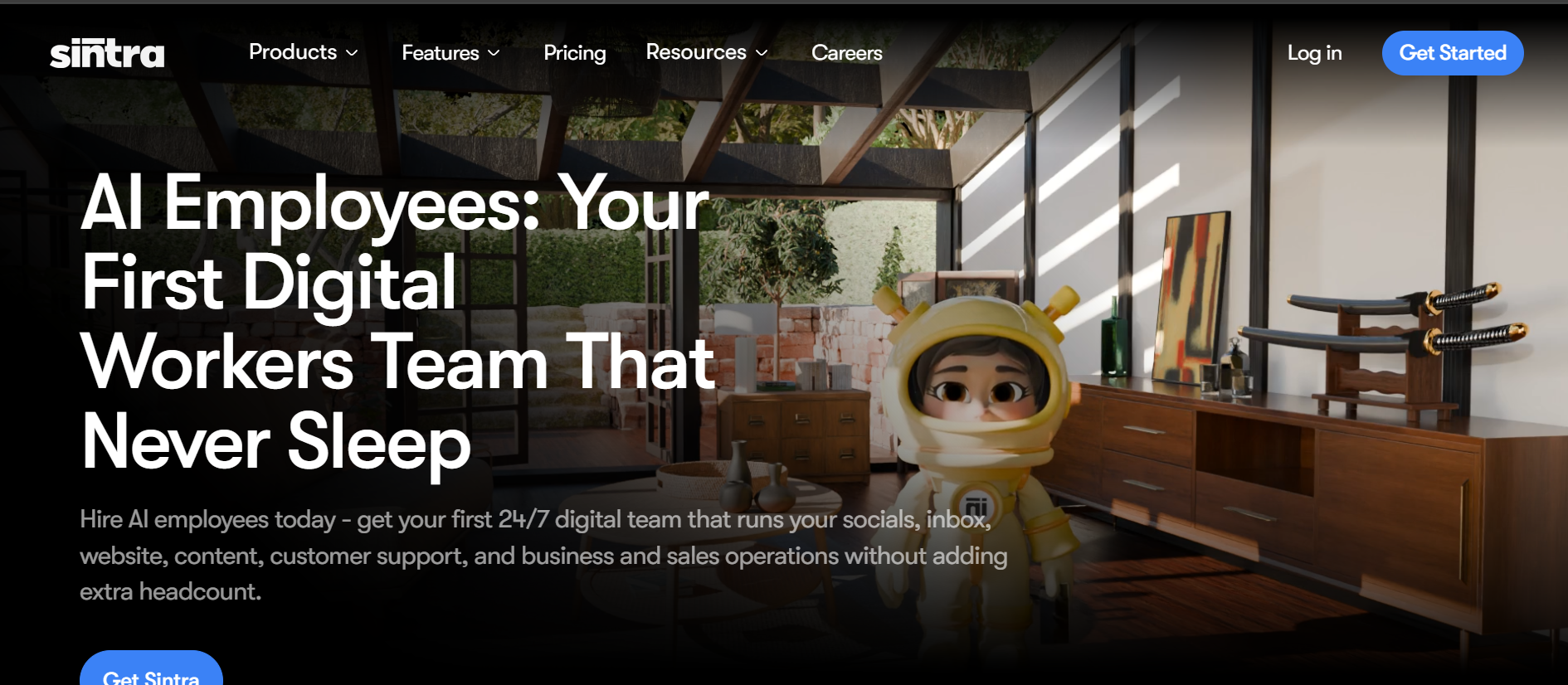
Take Sintra AI, for example. It fits into the productivity and automation space, which naturally sees higher retention and recurring commissions. Instead of promoting it as just another AI tool, it works better when positioned as a way to simplify daily workflows. Showing how tasks can be automated or streamlined makes the value immediately clear, which directly improves conversions.

Campaign Details:

  • Vertical: Utility
  • Category: Software
  • Geo: Worldwide
  • Tracking: Realtime
  • Validation Period: 52 days
  • Cookie Period: 30 days
  • Promotional Channels: Web/M-web
  • Promo Methods: Content, Coupon, Cashback, Mobile App, Telegram, Influencer, SMS, Software, Media Buying (Social, Display), Pop, Video, Incent

With OpenArt AI, the advantage is visual output. This is one of the easiest categories to sell because users can instantly see what the tool does. When you highlight generated images, creative outputs, or design improvements, you remove hesitation. The promotion doesn’t need a heavy explanation; the output does most of the work.

Campaign Details:

  • Vertical: Utility
  • Category: Software
  • Geo: Worldwide
  • Tracking: Realtime
  • Validation Period: 52 days
  • Cookie Period: 30 days
  • Promotional Channels: Web/M-web
  • Promo Methods: Content, Coupon, Cashback, Mobile App, Telegram, Influencer, SMS, Software, Sub Network, Media Buying (Social, Native, Search, Display), Pop, Push, Video, Incent, Reseller

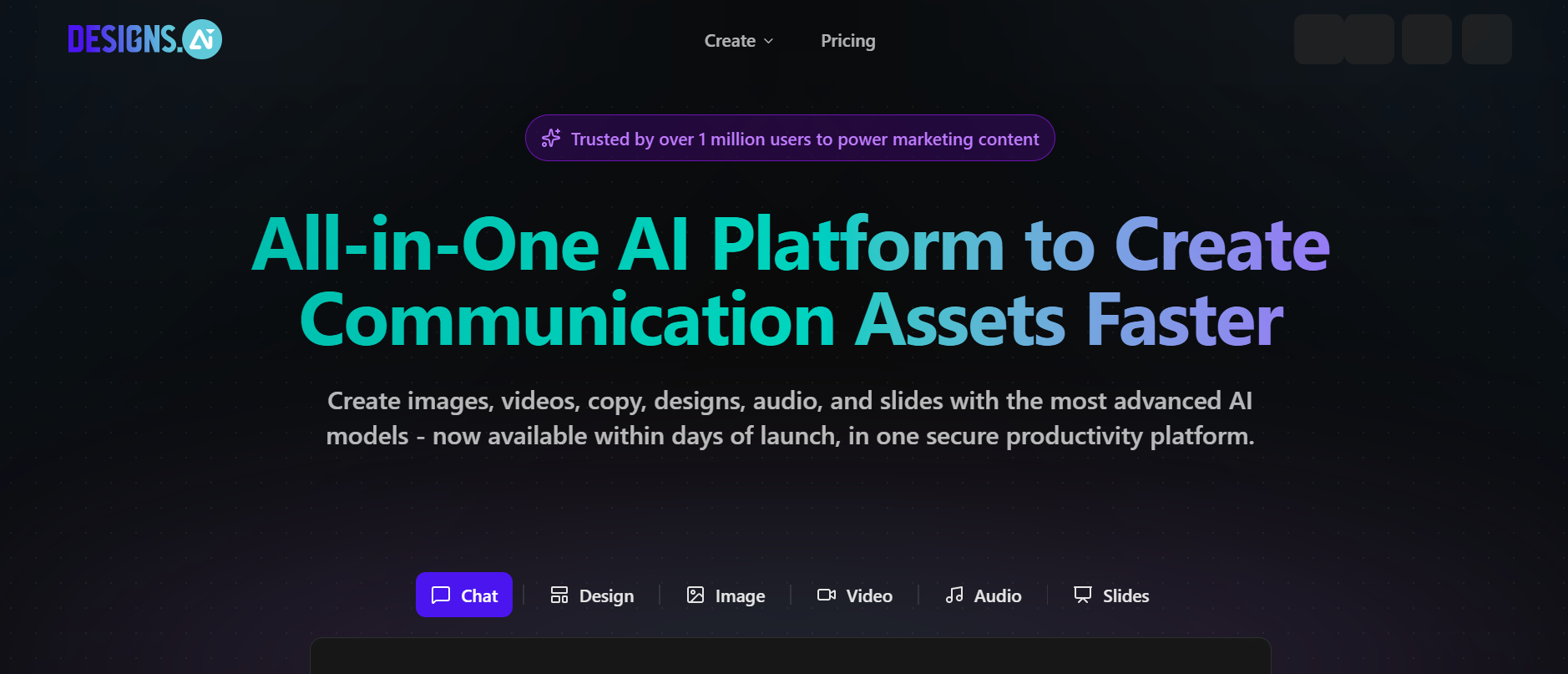
DesignsAI appeals to users who want quick branding solutions without hiring designers. This includes startups, freelancers, and small businesses. When positioned around speed and convenience, like creating logos, videos, or banners in minutes, it becomes much easier for users to see its relevance and take action.

Campaign Details:

  • Vertical: Utility
  • Category: Software
  • Geo: Worldwide
  • Tracking: Realtime
  • Validation Period: 52 days
  • Cookie Period: 30 days
  • Promotional Channels: Web/M-web
  • Promo Methods: Content, Coupon, Cashback,  Telegram, Influencer, SMS, Sub Network, Media Buying (Social, Native, Search, Display), Pop, Push, Video, Incent, Reseller

Then there’s Talkpal.AI, which taps into a completely different but highly active audience, people looking to improve their language skills. Whether it’s students or working professionals, the appeal lies in consistent, everyday usage. When you present it as a simple way to practice conversations or build fluency over time, it becomes less of a “tool” and more of a habit users are willing to adopt.

Campaign Details:

  • Vertical: Utility
  • Category: Software
  • Geo: Worldwide
  • Tracking: Realtime
  • Validation Period: 52 days
  • Cookie Period: 30 days
  • Promotional Channels: Web/M-web
  • Promo Methods: Content, Coupon, Cashback, Mobile App, Telegram, Influencer, SMS, Software, Sub Network, Media Buying (Social, Native, Display), Pop, Push, Video, Incent, Reseller

Finally, Sider AI stands out because of how seamlessly it fits into daily online activity. As a browser-based assistant, it doesn’t require users to change their workflow; it enhances it. Promoting it as a tool that helps with reading, writing, summarizing, or researching in real time makes it instantly relatable and easy to try.

Campaign Details:

  • Vertical: Utility
  • Category: Software
  • Geo: Worldwide
  • Tracking: Realtime
  • Validation Period: 40 days
  • Cookie Period: 80 days
  • Promotional Channels: Web/M-web
  • Promo Methods: Content, Coupon, Cashback, Mobile App, Email, Telegram, Influencer, SMS, Software, Sub Network, Media Buying (Search, Social, Native, Display), Pop, Push, Video, Incent,

What connects all of these campaigns is that they solve clear, practical problems and can be demonstrated without over-explaining. And that’s exactly why they perform well within affiliate ecosystems like vCommission.

As an affiliate, the focus shouldn’t be on pushing multiple tools at once. It should be on picking the right campaign, showing one strong use case, and making it obvious how the user can benefit from it immediately. That’s what turns interest into action—and action into consistent commissions.

Conclusion

In 2026, promoting AI SaaS solutions will focus on eliminating obstacles at every stage rather than adding additional links.

When you

  • Prioritise results above features.
  • Display actual changes
  • Create material with a purpose.
  • Help consumers before they reach the product
  • Make use of microfunnels and video

You become involved in the user’s decision-making process instead of just being another affiliate. Conversions genuinely take place there. Because the affiliate’s job is to facilitate decision-making in an area where the product is already intelligent.

Turn your AI SaaS traffic into real revenue. Join vCommission today and start promoting high-converting campaigns that actually scale.

Categories
Affiliates

Credit Card and Loan Affiliate Campaigns: Strategies for Higher Conversions

Nearly 76% of fintech users convert within the first 7 days of interaction, which means the gap between a click and a conversion is often just clarity and timing. [CleverTap, Promodo]

Credit cards and loans campaigns are not similar to other affiliate categories. You’re making a decision involving money, trust, and long-term commitment, not pressuring someone to try a product on a whim. This is precisely why this market demands a sharper, more deliberate approach, pays more, and converts differently.

If you’ve ever thought that fintech campaigns are erratic, it’s usually because of how they’re positioned rather than the offer. Things start to make sense when you understand how people think and what motivates them to take an action of purchase. 

Let’s break it down.

Why Credit Card & Loan Campaigns Deliver Higher Payouts for Affiliates

The majority of affiliate verticals heavily depend on volume. Because scale is built over time and doesn’t happen by accident, you drive traffic, optimise funnels, and constantly test what actually converts.

Fintech, however, operates on a very different dynamic.

Most affiliate verticals rely heavily on volume. You drive traffic, optimise the funnel, and work towards improving the conversions over time. Fintech, however, operates on a different equation. 

Here, the value of a single conversion is significantly higher. With vCommission, loan campaigns can offer payouts of up to 80%, while credit card campaigns deliver an average payout of around ₹440 per approved application. This shifts the focus from chasing large volumes of traffic to targeting the right users with strong intent.

In fintech, conversion rates are largely dependent on the source of your traffic rather than just the product.

Cold traffic performs well here, in contrast to other verticals. Campaigns for credit cards and loans typically have higher conversion rates when consumers are actively seeking financial solutions or already have faith in the source. For example, SEO-driven content attracts high-intent readers who are nearing a decision, such as comparison blogs or “best credit cards” searches. Similarly, YouTube explainers and review-based content are effective because they provide context prior to the click.

Email and return traffic are also excellent performers when people are already aware of your suggestions. Because the trust factor has already been established, these audiences frequently convert far better than first-time visitors. Additionally, compared to general, untargeted traffic, finance-focused groups and specialist platforms typically generate more quality prospects.

Conversely, more effective pre-selling is typically required for entirely cold-paid traffic. Users are less likely to begin or finish a financial application in the absence of context.

To put it briefly, fintech conversions are more about how ready your visitors is to act than they are about how much traffic you bring in.

Understanding User Intent in Fintech

People do not casually look for credit cards or loans. When they do that, they already have a reason. 

They are thinking about:

  • Saving on expenses
  • Managing cash flow
  • Getting quick access to funds
  • Making a large purchase

The intent is what makes this vertical 

In fact, around 76% of fintech users convert within the first 7 days of interaction. That means you’re working within a short window where clarity matters more than persuasion. [Clevertrap]

If your content confuses or delays the user, they usually move on.

Strategy That Actually Drives Conversion

Instead of forcing conversion, the goal is to reduce resistance. 

Start with the offer’s positioning. No one is searching for a “credit card” without any reason; instead, they are searching for a benefit. Convenience, flexibility, rewards, or cashback. Your content naturally aligns with the user’s purpose when it starts from that perspective.

Trust plays an even bigger role here. Finance is not a vertical where users can experiment as they wish; they will instantly drop if something feels overly promotional or vague. That is why content that feels real – practical examples, clear explanations, relatable scenarios – tends to perform better. 

There is also a friction factor. Loans and credit card applications come with an eligibility check, documentation, and approvals. You can’t remove these steps, but you can prepare the users for that. When expectations are clear, users are far more likely to complete the process. 

And then there is mobile. With over 70% of affiliate traffic coming from mobile devices, how your content appears on smaller screens directly impacts conversions. [Hostinger]  Smooth readability, clean structure, and well-placed CTAs matter more than ever.

High-Converting Credit Card and Loan Campaigns 

Choosing the right campaign is where strategy meets execution. vCommission offers diverse credit card and loan campaigns that cater to different user needs, making it easier for users to match offers with their intent. 

IDFC Bank Credit Card Campaigns

IDFC bank credit cards are designed for simple, transparent, and user-friendly financial solutions. IDFC prioritises clarity, usability, and constant value across daily spending, in contrast to many standard cards that rely on intricate reward systems.

These cards are designed for consumers who wish to access credit cards without uncertainty or hidden requirements. When it comes to everyday expenses like groceries, bills, or online shopping, the framework remains simple and easy to understand.

Campaign Details:

  • Vertical: Lead Gen
  • Category: Credit Card
  • Geo: India
  • Tracking: Offline
  • Validation Period: 30 days
  • Cookie Period: 30 days
  • Promotional Channels: Web/M-web
  • Promo Methods: Email, Media Buying (Native, Display), Sub Network

What this actually offers

IDFC credit cards remove the typical friction points that discourage new users:

  • Minimal or zero annual fees (on many variants)
  • Clear cashback or interest benefits without complicated rules
  • No excessive dependency on reward categories or milestones

Ideal audience

  • First-time credit card users
  • Salaried individuals starting their financial journey
  • Users switching from debit-only usage to credit

Conversion trigger

The biggest driver here is simplicity + trust. Users don’t feel overwhelmed, which significantly reduces drop-offs during the decision stage.

AU Bank Credit Card Campaigns

AU Small Finance Bank credit cards are positioned as lifestyle-oriented products that go beyond basic functionality. These cards are designed for users who are already familiar with credit and are now seeking additional experiences, rewards, and perks.

Unlike entry-level cards, AU focuses on delivering value through experiences, whether it’s travel, dining, or entertainment.

Campaign Details:

  • Vertical: Lead Gen
  • Category: Credit Card
  • Geo: India
  • Tracking: Offline
  • Validation Period: 30 days
  • Cookie Period: 30 days
  • Promotional Channels: Web/M-web
  • Promo Methods: Email, Media Buying (Display), Sub Network

What These Cards Offer

AU Bank credit cards typically include:

  • Airport lounge access
  • Dining and entertainment discounts
  • Reward points on lifestyle spending categories

Ideal Audience

  • Urban professionals
  • Frequent travelers or dine-out users
  • Users upgrading from basic credit cards

Conversion trigger

The key driver is experiential value; users convert when they see tangible lifestyle upgrades, not just savings.

ICICI Bank Credit Cards

Since ICICI Bank credit cards are among the most well-known in India, they are trustworthy and easy to promote. Strong brand recognition and useful, everyday advantages are included in these cards, particularly through co-branded partnerships.

Because consumers already associate ICICI with dependability and scale, ICICI is especially successful in reducing application hesitancy.

Campaign Details:

  • Vertical: Lead Gen
  • Category: Credit Card
  • Geo: India
  • Tracking: Offline
  • Validation Period: 30 days
  • Cookie Period: 30 days
  • Promotional Channels: Web/M-web
  • Promo Methods: Email, Sub Network

What these cards focus on

  • Cashback (especially via co-branded cards like Amazon Pay)
  • EMI conversion options
  • Wide acceptance and merchant tie-ups

Ideal audience

  • Mass-market users
  • Frequent online shoppers
  • Existing ICICI customers

Conversion trigger

The biggest factor here is trust and familiarity, which significantly shortens the decision-making cycle.

Loan Campaigns

MYUSA Finance Campaigns

MYUSA Finance is positioned as a provider of structured financial solutions, concentrating on clients who are making financial plans as opposed to responding to crises. It usually meets demands such as financing for school, big purchases, or other carefully considered borrowing choices.

MYUSA Finance is more suited for consumers who take their time weighing their options because it prioritises clarity, planning, and repayment structure in contrast to rapid loan platforms.

Campaign Details:

  • Vertical: Lead Gen
  • Category: Loan
  • Geo: USA
  • Tracking: Realtime
  • Validation Period: 15 days
  • Cookie Period: 30 days
  • Promotional Channels: Web/M-web
  • Promo Methods: Media Buying: Social

What it offers

  • Planned loan structures
  • Clear repayment timelines
  • Financial solutions aligned with long-term goals

Ideal audience

  • Users researching loans in advance
  • People planning education, travel, or big expenses

Conversion trigger

The biggest driver is clarity + stability, which builds trust over time rather than pushing urgency.

GetInsured Campaigns

GetInsured is a financial protection platform that assists customers in comparing and selecting insurance products across categories such as health, life, and general insurance; it is not a direct loan product.

Because borrowing and protection frequently go hand in hand, it readily fits into the financial journey.

Campaign Details:

  • Vertical: Lead Gen
  • Category: Auto Insurance
  • Geo: USA
  • Tracking: Realtime
  • Validation Period: 15 days
  • Cookie Period: 30 days
  • Promotional Channels: Web/M-web
  • Promo Methods: Media Buying: Social

What it offers

  • Insurance comparison across providers
  • Health, life, and general insurance plans
  • Easy policy discovery and selection

Ideal audience

  • Family-oriented users
  • Financial planning readers
  • Working professionals

Conversion trigger

The key driver is the need for protection, especially when paired with content around risk, health, or uncertainty.

Money Nauts 

Money Nauts is designed for users who are new to financial products or unsure where to start. It simplifies access to loans and credit options by reducing complexity and guiding users through the process.

This makes it especially powerful for audiences that feel overwhelmed by traditional financial jargon.

Campaign Details:

  • Vertical: Lead Gen
  • Category: Auto Insurance
  • Geo: USA
  • Tracking: Realtime
  • Validation Period: 15 days
  • Cookie Period: 30 days
  • Promotional Channels: Web/M-web
  • Promo Methods: Media Buying (Social, search, Native, Display), Email, Push, SMS

What it offers

  • Simplified loan discovery
  • Easy onboarding process
  • Beginner-friendly interface

Ideal audience

  • First-time borrowers
  • Tier 2/3 users
  • Young or financially unaware users

Conversion trigger

The biggest factor is ease of understanding, which reduces hesitation and builds confidence.

Where Most Affiliates Lose Conversions

Sometimes even strong campaigns fail when the execution is weak.

Too much information sometimes leads to confusion. Ignoring eligibility results in lost trust and denied applications. Additionally, drop-offs occur when users are sent straight to forms without context.

Pre-selling typically has the largest disparity. Before they commit, users need clarity, and your content must provide it.

Conclusion

Credit card and loan affiliate campaigns reward clarity, not aggression.

You don’t need massive traffic or complicated funnels. You need to understand intent, reduce friction, and guide users toward confident decisions.

Once you do that, fintech stops feeling unpredictable. It becomes one of the most stable and rewarding verticals to scale.

With vCommission, you also get access to a curated mix of high-converting credit card and finance campaigns, along with reliable tracking and consistent payouts. It’s built to help affiliates focus on performance, not guesswork, so you can scale with more confidence and less friction.

If you’re ready to tap into high-value fintech campaigns, vCommission gives you access to top-performing credit card and finance offers, along with the support you need to convert intent into consistent revenue.

Categories
Affiliates

Fintech Affiliate Campaigns: Monetizing Finance Traffic with High-Payout Offers

Someone lands on your finance blog to read about credit cards, trading apps, or personal finance tips. They’re already thinking about money. That moment, when intent is high and curiosity is real, is where fintech affiliates quietly turn traffic into revenue.

Finance traffic behaves differently from other categories. When users land on a page about personal finance tools, investment apps, or credit solutions, they’re usually close to taking action. That’s exactly why fintech affiliate campaigns consistently deliver some of the highest payouts in performance marketing.

For publishers and affiliates who already have finance-focused audiences, whether through comparison websites, fintech blogs, deal platforms, or personal finance communities, this category offers strong earning potential. And with fintech companies aggressively acquiring users online, affiliate partnerships have become a major acquisition channel.

This article explores why fintech affiliate campaigns perform so well, what types of offers convert best, and how affiliates can monetize finance traffic effectively.

Why Finance Traffic Is a High-Intent Asset

Not all traffic holds the same value. It’s possible that someone perusing entertainment content isn’t prepared to make a purchase. However, a person who searches for “how to start investing” or “best credit card for cashback” is already on the verge of making a financial decision.

Fintech companies are prepared to pay hefty charges for new clients because of this. Financial products create long-term value for businesses, whether they are digital wallets, trading accounts, insurance, or loans. Gaining a user through an affiliate turns into an affordable marketing avenue.

The broader market numbers explain why this model keeps expanding.

  • The global fintech market was projected to reach $394.88 billion by 2025 and could surpass $1.12 trillion by 2032. [Amra & Elma LLC]
  • The affiliate marketing industry itself is growing rapidly, with estimates suggesting it could exceed $20 billion globally by 2026. [AffTank]
  • Around 81% of brands already run affiliate programs, while 84% of publishers participate in affiliate marketing to monetize traffic. [Affiliate Help Centre]

For fintech companies, affiliate partnerships offer measurable results. Every click, lead, and conversion can be tracked. For publishers, it’s a performance-driven revenue stream.

How Fintech Affiliate Campaigns Work

At its core, fintech affiliate marketing follows a simple structure:

Brand > Affiliate Network > Publisher > Customer

Fintech brands come with high-intent products to promote, whether it’s credit cards, trading apps, or lending solutions. These offerings are structured into performance campaigns to align with specific acquisition goals.

Affiliate networks enable this by onboarding relevant publishers, setting up tracking infrastructure, and managing attribution, validation, and payouts.

Publishers with suitable inventory, such as finance content, comparison platforms, or finance content, comparison platforms, or deal platforms, integrate these offers into their user journeys, where intent is already established.

When users with strong intent engage through these placements and complete defined actions, it results in measurable conversions, driving revenue for publishers and customer acquisition for brands.

The most common payout models include:

  1. Cost Per Lead (CPL)

Affiliates get paid when a user signs up or completes a form.

  1. Cost Per Acquisition (CPA)

Payment happens when a user completes a deeper action like opening an account or making a deposit.

  1. Pay Per Click (PPC)

Affiliates earn based on the number of clicks driven to the advertiser’s platform. While less common in fintech compared to CPL and CPA, it is sometimes used for scaling top-of-funnel traffic.

  1. Revenue Share

Some fintech platforms offer a percentage of the revenue generated by referred users.

CPA and CPL are especially popular in finance because companies can easily track onboarding steps.

The Core Campaign Types (With Active Campaign Insights)

1. Personal Loans (CPL)

Fibe CPL

A live lead-generation campaign available on vCommission, where affiliates earn when a user submits a valid application for a personal loan through Fibe. Approval isn’t required, only accurate and verified user details are needed for the lead to qualify.

Why it works:
Personal loans are driven by immediate need, and users actively look for quick, digital-first borrowing options with minimal documentation.

Campaign Details: 

  • Vertical: Lead Gen
  • Category: Loan
  • Geo: India
  • Tracking: Realtime
  • Validation Period: 30 days
  • Cookie Period: 30 days
  • Promotional Channels: Web/M-web
  • Promo Methods: Content, Email, SMS, Media Buying (Native, Display), Sub-Network

2. Stock Trading Apps (CPA)

Angel One CPA

A live Cost-Per-Acquisition (CPA) campaign on vCommission for Angel One, one of India’s leading retail stockbroking platforms. Payouts are triggered when a user completes onboarding, typically including registration, KYC verification, and in some cases, the first trade.

This campaign works best with audiences that already show interest in investing, such as beginners exploring stock markets, active traders comparing platforms, or users consuming content around wealth creation and trading strategies.

Why it works:
India’s retail investing boom has brought in millions of first-time traders, making brokerage platforms a high-converting category.

Campaign Details: 

  • Vertical: Lead Gen
  • Category: Demat
  • Geo: India
  • Tracking: Realtime
  • Validation Period: 30 days
  • Attribution Window: 7 days
  • Promotional Channels: Mobile App
  • Promo Methods: Content, Mobile App, Email, SMS, Influencer, Media Buying (Social, Native, Display), Sub Network, Pop, Push, Video

3. App Installs (CPA)

Groww Android Mobile CPA

Groww is one of India’s fastest-growing investment platforms, known for simplifying stock market investing for first-time users. Its mobile-first approach and clean interface make it especially popular among younger investors entering the market.

You earn when a user installs the Groww app and completes required actions (such as signup or KYC) via Android devices.

Why it works:
Groww has strong brand recall among beginner investors, and mobile-first users are easier to convert through content and social traffic.

Campaign Details: 

  • Vertical: Lead Gen
  • Category: Demat
  • Geo: India
  • Tracking: Realtime
  • Validation Period: 30 days
  • Attribution Window: 7 days
  • Promotional Channels: Mobile App
  • Promo Methods: Content, Mobile App, Email, SMS, Media Buying (Display), Sub Network, Pop, Push, Video

4. Credit Cards (CPA)

Tata Neu Credit Card – India

The Tata Group’s digital platform, TataNeu, unifies financial services, payments, and commerce into a unified ecosystem. Its co-branded credit cards are intended to provide incentives for regular purchases made within the Tata network.

Affiliates in this performance-based promotion get paid when customers apply, are accepted, and finish the TataNeu credit card activation process.

Why it works:
TataNeu leverages a strong brand ecosystem and rewards-driven usage, making it appealing for users already engaged with Tata services and looking for added benefits on their spends.

Campaign Details:

  • Vertical: Lead Gen
  • Category: Credit card
  • Geo: India
  • Tracking: Offline
  • Cookie Period: 30 days
  • Promotional Channels: Web/m-web
  • Promo Methods: Coupon, Email, Media Buying (Native, Display), Sub Network

5. Financial Services (Hybrid payouts)

Bajaj Finserv

Bajaj Finserv is one of India’s leading financial services brands, offering a wide range of solutions across lending, payments, and consumer finance. It has strong offline and digital presence, making it a familiar and trusted name among users.

This campaign typically spans multiple financial products—such as personal loans, EMI cards, and other financial services—with payouts based on leads or successful applications.

Why it works:
It appeals to a wider audience beyond investing, especially users looking for quick credit or financing options.

Campaign Details: 

  • Vertical: Lead Gen
  • Category: Loan
  • Geo: India
  • Tracking: Realtime
  • Validation Period: 30 days
  • Attribution Window: 30 days
  • Promotional Channels: Mobile App
  • Promo Methods: Mobile App, Media Buying (Native, Display), Sub Network

Affiliates Who Benefit Most from Fintech Campaigns

When the audience is already interested in financial content, fintech affiliate campaigns are most effective.

Below are the affiliate segments that usually perform well.

Personal Finance Websites

People looking for financial tools frequently visit websites that offer advice on budgeting, investing, and saving.

These consumers are very receptive to fintech offers since they are already searching for answers.

Comparison Platforms

These platforms are built to compare brands offering similar financial products, such as multiple credit cards, trading apps, or loan providers, side by side. By breaking down features, fees, benefits, and eligibility across options, they help users make informed decisions, which naturally drives higher engagement and conversions for fintech campaigns.

Visitors to these sites are more likely to convert because they are already weighing their options.

Deal and Cashback Platforms

Financial businesses that provide sign-up bonuses or welcome incentives receive a lot of attention from deal communities and cashback platforms.

In  these platforms, users actively search for deals.

Investment and Crypto Communities

High-value traffic for trading platforms is also attracted by blogs, forums, and content producers who specialise in investment or cryptocurrencies.

These audiences are usually seasoned consumers who are open to trying new platforms and are knowledgeable about financial items.

The Future of Fintech Affiliate Marketing

Fintech is not going to slow down anytime soon.

Financial technology companies will continue to compete for users as billions of people shift to digital banking, investing, and payments.

Fintech revenues are expanding at a rate of more than 21% per year, which is much quicker than that of traditional financial services, according to industry sources.

Simultaneously, the array of products accessible to consumers is being expanded via digital investment platforms, AI-powered financial services, and integrated finance.

This implies more campaigns, more payments, and new financial goods to market for affiliate marketers.

Conclusion

One straightforward benefit is the foundation of fintech affiliate campaigns: intent.

Users aren’t being persuaded to try something new. They have already begun making a decision, and you are assisting them in finishing it.

Because of this, even a tiny amount of finance traffic can surpass higher numbers from other sectors.

Affiliates have access to offers that combine significant payments with high demand through campaigns like HDFC Bank Credit Card CPL, Angel One CPA, Groww Android Mobile CPA, Upstox CPA India, and Bajaj Finserv.

The true opportunity lies not just in attracting traffic, but also in knowing what that visitor desires and presenting the appropriate product.

If you do that successfully, fintech will become one of your most reliable sources of income rather than just another category.

Affiliates may access a carefully selected collection of successful fintech marketing without having to guess thanks to networks like vCommission. It makes it simpler to scale finance traffic into steady revenue by bringing together the appropriate audiences and offers.

Turn your finance traffic into real revenue. Join vCommission and start promoting high-payout fintech campaigns today.

Categories
Affiliate Marketing

How Coupon and Deal Websites Generate Revenue for E-commerce Campaigns

You don’t notice coupon websites when they work well, but brands definitely notice the revenue they bring in.

Coupon and cashback platforms are often misunderstood as “discount aggregators,” when in reality, they function as performance-driven distribution channels for e-commerce brands. They don’t just list offers, they influence final purchase decisions, recover drop-offs, and drive measurable conversions through affiliate networks.

This blog looks at coupon and cashback websites from a brand and affiliate perspective, how they generate revenue through affiliate marketing, why shoppers rely on them, and how advertisers can strategically use them to scale e-commerce campaigns.

Coupon & Cashback Platforms: Why Shoppers Keep Coming Back

Before getting into revenue mechanics, it’s important to understand why users actively seek out coupon platforms in the first place.

Discount-driven behaviour is no longer occasional, it’s embedded into the purchase journey.

According to recent data, coupon-based online transactions increased by 20% worldwide in 2023 and 17% in early 2024; in India alone, coupon usage increased by 7% and purchase volume increased by 5%. These figures show a steady change in user behaviour: consumers anticipate saving money before making purchases.

Cashback platforms take this a step further. Instead of just offering a discount, they give users a portion of the affiliate commission back as real value. This creates a loop where users:

  • Search for the product
  • Look for a coupon or cashback site
  • Complete the purchase through that platform

From a shopper’s perspective, it’s simple: a few seconds of effort leads to immediate savings or future rewards. From a brand’s perspective, it’s a highly efficient conversion trigger.

How Coupon Websites Generate Revenue via Affiliate Networks

An affiliate network is the foundation of all coupon and cashback platforms.

These networks facilitate tracking, attribution, and commission payments by serving as a link between publishers (coupon websites) and advertisers (brands).

This is how the revenue model functions in real life.

A discount website doesn’t just reroute customers at random when it publishes a deal for a brand, like Nykaa or Myntra. Each link is an affiliate tracking link that is provided by a network such as vCommission.

A tracking cookie is added to the user’s browser when they click on that link. The affiliate network attributes the sale to the coupon publisher and pays a commission if they finish the transaction within the allotted time frame.

The commission is then divided based on the model:

In typical affiliate setups, the coupon website retains the entire commission or gives users a part (in cashback models).

Affiliate networks play a critical role here. Without that, there is not reliable way to track which publisher drove the actual transaction.

A significant share of e-commerce revenue comes from affiliate-driven channels, such as discount programs. Approximately 13% of marketplace transactions in India occur through coupon and deal platforms, making them a significant performance channel as opposed to a side strategy.

The User Journey: Where Coupon Platforms Actually Convert

Understanding how revenue is made is greatly influenced by the user journey.

This is how a typical flow appears:

A product is found by a user via marketplaces, social media, or advertisements. After examining their selections and comparing costs, they arrive at the payment page. However, they hesitate before making the transaction.

This is a crucial pause.

They open a new tab and look for a coupon or rebate offer rather than making the purchase right away. Coupon platforms usually steps in at this stage of the journey, not when users are exploring options, but when they are making a purchase. 

They offer:

  • A coupon
  • An incentive for cashback
  • Feeling like you’re getting a better deal

After clicking, the customer returns to the brand’s website via an affiliate link and completes the transaction.

This last click frequently receives credit from an attribution standpoint.

Coupon websites make money by attracting high-intent customers at the last minute, rather than by generating demand.

Why Brands Should Leverage Coupon & Cashback Channels

From the perspective of a brand, coupons are about performance rather than merely discounts.

The fact that this paradigm is outcome-based is its greatest benefit. Brands don’t pay until a transaction is completed. There are no wasted impressions or upfront media expenditures.

However, the significance extends beyond that.

Users who are already in the funnel but have not yet converted can be recovered by brands via coupon systems. These customers are frequently persuaded to finish the transaction with a little discount or rebate incentive.

Additionally, they increase reach in a highly focused manner. Brands post deals where consumers are actively looking for them rather than publicising them indiscriminately.

Additionally, there is a timing benefit. When user intent is already high, such as during holiday marketing, end-of-season discounts, or flash deals, coupon platforms are ideal.

This comprises:

  • Providing the appropriate amount of discount (not too much, nor too little)
  • Using trustworthy affiliate networks to ensure accurate tracking
  • Controlling the distribution of coupons to prevent leaks

When properly implemented, coupon platforms offer a reliable and scalable source of income.

Campaigns That Perform Well on Coupon Inventory

On coupon and cashback platforms, not all campaigns perform as well. The ones that succeed usually have strong demand, competitive pricing, and consistent promotional activity.

Several e-commerce campaigns often do well on coupon and cashback offers through affiliate networks such as vCommission.

Fashion & Lifestyle

These brands benefit from frequent sales, trend-driven demand, and price-sensitive shoppers. Coupon platforms amplify their visibility during peak sale periods.

These brands benefit from frequent sales, trend-driven demand, and price-sensitive shoppers. Coupon platforms amplify their visibility during peak sale periods.

Beauty & Personal Care

Beauty campaigns work well because of repeat purchase behaviour. Users actively look for discounts before restocking products.

Travel and Experiences

Travel campaigns see strong traction when paired with coupon codes or cashback offers, especially during holiday seasons or long weekends.

The Cashback Layer: Increasing User Retention

Revenue creation takes on a new dimension with cashback platforms.

They give users a portion of the affiliate commission rather than keeping the entire amount. Although this initially appears to be a loss, it actually increases:

  • Retention of users
  • Recurring visits
  • Frequency of purchases

Because they gain value over time, users stick with the same platform.

This gives brands access to a devoted user base that is predisposed to use affiliate links to convert.

Conclusion

Coupon and cashback websites function as conversion-focused distribution channels, generating revenue by driving tracked sales through affiliate networks.

When consumers have made up their minds about what they want to buy and are only searching for the greatest value, coupon and cashback offers are most effective. Because consumers in these markets are extremely price conscious and actively look for deals before completing a transaction, categories like fashion, beauty, electronics, and travel perform particularly well here. Results on coupon sites are further enhanced by limited-time offers, holiday campaigns, and in-demand items.

For brands, the real value lies in tapping into this high-intent traffic through the right affiliate partnerships. By working with vCommission, advertisers gain access to a wide network of coupon and cashback publishers, reliable tracking systems, and performance-driven campaign execution. This ensures that offers reach users at the right moment, helping brands maximise conversions while maintaining full visibility and control over their campaigns.

Ready to turn high-intent traffic into consistent revenue?

Join vCommission and tap into top-performing e-commerce campaigns across fashion, beauty, travel, and more. Whether you run a coupon platform, cashback site, or deal-focused community, you get access to reliable tracking, competitive payouts, and brands that actually convert.