

 Black Friday Deals 2026: How to Promote High Ticket Items to Affluent Shoppers
 Halloween Haul: Scale Your Earnings with the POP MART Affiliate Program
 AliExpress 11.11 Sale 2026: How Affiliates Can Capture Global Shopping Demand
 Best Electronics Campaigns to Test Before Scaling for BFCM
 BFCM Tech Deals: Scale Your Revenue with High Paying Saas Campaigns
You don’t lose conversions because people don’t want to buy; you lose them because you misread them when they’re ready.
That moment when a buyer’s focus shifts from browsing to buying is what buyer intent really is. And the mistake that affiliates are making these days is assuming that intent behaves the same everywhere.
Well, the truth is, it does not.
One person opens Amazon, types “wireless earphones under 2000,” scrolls for about forty seconds, reads two reviews, and buys. Another person lands on a brand’s website after watching a YouTube video, reads the founder’s story, checks the return policy twice, and then decides. Same product category. Completely different mental journey. And if you’re running marketing or affiliate campaigns without accounting for that difference, you’re basically throwing money at the wrong wall.
Buyer intent is not universal. It shifts depending on where a person is shopping, not just what they’re looking for. And the difference between how someone approaches a marketplace like Amazon or Flipkart versus how they land on a D2C brand’s website is one of the most underestimated gaps in performance marketing today.
Understanding the difference is where the conversion begins.
Buyer intent in e-commerce is more about timing than interest. It reflects how close a user is to making a purchase decision at any given moment. There is a difference between someone who is searching for the best skincare products and someone who is searching for “best vitamin C serums under 1k.” The latter one has already moved past curiosity. They are evaluating, comparing, and narrowing down options.
This shift shows through behavior – specific searches, repeated visits, time spent comparing, and attention to review. These are all signals that the user is no longer exploring aimlessly but actively working toward a decision.
Yet, most users never reach this stage on their first visit. The average eCommerce conversion rate globally sits at around 2.5% to 3%, meaning most users are still figuring things out rather than buying. (Source: Revlifter)
This is where most strategies go wrong. They treat all traffic as if it carries the same level of intent, when in reality, intent varies dramatically across platforms.
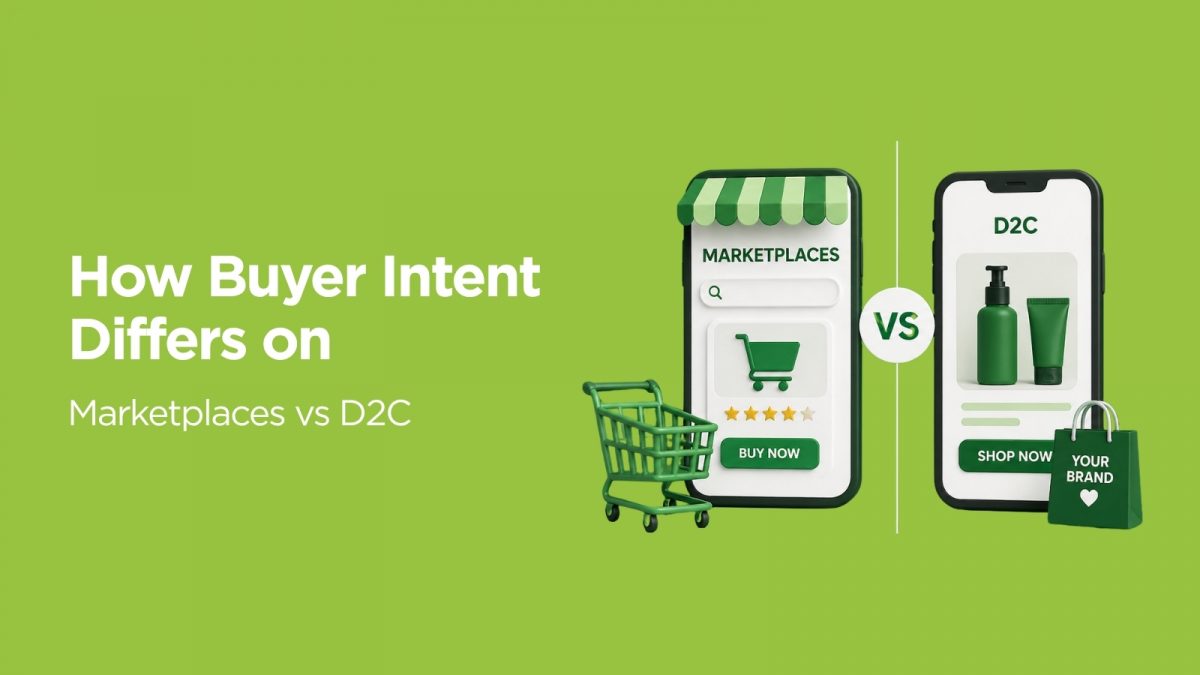
The difference between marketplaces and D2C is not structural – it is more psychological. On marketplaces, customers arrive with intent, but on a D2C platform, they arrive with questions. This difference changes how fast decisions are made, what influences them, and how much effort is required to convert a user. Marketplaces compress the journey. D2C expands it.
And that single distinction explains why the same product can perform completely differently across the two.
When someone opens a marketplace, they have already decided to purchase. The question that remains is from which seller and which product. That is a fundamentally different starting point than just browsing. Marketplace shoppers are transactional by nature. They are comparing, filtering, rating, and seeing if the product can be delivered within 2 days. They are not wasting their time reading brand stories. Buyers on this platform have higher purchase intent and prefer delivery time, availability, and competitive pricing.
D2C purchases are different from marketplaces. Someone who lands on your brand’s website after watching an Instagram reel, reading a review, or clicking an affiliate link is not considered as comparison shopping – at least not in the same way. They are mostly evaluating the brand to determine whether the product is worth spending money on. Purchase intent here depends on value perception and transparency. A D2C brand gains trust when messaging, pricing, and policies are clear and are supported by visible social commerce activity. This is also why D2C conversions require more touchpoints. A marketplace shopper might need one search and two taps. A D2C buyer might see your product three times across different platforms before deciding to visit your site. Direct traffic converts at about 3–3.5%, whereas email traffic, where customers are already familiar with the brand, can reach 4–5% conversion rates. On the other hand, cold traffic from discovery channels typically falls below 1%. (Source: Elogic)
Affiliate marketing works in both the marketplace and D2C, but the tactics are not interchangeable.
It is simple for marketplace-oriented campaigns: match high-intent keywords, offer a reason to click (a coupon, cashback, deal), and remove friction. The buyer is already interested; affiliates provide the final nudge. This is why coupons and cashback work well here: they align with the shopper’s intent
Whereas in D2C, the shopper is not looking for a deal – they are looking for validation. Traffic coming from a creator’s content comes with a context. A link in a “my skincare routine” video works because it feels like a recommendation rather than a promotion. Instead of pushing decisions, affiliates reinforce ones already forming.
The performance model changes accordingly. Marketplace affiliate is volume-driven; scale matters. D2C affiliates, on the other hand, are quality-driven; consumers are more informed and more likely to return. In India, repeat-purchase rates typically range from 15–25%, but improve when brands invest in high-intent, trust-led channels.
One of the most overlooked aspects of buyer intent is its strong tie to traffic sources.
High-intent traffic, such as search queries with specific keywords or direct visits, tends to convert faster because users are already aware of what they are looking for.
Low-intent traffic, such as a social media strategy, works differently. These users are not actively looking for products to buy; they are just browsing, discovering, and occasionally clicking out of curiosity.
This explains why conversion rates differ so much between channels. Due to stronger intent rather than superior creatives, email and direct traffic frequently outperform sponsored social media.
Knowing this makes it easier to decide where to direct users and where to spend money.
When affiliate marketing aligns with intent rather than trying to compel it, it becomes far more effective.
Affiliates work in all areas. While some engage consumers earlier in the trip, others capture customers who are prepared to make a purchase.
Finding the appropriate destination for that intent is crucial.
On a marketplace, a user who compares offers has a far higher conversion rate. A D2C experience, where the brand story can develop, is more appropriate for users who find a product through content.
Conversions feel natural when this alignment is correct. Even with heavy traffic, it’s difficult to produce outcomes when it’s not.
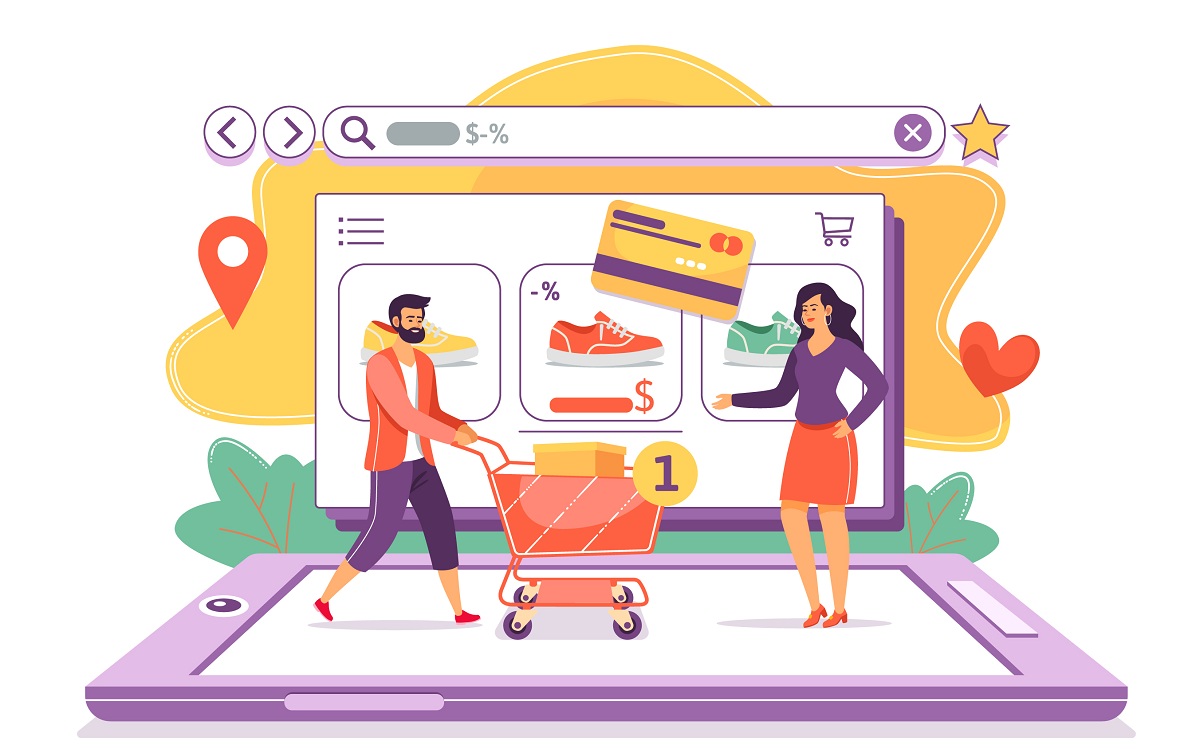
Not all users come with the same level of readiness, and that is where smarter affiliate strategies make a difference. Instead of treating traffic as a single, uniform pool, the focus shifts to matching intent to the right platform.
Marketplaces typically work better for people who are nearing a decision. Flipkart, Amazon India, and Meesho are platforms that naturally attract customers who are weighing their options and looking to make a quick purchase. Conversions are typically more predictable, and the route is shorter here.
Travel exhibits a similar tendency. Users who frequently arrive with established plans are catered to by platforms like Cleartrip and Klook, which speed up the choice cycle.
However, verticals like gifts and beauty, such as Ferns N Petals, benefit from intent tied to events or pressing needs, where timeliness is crucial for increasing conversions.
Naturally, the strategy becomes more gradual for D2C marketing. Strategies tend to focus more on content, creator-led discovery, and retargeting rather than expecting immediate returns. Instead of pressuring someone to make a decision right away, this lets intent develop across several conversations.
Campaigns across marketplaces, travel, gifting, beauty, and D2C categories are actively live on vCommission, giving affiliates access to brands that already attract strong buying intent. The advantage here is simple, shorter conversion journeys, higher purchase readiness, and campaigns that align naturally with how users shop online today. For affiliates, that means better conversion potential without relying on aggressive selling, especially when promoting categories where users are already close to making a decision.
In actuality, it produces a more balanced system that gradually builds high-intent demand where it doesn’t currently exist while capturing it where it does.
Marketplace intent and D2C intent aren’t in competition – they’re stages. The same customer may find you on Amazon and become a devoted visitor to your website. A content campaign for D2C purchasers and a cashback campaign for marketplace traffic might be operated by the same affiliate. The channel shows where a person is in their relationship with your brand, not who they are.
Treating marketplaces and D2C platforms the same way with a single conversion approach is where most strategies fall apart. You are diminishing the relationship if you run coupon promotions for customers who have come through a brand trust journey. You’re creating unnecessary friction when you offer long-form material to customers who only want the fastest delivery and the lowest alternative.
The indication is intent. It has just been received through the channel. The real challenge is to consistently and at scale match those two factors.
Start aligning your affiliate strategy with real buyer intent, tap into high-converting vCommission campaigns today.