

 OND 2026: How to Find the Right Campaign for Every Stage of the Shopping Season
 Diwali Sale Picks: Top Home Appliance Affiliate Programs to Promote in 2026
 Tommy Hilfiger 11.11 Sale: Top Deals for Global Fashion Shoppers
 Hawkers Affiliate Campaign: Top Converting BFCM Opportunity for Latin American Publishers
 The 11.11 Affiliate Opportunity Guide: Global CPS Campaigns Across Markets and Verticals
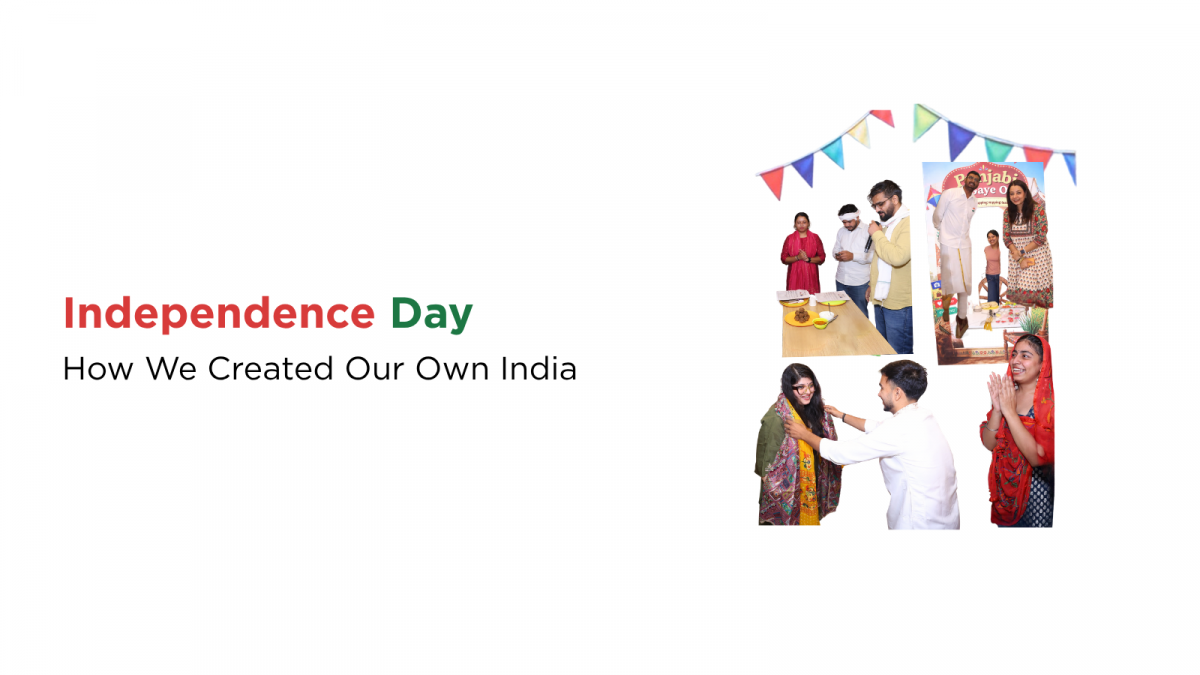
There are office celebrations. And then there are celebrations that make you walk into work the next day and think, “Did that actually happen, or did I dream the entire thing?”
This Independence Day story? That was the latter.
It started with a simple thought in our HR meetings: What if Independence Day wasn’t just about flags, patriotic speeches, and the obligatory office cake that nobody remembers?
What if we actually made employees feel India?
Not just talk about it. Not just hear about it. But literally walk through it, taste it, celebrate it, compete with it, and lose their minds over it for an entire afternoon.
We wanted to celebrate India’s diversity. Like, actually celebrate it—not as a corporate concept, but as a lived, breathing, messy, beautiful, colorful experience.
So we thought: What if every state of India gets its own marketplace stall?
Employees could pick a state. Represent it. Bring its food. Its culture. Its clothes. Its accessories. Its spirit. Its chaos. Everything.
It would be a marketplace inspired by the diversity of India, run by our own people, for our own people.
On paper, it sounded perfect.
But here’s the thing nobody talks about.
The entire HR team sat in that conference room, looked at each other, and thought: “Kar payenge kya?” (Can we actually pull this off?)
It was ambitious. It was risky. It required coordination. It required trust in employees we’d never asked to do something this elaborate before. It required believing that people would actually care enough to show up, prepare, and deliver.
Some of us had doubts.
Big doubts.
What if employees don’t book states? What if the turnout is low? What if the dance performances flop? What if the marketplace becomes a ghost town because people don’t participate? What if we’re asking too much?
We could’ve played it safe. We could’ve done the usual: cakes, decorations, speeches, done by 5 PM.
But then WE said: “Let’s just… try it.”
And we decided to take the risk.
We decided to believe that our team was different. That they would care. That they would participate. That they would turn an idea into magic.
Spoiler alert: We were right. But we had absolutely no guarantee at that point.
In reality? It was about to become the most gloriously chaotic Independence Day celebration we’ve ever seen.

We announced it simply: 10 stalls. First come, first served.
That’s it.
And what happened next was… interesting.
See, in the back of our minds, we knew something: If there are too many stalls, who’s going to buy from them?
So we made the limit real. Intentional. Non-negotiable.
The moment we announced it, the office transformed into a mini stock market.
“PUNJAB STALL BOOKED!”
We’d announce it and watch the energy spike.
“RAJASTHAN STALL BOOKED!”
Another spike.
“HARYANA STALL BOOKED!”
The momentum kept building. People who weren’t initially interested suddenly became very interested.
Within hours, inquiries started pouring in. “Can we get Delhi?” “Is UP still available?” “Is there any state left?”
The competition was real. The FOMO was real.
And then—
All 10 stalls were gone.
Completely. Sold out. No waiting list. No mercy.
And honestly? That “sold out” status was the best marketing we could’ve done. People who didn’t book started asking their colleagues about it. The curiosity was absolutely there.
We had no idea that this scarcity marketing tactic was just the warm-up act. The real show was about to begin.
While employees were excited, our Creative Team was doing something extraordinary behind the closed office doors.
They didn’t just print state names on cardboard.
No.
They built experiences.
Each stall got a completely customized, state-themed frame—like a photo booth, but way more sophisticated. Each frame was designed to be that state.
Uttar Pradesh? It looked like Uttar Pradesh walked into the office.
Punjab? You could feel Punjab the moment you approached.
Rajasthan? Full of color, culture, and authenticity.
Gujarat brought its own vibe with traditional symbols and colors.
Bengal? Oh, Bengal just said, “We’re here for the sweets, and we’re not leaving.”
The frames had:
The goal was simple: If you walked up to a stall, you should feel transported. Not like you’re in an office. But like you’ve actually stepped into that state.
Mission? Absolutely accepted.

Each stall had a team of 4-5 people who’d own it completely.
We asked them to prepare menus, activities, and pricing in advance.
A couple of days before the event, we collected the details:
And here’s what blew us away: the variety.
Punjab came prepared with Chole Kulche, Parandi, homemade products, and enough Punjabi energy to power a small state.
Uttar Pradesh said, “We’re bringing Nankhatai, Dal, Papdi Chaat,” basically covering every flavor in the UP spectrum.
Delhi arrived with that classic street-food energy. Because if anyone knows how to run a marketplace, it’s Delhi. It’s literally their entire personality.
Rajasthan brought cultural representation on a platter.
Gujarat showed up with traditional elements like Chunris and Gajra—because culturally representing isn’t just about food, it’s about the entire experience.
And Bengal?
Bengal took one look at the marketplace and said, “If there’s no sweet mound by the end of this, I will be personally offended.”
Bengal’s sweet strategy was clear: Come for the sweets. Stay because you’re too full to leave. Leave happy. Return tomorrow with regrets about that extra payasam.
This was going to be good.
Now here’s where things got deliciously complicated.
We didn’t want employees just handing over actual money at every stall. That felt too… normal? Too regular?
So we did something wonderfully chaotic: We printed our own event currency.
Yes. We literally created money for this event.
Custom-designed notes in denominations of ₹20, ₹50, and ₹100.
And the genius part? Each state had its own unique currency design.
UP’s currency looked like UP.
Haryana’s looked like Haryana.
Himachal had its own aesthetic.
Punjab had its own vibe.
Every single note was colorful, funny, entertaining, and completely customized.
By the time we printed and distributed them, our office had basically become a mini-economy. A miniature India with its own banking system. Its own currency crisis. Its own inflation potential.
And obviously, every economy needs a central bank.
Or in our case—a Munim Ji.
Enter Munim Ji – For those who didn’t grow up watching Indian TV, Munim Ji is basically the accountant. The bookkeeper. The financial guy. The one who manages all the money.

We selected a few brave souls to become our own Munim Jis.
Their job description?
Sounds simple? It absolutely wasn’t.
The moment the marketplace opened, Munim Ji’s desk became the most visited location in the office. It wasn’t a customer service counter. It was a phenomenon.
Imagine a bank branch on salary day.
During India’s biggest festival.
After a stock market crash announcement.
All happening simultaneously.
People were lined up.
“Munim Ji, 500 ka currency de do!”
“Munim Ji, mujhe exchange kar do!”
“Munim Ji, aur kitna available hai?”
At one point, there were so many people crowded around Munim Ji that we thought the entire cash vault was about to collapse. We had to keep reminding Munim Ji (who was actually doing an incredible job, by the way) that this was supposed to be fun.
Munim Ji’s lunch break? Cancelled.
Munim Ji’s peace? Also cancelled.
But honestly? Munim Ji was the MVP of the entire event, and we all knew it.

While Munim Ji was managing the economic crisis, our stage was on fire.
We had organized a state-themed dance competition, and every participating team was ready to bring it.
Here’s how it worked:
Part 1: Each team performed a traditional dance representing their state.
Part 2: They transitioned into a Bollywood song connected to (or representing) that state.
Part 3: They finished with a high-energy remix that brought everything together.
So if Rajasthan was performing? They started with classical Rajasthani vibes, moved into Bollywood, and ended with pure remix madness.
The office was filled with:
The energy? Absolutely electric.
And then—we had to make the judging dramatic.
Because what’s a competition without drama?
This is where I stepped into the role.
I stood on stage, mic in hand, looking at the teams lined up, the decorations around me, the crowd seated and waiting, and I thought: “Okay. Let’s make this memorable.”
I welcomed everyone to our “States of India” celebration. I cracked a few jokes about how we literally created a new country inside our office, complete with its own currency and central banking system.
I introduced our panel of judges who had the actual difficult job of deciding which team had presented the best combination of tradition, Bollywood, and remix.
And then I said something like: “Ready to see if tradition can win in the era of remixes?”
The performances that followed were not what I expected.
I expected people to dance and smile.
What I got was: people pouring their souls into celebrating their states.
Punjab’s performance? A complete Punjabi party. Rajasthan’s dancers? They brought Rajasthani aesthetics to life. Haryana? Pure Haryanvi attitude mixed with Bollywood glam and Gujarat – I have no words.
As I watched each performance, I could see what this event was really about: It wasn’t about competition.
It was about belonging.
About celebrating something bigger than yourself.
About showing pride in your culture while also being part of this larger, diverse, chaotic, beautiful community called vCommission.
The judges scored meticulously (we had prepared proper scorecards and marking schemes, because we’re that kind of organization).
And then came the moment.
I announced the winners for the dance performances.
The energy was absolutely palpable.
And just when the crowd was still celebrating those winners—
The gates opened.
The marketplace was now live.

The moment those stalls opened, it was like someone had pressed the fast-forward button on human energy.
There was no gradual crowd building.
There was no “let’s check out this stall first.”
It was pure, unfiltered, beautiful chaos.
People were everywhere.
Flowing from state to state. Buying food. Trying activities. Collecting tokens. Spending their custom currency like it was going out of style. Taking pictures. Laughing. Eating with their hands. Asking for refunds (okay, maybe not that). Coming back for seconds.
And of course—continuously visiting Munim Ji.
The line at Munim Ji’s desk never ended.
Every stall had its own energy. Its own rhythm.
Each one had been given a unique name and tagline.
Delhi? They had their own cheeky metro-inspired slogan. Something along the lines of “Metro mein milte hain” because, let’s be honest, Delhi’s entire culture revolves around its metro at this point.
Punjab came with its own energetic Punjabi-style tagline that made everyone smile.
The stalls weren’t just places where you bought food.
They were experiences.
Gujarat’s stall was exceptional because they figured out something we hadn’t expected: What if fitness was the currency?
They had an activity: Do push-ups, get discounts.
Yes.
You read that right.
More push-ups = more discount.
Suddenly, people were standing at Gujarat’s stall, doing push-ups, counting them out loud, negotiating with themselves: “Is the fifth push-up really worth the extra ₹10 discount?”
It was hilarious.
It was genius.
It was the kind of creative chaos we love.
While this was happening, other stalls had their own atmosphere.
Rajasthan played music representing Rajasthan. The decorations transported you. The food tasted authentic.
Everyone was dressed according to their state—different colors, different styles, different cultural markers.
Walk around the office, and you’d see:
A person in Rajasthani attire next to someone in Punjabi wear next to someone in Bengali traditional dress.
And honestly, the stalls were a full-on trip across India—without leaving the office! Punjab had Chole Kulche, Parandi and Halwa, Delhi brought its street-food attitude with Laphing and Chaat, while Uttar Pradesh came fully prepared with Naan Khatai, Papdi Chaat, Daal Muradabadi and Thandai. Before you could recover, Himachal Pradesh was offering Dream Catchers and Momos, Gujarat had Dhokla, Fafda and Gajra, and West Bengal was making sure nobody escaped without a serious sugar rush.
Somewhere in between, Maharashtra pulled people in with Gol Gappe and games, Rajasthan brought the full vibe with Braids, Earrings, Mirchi Vada and Lahsun Chutney, while Haryana kept it simple and delicious with Thali, Ghevar and Lassi. And if there was one stall everyone was talking about, it was G Town—Haryana 2.0’s contribution to the marketplace, and honestly, a whole different experience altogether!
They came with mocktails. Creative beverages. A complete entertainment experience.
The energy at G Town was electric.
People were queuing for their mocktails like it was a celebrity meet-and-greet.
At this point, nobody was casually “visiting stalls” anymore. We were travelling across India, eating our way through it, shopping a little, playing games, taking pictures and wondering one very important thing: How exactly were we supposed to go back to work after this?
Beautiful chaos. Colourful chaos. And most importantly—absolutely delicious chaos.
At the end of the day, we had two major winners to announce.
Winner 1: G Town – Haryana 2.0
They won because they dominated the sales.
Not just in quantity. In engagement. In creativity. In execution. In customer love.
Winner 1: Rajasthan
They won because their stall was a masterpiece.
Beautifully decorated. Clean. Well-maintained. Visually appealing. The clothing was authentic. The presentation was flawless. The entire experience felt like you’d been transported to Rajasthan.
It wasn’t just about selling; it was about storytelling through design.

As the afternoon wound down and people were still lined up at random stalls, grabbing last-minute snacks, I stood back and watched.
What I saw wasn’t just an office celebration.
It was everyone—from our leadership to our interns—participating equally.
People had taken ownership.
Teams had planned for weeks. Dancers had practiced. Stall owners had prepared menus. Currency managers had sweated through the afternoon. Everyone had contributed something.
The creativity wasn’t just in the stalls. It was in the activities. In the way people dressed. In the taglines they created. In the push-ups they did for discounts. In the way they represented their chosen state.
The enthusiasm wasn’t manufactured.
It was genuine.
The diversity wasn’t a checkbox. It was felt.
And the sense of belonging? It was unmissable.
Everyone knew they were part of something bigger than themselves—not because we told them so, but because they could feel it in the energy, the conversations, the shared celebration.
As I left the office that evening, looking at the empty stalls, the currency scattered around (in a good way), the decorations still standing—I realized something:
The biggest achievement of Independence Day wasn’t the performances or the sales or even the creative stalls.
It was watching 200+ people genuinely enjoy themselves.
It was seeing teams collaborate on something that had nothing to do with their job descriptions, yet everything to do with the culture they’re building together.
It was understanding that you can work in the same office with someone and never really know them until you see them represent their state with pride.
It was realizing that diversity isn’t about tolerating differences.
It’s about celebrating them. Loudly. Colorfully. Chaotically. Joyfully.
This Independence Day, vCommission didn’t just celebrate India.
We became India—in all its messy, beautiful, diverse, loud, creative, chaotic glory.
And if that’s not a success, I don’t know what is.