

 How Affiliates Can Generate Consistent Revenue with PPC Affiliate Marketing in 2026
 Credit Card and Loan Affiliate Campaigns: Strategies for Higher Conversions
 Semrush Affiliate Program: A High-Payout Offer for Marketers and SEO Publishers
 10 Best Affiliate Marketing Platforms of 2026
 Fintech Affiliate Campaigns: Monetizing Finance Traffic with High-Payout Offers
Think about the last time you bought something because it popped up in your Instagram feed, you saw it used in a YouTube video, or a friend sent you a link on WhatsApp. Shopping is no longer just about visiting online websites; it’s happening right inside the apps people use every day.
This change is a big opportunity for affiliates. Instead of waiting for people to search for products, you can reach them where they spend most of their time online. The gap between seeing and buying a product is getting smaller, and because of this, India’s social commerce market is growing quickly. In fact, according to a Bain & Company report cited in The Economic Times, the market is expected to reach $16 to $20 billion by 2025. This means more chances for affiliates to turn their followers into customers without relying only on traditional e-commerce websites.
In this blog, we’ll look at how Instagram, YouTube, and WhatsApp can become powerful sales tools for affiliates, and what steps you can take to make them work for you.
Social commerce means selling directly through platforms like Instagram, YouTube, and WhatsApp. And the buyers don’t need to switch between multiple apps or websites. The product, the recommendation, and the buying link all appear in one place, making the process faster and simpler. This approach is beneficial for affiliates, as:
One of the best things about social commerce is that it meets people where they already are. Instagram alone sees users spending around 11.7 hours a month on the app (Statista), so your content isn’t fighting for attention in a new space; it’s appearing in their daily scroll. On WhatsApp, where open rates top 90% (Verloop.io), your message has a far better chance of being seen than in an email inbox. And with YouTube reaching about 2.5 billion people globally (Global Media Insight), it offers affiliates a chance to connect with massive, highly engaged audiences, especially Gen Z.
Social commerce thrives on trust. When a recommendation comes from someone people already follow, it feels like advice rather than advertising. That’s why more than half of users have made a purchase directly on platforms like Instagram or TikTok (Publift). These buyers also tend to spend more, about 21% extra per order on average.
Social commerce removes the friction between “I like this” and “I’m buying it.” Features like Instagram’s shoppable posts or YouTube Shorts’ built-in checkout mean people never have to leave the app. This simplicity pays off; affiliate links now account for nearly a third of all global eCommerce sales, and campaigns generate about $15 in revenue for every $1 spent (Authority Hacker).
Seeing is believing, especially online. A product demo, a review, or a quick tutorial can turn curiosity into a sale far more effectively than static images. In fact, 53% of affiliate sales come from this kind of content (GeekChamp, 2025), and video formats convert at nearly twice the rate of still posts. With eCommerce making up 67% of affiliate revenue, niches like lifestyle and tech are finding even greater success by showing products in use.
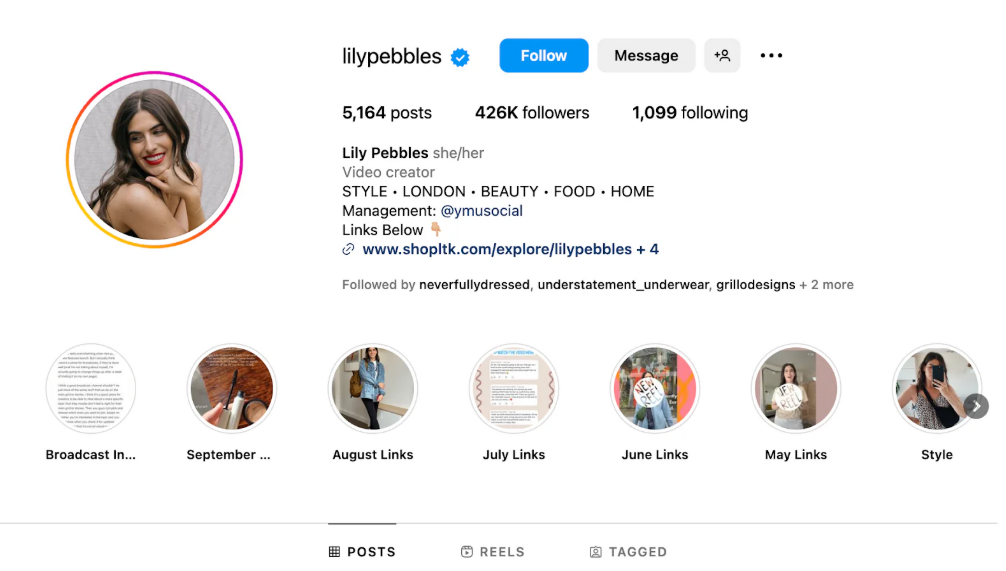
Instagram is one of the most effective platforms for social commerce because it combines visuals, storytelling, and built-in shopping features. Affiliates can use different content formats to reach their audience and guide them toward a purchase without disrupting their browsing experience.
Short videos are dominating Instagram right now. Reels get around 67% more engagement than regular posts (Outfy), and when viewers see a product being used, they’re about 2.3x more likely to buy. They already account for roughly a quarter of all affiliate purchases on the platform, so skipping Reels means leaving sales on the table.
Stories work well for flash offers because they create urgency. They get about five times more taps than feed posts (Publift), and adding a link sticker can lift clicks by around 32%. Simple features like countdown timers or polls can also push engagement up by nearly 28%, and that extra interaction often leads to higher conversions.
The easier it is to buy, the better your results. Posts with product tags convert about 23% better than those without (Influencer Marketing Hub), and with 80% of Instagram users having tapped a product tag at least once, this is one of the simplest ways to shorten the path from interest to purchase.
People follow creators for more than discounts; they want value. Share tips, how-to guides, or personal reviews instead of only sales pitches. According to HubSpot, 61% of users trust creator recommendations more than ads, and micro-influencers can drive engagement rates up to 60% higher. That trust can easily turn into clicks and sales.
Quick replies show you’re attentive and build buyer confidence. Affiliates who respond to questions within two hours see around 40% more conversions (EarnKaro). Direct messages, in particular, are powerful, with click-through rates of about 48%; they outperform many other online channels.

YouTube is one of the most powerful platforms for affiliate marketing because it blends learning, entertainment, and shopping in one place. With over 2 billion people using it every month (GeekChamp), even small creators have the chance to reach a huge audience.
Also your videos can keep generating views, and sales, for months or even years after posting. In fact, YouTube affiliate marketing brought in $2.6 billion globally in 2024 (Zebracat), showing just how much opportunity it holds.
People connect with creators they can trust. Share the real picture, what you liked, and what could be better. This builds credibility, which is essential when you’re competing in a space where over 60% of marketers now consider YouTube their main affiliate channel (WeCanTrack).
Step-by-step guides help viewers imagine themselves using the product. That visual connection often turns into clicks on your affiliate link. Considering that the average earnings per affiliate link on YouTube are $6.80 (Zebracat), those clicks can add up quickly.
Short videos are quick to make but very effective. Even though they make up only about 11% of videos uploaded, they lead to 22% of affiliate sales on YouTube (Zebracat). Videos like quick unboxings, product comparisons, or short tips work great in this format.
Use clear titles, detailed descriptions, and the right keywords to help your videos show up in search results. Put your affiliate link near the top of the description so viewers can easily find it without scrolling.
If your video talks about several products, adding timestamps lets viewers jump straight to the part they want. This makes watching easier and can increase the chance they’ll click your affiliate link for that product. With its wide reach, trust-building power, and long-lasting visibility, YouTube remains one of the best platforms for affiliate marketing.
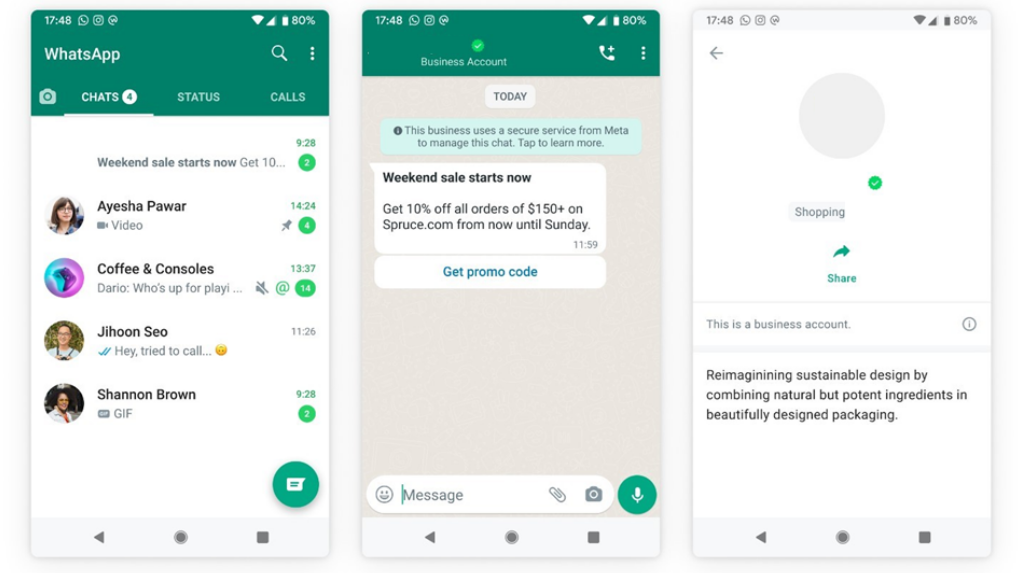
WhatsApp may not look like a traditional sales platform, but it’s one of the most personal and high-conversion channels available. With over 2 billion users worldwide (Backlinko), it’s a great way to reach people directly. And most of the people see and react to your message here.
Focus on building a list of contacts who are genuinely interested in your topic. You can collect leads through sign-up forms, social media promotions, or QR codes at events. Targeted leads are much more likely to convert; they convert four times better than random contacts (AffiliateWP, 2025).
Broadcast lists allow you to send the same message privately to many people at once. They have high engagement, with WhatsApp open rates averaging 98%, far higher than email (Authority Hacker, 2025). Use them to share product launches, special offers, or tips with affiliate links.
WhatsApp groups are useful for building a small, loyal community. Engagement here can be three times higher than on public social media. Share valuable content along with product recommendations so it feels helpful rather than promotional.
Rich media makes your messages feel personal and engaging. Video content shared via WhatsApp can get a click-through rate of 5.2% (Whop.com, 2025). Use short demo videos, image carousels, or quick voice notes to explain product benefits in a friendly way.
WhatsApp Status works like Instagram Stories and disappears after 24 hours. About 40% of users check statuses daily (Backlinko, 2025), making it a good place to share flash sales, behind-the-scenes moments, or seasonal offers.
Social commerce is changing how people shop, making it easier and faster to buy products directly on Instagram, YouTube, and WhatsApp. For affiliates, this opens up new ways to reach customers where they spend most of their time online. By sharing honest reviews, helpful tips, and engaging content, affiliates build trust and guide their followers to buy without extra steps.
At vCommission, we focus on making affiliate marketing straightforward and effective. You can track your clicks and sales in real time, so you always know how your efforts are performing. Our platform lets you promote in ways that suit your style and audience, giving you the flexibility to grow your income your way.
With clear and timely payments, we help you focus on creating useful content that helps your followers find great products. As social commerce grows, affiliates who use the right tools and strategies have the best chance to succeed. With our support, you can confidently use Instagram, YouTube, and WhatsApp to boost your affiliate sales and grow your income steadily.