

 Festive Skincare Affiliate Campaigns: What Publishers Should Promote in 2026
 Adidas Affiliate Program: Promote Diwali Sale Offers and Earn on Festive Shopping
 Aerless Affiliate Program: Monetize High Paying Offers During BFCM and the Holiday Season
 OND 2026: How to Find the Right Campaign for Every Stage of the Shopping Season
 Diwali Sale Picks: Top Home Appliance Affiliate Programs to Promote in 2026
The festive season gives brands a valuable opportunity to increase sales, but making the most of it takes more than attracting traffic. Advertisers need to understand which affiliate partnerships are generating orders, whether those orders are approved and how campaign spending contributes to revenue.
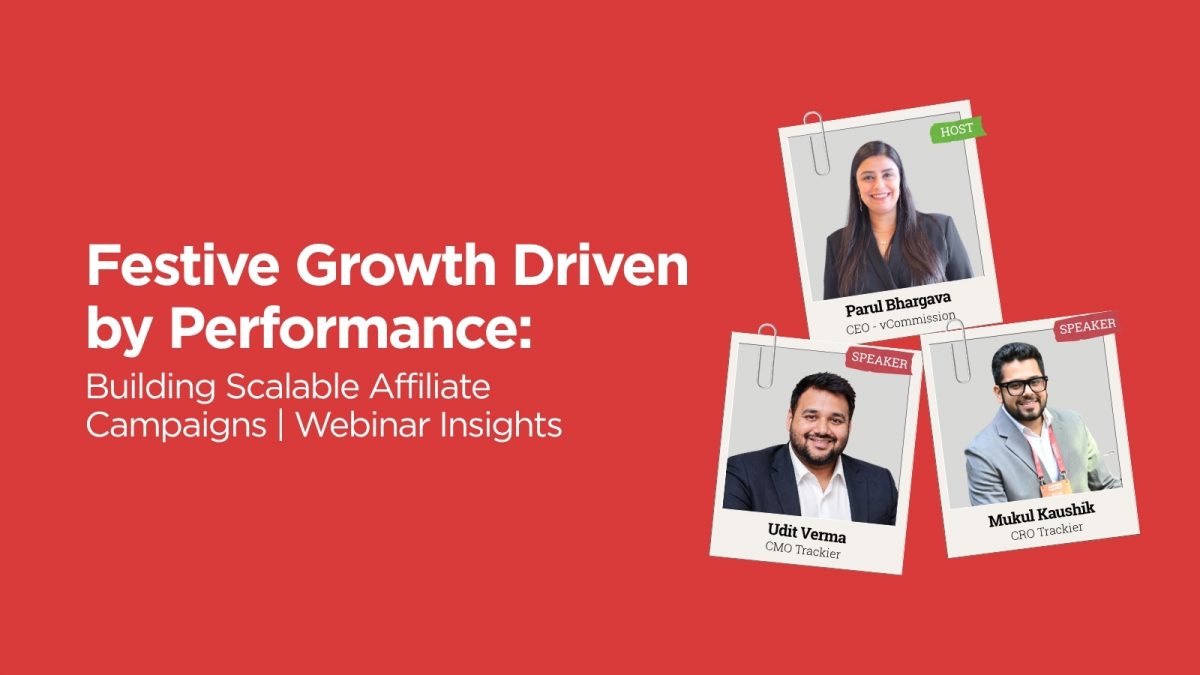
These were the questions at the heart of our webinar, Festive Growth Driven by Performance: Building Scalable Affiliate Campaigns, organised by vCommission and Trackier in association with Affiliate Social Co. Hosted by Parul Mehta Bhargava, the session featured Udit Verma and Mukul Kaushik, who discussed how brands can make better use of affiliate partnerships during the festive season.
The conversation covered the opportunity presented by festive shopping, the economics of Cost Per Sale (CPS) campaigns and the importance of preparing campaigns before demand peaks. It also explored how affiliate tracking, performance measurement and automation can help brands manage campaigns as they grow.
The discussion began with the opportunity brands have during the festive season. With shoppers moving between product discovery, price comparisons and deal searches, advertisers need affiliate partners who can reach customers at different stages of the buying journey.
Content publishers can introduce shoppers to products, comparison platforms help them evaluate options, and coupon or cashback partners can reach customers looking for savings before placing an order. Creators and loyalty platforms can also contribute to a balanced affiliate partner mix.
The focus, however, should not be on traffic alone. Brands need to understand how partner activity translates into approved sales and incremental revenue. Measuring these outcomes helps advertisers identify which partnerships are contributing to their objectives.
The conversation then moved to CPS campaigns and the importance of protecting profitability as sales increase.
Because Cost Per Sale campaigns link commissions to completed purchases, they give advertisers a way to connect marketing costs with sales. However, the commission structure still needs to account for product margins, average order value, category economics and customer acquisition goals.
The discussion also highlighted the need to reward valuable outcomes while checking conversion quality. Cancellations, returns, duplicate transactions and invalid activity can affect the final value of reported sales.
A reliable validation and reconciliation process helps advertisers determine which transactions qualify for commission and assess the actual contribution of their affiliate campaigns.
With the campaign economics established, the webinar moved to preparation. Brands need to have their campaign plans and technical setup ready before festive demand peaks.
The discussion covered four important steps:
Planning ahead gives advertisers and publishers time to resolve issues before campaign activity increases.
The webinar then explored changes in how affiliate campaigns are managed. The discussion focused on three areas: expanding the partner mix, measuring sales quality and using automation to respond to performance signals faster.
Brands can work with creators, communities, comparison platforms, coupon publishers and cashback partners to reach different audiences. Each partnership should be assessed according to its contribution rather than judged by the same measures.
Performance measurement also needs to go beyond conversion volume. Approved sales, incremental revenue and customer value can help advertisers understand the quality of the results.
Automation can support this process by flagging unusual activity, helping teams review performance patterns and reducing manual reporting work. These capabilities can be particularly useful when campaign volumes rise during major sales periods.
Building on the discussion about measurement, the webinar examined how tracking and attribution help advertisers understand campaign performance.
The metrics highlighted in the session included conversion rate, approved sales, average order value, cancellation rate, partner ROI, CAC and ROAS.
Each metric answers a different question. Conversion rate shows whether traffic is turning into purchases, while approved sales indicate how many conversions meet the campaign’s conditions. Average order value helps advertisers understand transaction value, and cancellation rates can reveal issues affecting order quality.
Reviewing these figures together provides a clearer picture of campaign performance. Consistent attribution and validation rules are also important because advertisers and publishers need to work with the same understanding of which transactions qualify for commission.
Towards the technology side of the discussion, the webinar covered how AI is being used across content, sales and business operations.
Examples included market research for content teams, video creation using virtual presenters and automated email outreach. The team also discussed exploring AI to simplify platform interactions.
The conversation introduced the Model Context Protocol (MCP), which can connect AI applications with external tools and data sources. In affiliate marketing, this could support tasks such as preparing reports and sharing campaign updates when the required integrations are available.
AI can also help sales teams personalise outreach, organise follow ups and manage reminders. These applications can reduce repetitive work, although teams still need to verify information and review important decisions.
Festive season campaigns work best when brands focus on more than sales volume. Choosing the right affiliate partners, setting profitable commissions and tracking approved sales can help advertisers make better decisions throughout the festive period.
At vCommission, we partner with premium brands across categories, offering affiliates opportunities to promote relevant campaigns and earn commissions on successful sales. Affiliates can explore our available campaigns, choose those that match their audiences and make the most of festive shopping demand to generate more revenue this season.
With Diwali and BFCM bringing shoppers back to their wishlists, it is a good time for affiliates to explore suitable brand campaigns and make their festive traffic count.
Brands should prepare early, test their tracking and ensure all campaign tools are ready. This helps them track conversions accurately during busy sales periods.
A coupon company processed around 3 million coupons a day during the IPL season. The team scaled its system to handle the volume and maintain tracking when the client moved from another platform.
Large affiliates often work with thousands of brands, which requires more technical checks. Advertisers may have a simpler setup when they can manage product feeds and coupon codes through a dashboard.
In India, advertisers use both coupon codes and tracking links. Saudi Arabia and the UAE rely heavily on coupons, while other markets have different payment habits and consumer preferences.
Indian consumers are often price conscious, and Diwali is a major shopping period. Cyber Monday and Christmas are important sales periods in many international markets. Payment preferences also vary, with UPI and cash on delivery common in India and cards and digital wallets widely used in many other markets.
Hiring local team members can help companies understand customers, communicate effectively and build business relationships. Choosing the right markets and staying focused on business goals are also important.
AI supports content research, video creation with virtual presenters, email outreach and PR research. The team is also exploring ways to make platform interactions easier with AI.
MCP can connect AI applications with external tools and data. With suitable integrations, it can help prepare reports and share campaign updates, reducing manual work.
AI helps with email and LinkedIn outreach, personalised messages and meeting scheduling. It can also remind teams to follow up with potential customers, revisit old opportunities and manage renewals through tools such as Salesforce.