

 How Affiliates Can Generate Consistent Revenue with PPC Affiliate Marketing in 2026
 Credit Card and Loan Affiliate Campaigns: Strategies for Higher Conversions
 Semrush Affiliate Program: A High-Payout Offer for Marketers and SEO Publishers
 10 Best Affiliate Marketing Platforms of 2026
 Fintech Affiliate Campaigns: Monetizing Finance Traffic with High-Payout Offers
What if a single reel you created today could keep earning for you weeks or months after you post it? That’s not wishful thinking. It’s exactly what smart influencers are already doing by combining content creation with affiliate marketing.
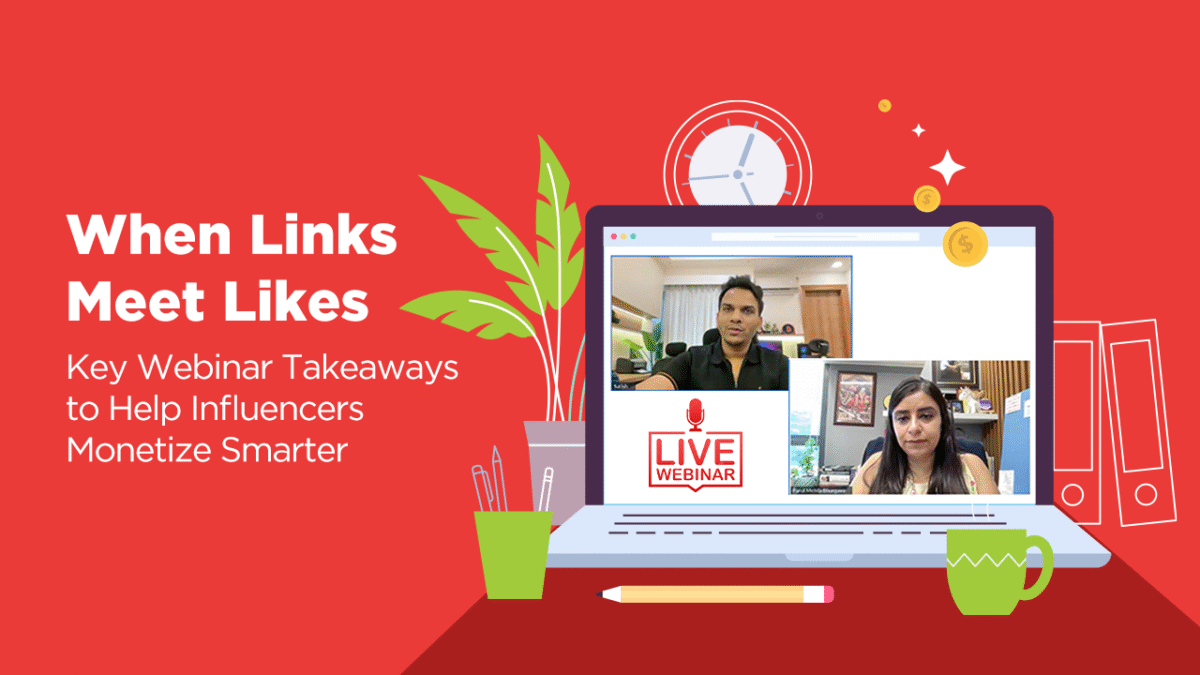
To spotlight this growing opportunity, vCommission recently hosted a high-impact webinar “When Links Meet Likes: How Affiliate & Influencer Marketing Make the Perfect Power Couple!” The session featured an insightful conversation between our CEO Parul Bhargava, and digital content creator Satish Kushwaha, where they discussed how influencers, regardless of niche or follower count, can build steady income streams by weaving affiliate marketing into their everyday content strategy.
The best thing is that you don’t require a massive shift in your current workflow. You don’t have to change your content style, switch platforms, or start from scratch. All you need is a smarter monetization layer, something affiliate links can provide when used right.
Here are the top takeaways from the webinar that every content creator should know:
The influencer economy is bigger than ever, set to cross $30 billion by the end of 2025 (Statista). Platforms like Instagram and YouTube are leading this growth, with Instagram hosting 42% of brand collaborations (Collabstr, 2025) and YouTube holding 33% of marketing budgets for reviews and tutorials (Sci-Tech Today, 2025).
That means brands are spending big, and creators who know how to monetize their audience can earn more from every post.
A lot of influencers are focused on building content, growing followers, and landing brand deals. But affiliate marketing lets you earn even when no brand has reached out.
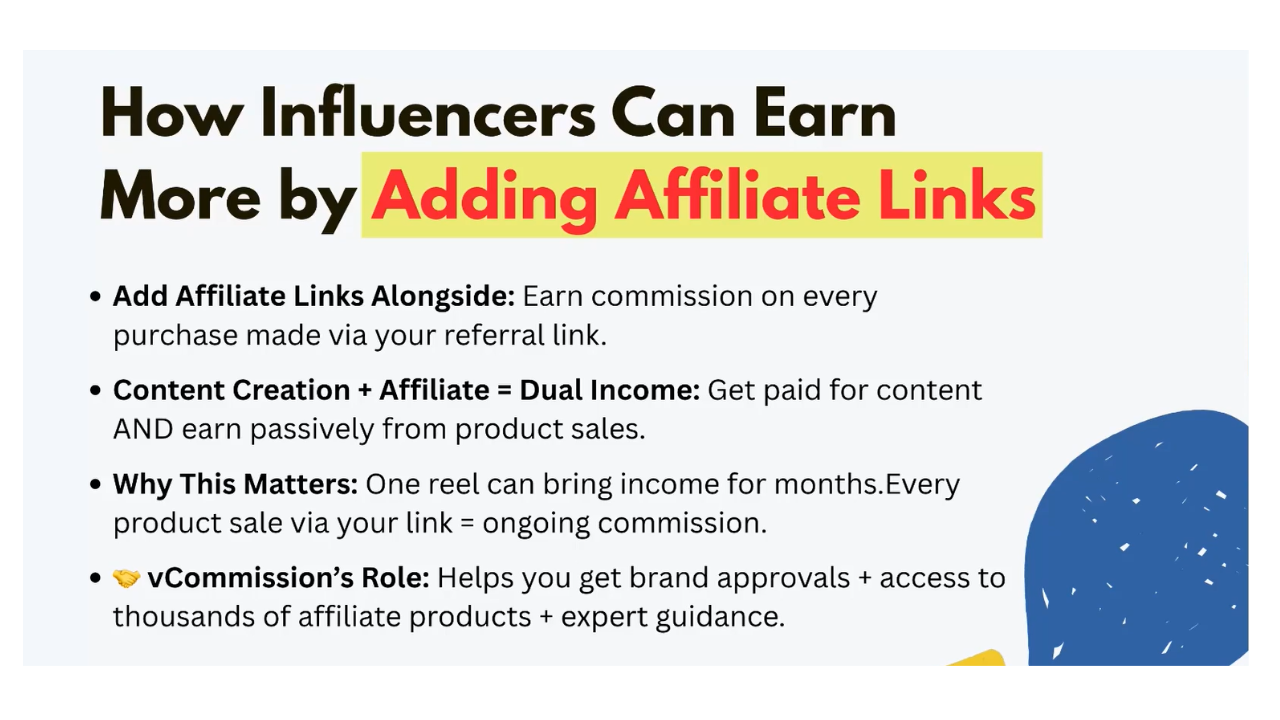
As Satish shared in the webinar, you don’t need to change your content style or switch platforms. You just need to add a link.
Here’s how it works in 3 simple steps:
That’s it. No pitching. No cold emails. Just steady income from content you’ve already created.
Affiliate marketing isn’t about replacing your existing content; it’s about amplifying your earnings through it.
If you’re creating content on Instagram or YouTube, the kind of niche products you talk about can make a big difference. Satish further discussed these five product types that are doing really well currently:
People love watching simple room makeovers or space-saving ideas online. This type of content works especially well on Instagram Reels. According to Grand View Research, the home decor market in India is expected to reach USD 27.6 billion by 2030. That’s huge!
If you show how to decorate a small space using LED lights, wall art, or indoor plants, your content has a high chance of getting saved and shared. Plus, these are easy-to-promote items that look great on camera.
More people in India are adopting pets and treating them like family. The pet care market is expected to reach $800 million by 2025, as reported by Creature Companion Magazine.
This means there’s strong demand for grooming tools, food bowls, toys, and pet care tips. If you’re a pet parent, sharing what works for your dog or cat makes your content relatable and also helpful to others. It’s a niche where honest reviews really matter.
New parents often turn to the internet to find safe and reliable products. If you create videos that explain how a baby product works or compare two similar items, it builds trust.
According to JJTU Journals, the baby care market in India is growing fast and is expected to hit ₹25,345 crore by 2026. That’s a 14.8% CAGR from 2022 to 2027.
Short, helpful videos, like how to use a feeding bottle or set up a baby monitor, can get great reach, especially when they’re easy to understand.
Tech content never goes out of style. People love watching product demos, unboxings, and “does it really work?” videos. According to ExtraPe, gadgets make up 15–20% of total affiliate sales in India, showing how strong this category is.
Even small products, like earphones, phone stands, or mini blenders, do really well if you show how they fit into everyday life. Clear visuals and real-life use cases can boost both engagement and sales.
Car accessory content is getting more popular, especially among new car owners in Tier 2 and Tier 3 cities. The Indian car accessories market is growing steadily and is expected to cross ₹29,600 crore by 2033, with a 5.5% CAGR, says IMARC Group.
Content that shows how to use mobile holders, air fresheners, or organizers in your car performs well, especially when it solves a common problem like clutter or discomfort.
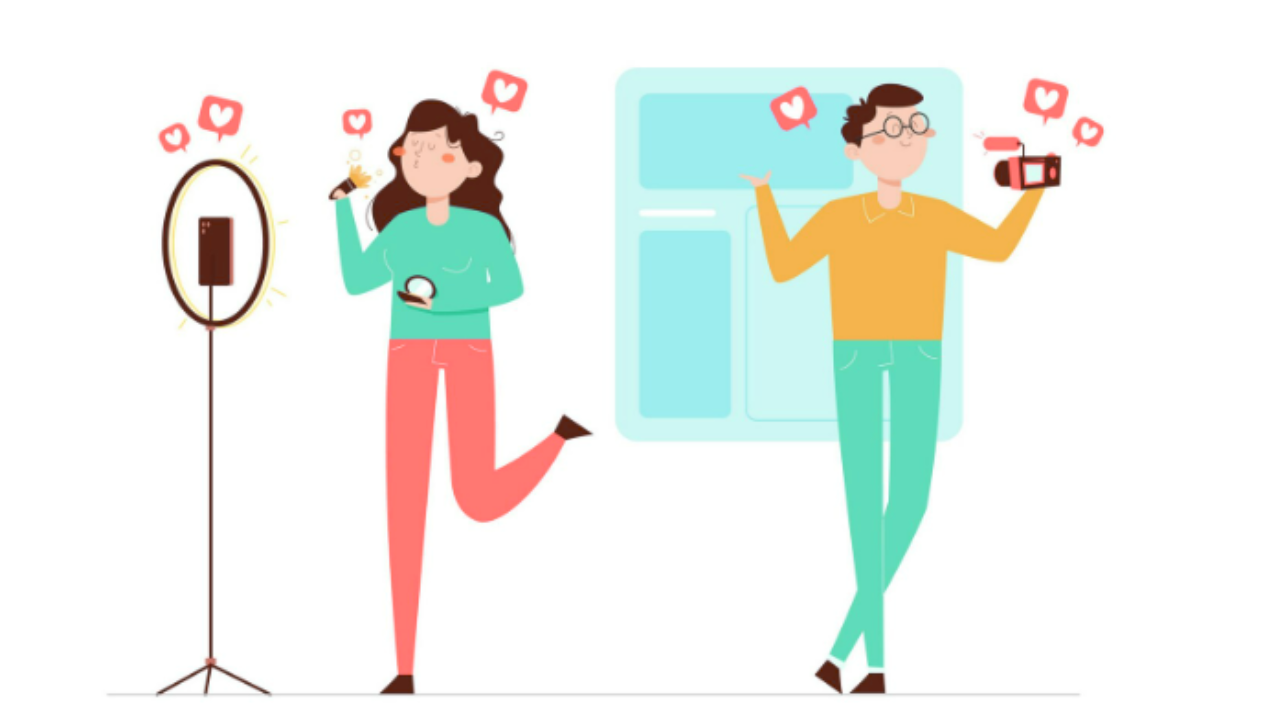
You don’t need to be a tech expert or have a huge following to earn through affiliate marketing. If you regularly talk about products, whether it’s skincare, gadgets, books, or fitness gear, you can start monetizing that influence right away. Here’s how you can start:
Affiliate marketing doesn’t require a shift in your content style. You just embed a smart revenue model into what you’re already doing. As Satish mentioned during the webinar, “It’s about making your content work for you, even when you’re not online.”
Affiliate marketing isn’t about chasing trends; it’s about building trust. The creators who win are the ones who stay true to their voice, share products they believe in, and show up consistently. You don’t need a massive following to start; you just need direction.
With access to diverse campaigns and reliable tracking, vCommission gives creators the tools to turn everyday content into long-term income. Sign up now to grow.
AI will make content creation faster. It can help with ideas, writing, and editing. But don’t rely fully on it, people still trust real human opinions. Use AI to explain a product, but always share your personal experience too. Earlier, we had to invest in expensive tools to get good quality, but now many AI tools and apps give the same results without much effort or money.
New creators try too many niches at once. It’s better to stick to one focused area. A micro-niche builds trust and loyal followers. Also, they often lack consistency, which slows growth.
You can use Linktree, but I’ve seen better results with Auto DM or a personal landing page. Auto DMs increase your engagement and drive more clicks directly from your audience.
No, it doesn’t matter if you use a blog, Instagram, or YouTube. The commission depends on the brand or product you’re promoting. Each product has a fixed rate shown on the platform.
Use AI tools for keyword research, SEO-friendly content, and backlinks. Don’t copy blindly. Write in your own style to connect better with your audience. AI helps, but human touch builds trust.
Try using Gemini. It’s an advanced tool and really helps with creating short videos quickly, especially if you want high-quality results with less effort.
Influencers usually charge per post. A good idea is to offer a mix, some fixed payment and a performance-based bonus. This way, influencers are motivated to make better content and also get rewarded for results.
Use your in-house team to explain products clearly. Micro-influencers are great for honest feedback and relatable content. You can even boost their content with ads. Celebrities help build authority. A smart mix of all three works best depending on your goals.
You can use tracking links and dashboards for these updates. These show how many clicks and sales you got. You can also use unique coupon codes. These help track first-click and last-click attribution and give proper credit for the sale.
Yes. It works well for B2B brands, especially in software and SaaS. Focus on good storytelling and use text posts to build reach.