

 How Affiliates Can Generate Consistent Revenue with PPC Affiliate Marketing in 2026
 Credit Card and Loan Affiliate Campaigns: Strategies for Higher Conversions
 Semrush Affiliate Program: A High-Payout Offer for Marketers and SEO Publishers
 10 Best Affiliate Marketing Platforms of 2026
 Fintech Affiliate Campaigns: Monetizing Finance Traffic with High-Payout Offers
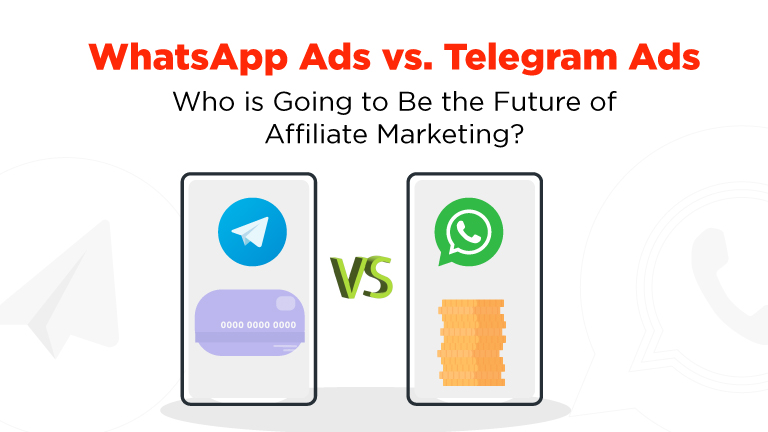
If you think affiliate marketing is still about blogs, websites, and constant email campaigns, then you are missing out on the new age front line – messenger apps. WhatsApp and Instagram are no longer platforms where people just chat. They are quickly emerging as the most popular platforms, and advertisers, affiliates, and brands are vying for users’ attention. The key query is: Will Telegram Ads or WhatsApp Ads rule affiliate marketing?
Let’s take a closer look, evaluate them side by side, and determine which one has the greatest chance to influence affiliate marketing going forward.

Think about it – people are tired of seeing advertisements on every website, every YouTube video, and even in their favorite games. However, texting apps? That’s where the real attention is:
Messaging applications are more personal, direct, and trusted than social media feeds, where users mindlessly browse. Because you’re essentially whispering into your audience’s ear rather than yelling in a busy marketplace, affiliates prefer them.
It became evident that Meta was developing a viable business model when it unveiled the WhatsApp Business API and Ads. WhatsApp Ads give affiliates access to a plethora of opportunities.
In summary, if you follow the guidelines, WhatsApp ads can be very effective.
Telegram offers a more open and experimental environment for affiliate marketing than WhatsApp, which functions under Meta’s strictly regulated ecosystem.
Promotions and ads on Telegram have skyrocketed, particularly in specialist communities. Telegram is similar to an underground club where advertisers can make direct pitches to interested audiences, with anything from fashion and fitness channels to crypto and finance groups.
In summary, Telegram Ads are adaptable, inventive, and resourceful, ideal for affiliates who enjoy trying new things.
Let’s stack them side by side:
| Feature | WhatsApp Ads | Telegram Ads |
| User Base | 2.7B+ | 1B+ |
| Ad Ecosystem | Backed by Meta (Facebook/Instagram integration) | Still new, but growing |
| Trust Factor | High – personal messaging | Medium – strong in communities |
| Automation | Limited | Highly advanced (bots, scripts) |
| Policies | Strict (anti-spam rules) | Flexible (but prone to spam) |
| Best For | Mass-market campaigns | Niche campaigns & community-driven offers |
So, which one is better? Well, it depends on your strategy.
WhatsApp Ads can be your best option if you’re an affiliate trying to use organized campaigns to reach large audiences. But Telegram Ads might be the future you’re counting on if you’re looking for active, specialised communities and desire creative freedom.

As an affiliate, you want three things: reach, conversions, and control.
The wise choice? Use both instead of just one. Create hybrid funnels in which Telegram.
The goal of affiliate marketing is always to follow the audience’s interest, and at the moment, that focus is found within chat apps. With their highly individualized, interesting, and high-converting methods of audience engagement, WhatsApp and Telegram are completely changing the rules for affiliates. Whereas Telegram offers creative freedom and community-driven interaction, WhatsApp offers unparalleled scale and trust.
There won’t be a single victor in the future. Rather, affiliates who become proficient in both platforms, using Telegram for depth and WhatsApp for reach, will continue to be at the forefront. Additionally, you don’t have to pick a side because vCommission provides the appropriate campaigns, tools, and data for both apps. Take control of your affiliate marketing communities, nurture leads with insider offers, while Facebook Ads reroute them to WhatsApp chats. The magic takes place there in the future by using vCommission to begin creating your next high-converting funnel right now.