

 How Affiliates Can Generate Consistent Revenue with PPC Affiliate Marketing in 2026
 Credit Card and Loan Affiliate Campaigns: Strategies for Higher Conversions
 Semrush Affiliate Program: A High-Payout Offer for Marketers and SEO Publishers
 10 Best Affiliate Marketing Platforms of 2026
 Fintech Affiliate Campaigns: Monetizing Finance Traffic with High-Payout Offers
Social media often feels like an unpredictable rollercoaster. You post every day. Write snappy captions. You dance with the algorithms. You even toss some dollars in a campaign or two. But when someone says, “What’s the return on investment?” your mind is suddenly filled with the sound of crickets.
If you’ve ever stared blankly at your analytics dashboard wondering if all those likes and shares are actually paying off in affiliate commissions, you’re not alone. Calculating social media ROI in affiliate marketing sounds intimidating, but it doesn’t have to be.
Before we get into the how, let’s talk about the what.
ROI (Return on Investment) is really just a measure of what you’re receiving in return for what you’re investing. In affiliate marketing, it’s calculating how much money (or commission) your social media campaign is bringing in versus how much you’re investing in it, a monetary amount, hours, equipment, or all three.
Social Media ROI = (Net Profit / Investment) x 100
But here’s the catch: with affiliate marketing, it gets a little fuzzy. Your investment may be more than ad spend, it may be content creation, influencer costs, software tools, and time. Your returns? They could be affiliate sales, leads, clicks, or even email subscribers.
So yeah, it’s more than plugging numbers into a formula. It’s knowing which numbers count.
You can’t measure ROI if you don’t know what you’re aiming for.
That’s why the very first step in calculating your ROI is asking: What does success look like in social media advertising?
After your goals are defined, you can reverse engineer the most important metrics to measure. And don’t forget that goals need to be SMART: Specific, Measurable, Achievable, Relevant, and Time-bound.
Example: “I want to get 100 affiliate conversions on Facebook over the next 30 days.” Boom. Now we’re talking.
Alright, so you have goals but still lack the real numbers to analyze the feasibility. At this point, link management and monitoring software become your best friends.
This includes:
This aids in making the connection between a conversion and a social media post.
Pro Tip: Your ROI will always be hazy if you aren’t monitoring specific platforms, like Facebook vs. Instagram. The key is accuracy.
Here comes the money talk.
Let’s say you ran an affiliate campaign on TikTok promoting a fitness supplement. You spent:
Total investment: $600
Let’s say your affiliate links generated 150 sales, each generating you $5 in commission. That’s:
150 x $5 = $750 in revenue
Now plug it in:
($750 – $600) / $600 x 100 = 25% ROI
Boom! You’re on the gold plate. And now you can make wiser decisions for your next campaign.
This is where things get problematic: not all ROI is immediate cash.
Occasionally, your campaign creates brand equity, generates email sign-ups, or makes content that continues to earn months down the road. These are legitimate benefits, even if they don’t immediately register as affiliate sales.
Assume a viral Instagram Reel gets you 10,000 new followers. If 5% of them regularly interact with your affiliate content, that’s a pipeline for future ROI.
Pro Tip: Employ KPIs (Key Performance Indicators) such as CTR (Click Through Rate), CPC (Cost Per Click), CPL (Cost Per Lead), and conversion rate in order to provide a richer picture of performance.
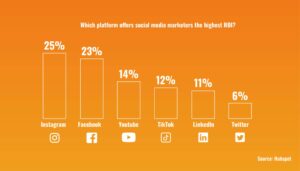
Facebook may generate clicks but TikTok may generate sales. Instagram may establish trust, but Twitter may be a bust for your vertical.
So, measure ROI by platform.
This allows you to double down on what’s working and chop what’s not. Here’s an easy comparison framework:
| Platform | Total Cost | Revenue | ROI | Clicks | Conversions |
| $300 | $500 | 66% | 1200 | 100 | |
| $200 | $400 | 100% | 1000 | 80 | |
| TikTok | $100 | $150 | 50% | 800 | 50 |
Over time, this data helps you predict performance and plan smarter campaigns.
It’s easy to be thrilled about likes and shares. They’re flashy, that is.
But the thing is: likes don’t earn commissions.
If a post racks up 10,000 likes but nobody clicks your affiliate link, it’s not a win. Monitor metrics that really correlate to your objectives, such as:
That doesn’t imply engagement is futile, it’s merely not the ultimate objective. Visualize it as a stepping stone towards a more profitable end.
Some campaigns burst in 24 hours. Others need weeks to pick up.
When computing ROI, give your campaign a clean window, i.e., 7, 14, or 30 days, and study performance during that period.
This prevents making conclusions too early and facilitates A/B testing. You may find that Reels convert higher after 7 days, while Stories convert higher in 24 hours.
Social media is already a time-sucking monster. Don’t overcomplicate ROI tracking.
Employ tools such as:
After setup, these tools can save hours and yield clean data to analyze.
Now, if all this still feels a little overwhelming, don’t worry. You’re not expected to be a data scientist overnight. That’s where platforms like vCommission are stepping in to make life easier for affiliates and advertisers alike.
Here’s how vCommission is leading the charge when it comes to tracking and improving social media ROI in affiliate marketing:
vCommission provides custom tracking links and individual affiliate IDs that integrate smoothly into your social campaign. Whether you’re using an Instagram story swipe-up, a link in a YouTube video description, or a Facebook carousel ad, you’ll be able to see exactly where the conversion originated.
Their dashboard isn’t merely reporting clicks, it provides a detailed view of conversions, traffic sources, device types, and even geo-location.
vCommission’s dashboards are designed for decision-makers. You don’t have to export a dozen spreadsheets just to determine what worked. You can view live campaign statistics, categorized by platform, link, or offer.
This allows you to make adjustments during the course of your campaign, not after it ends.
By regularly analyzing data, vCommission actually informs affiliates which social networks are performing top-notch on particular verticals, such as finance, gaming, e-commerce, and so on.
That way, you’re not losing time spamming skincare products on LinkedIn (yep, it happens).
Tied up on what to monitor or how to optimize your ROI? vCommission hand-picks dedicated affiliate managers who will work with you to plan, test creatives, and amplify top-performing campaigns. Think of it like having a performance coach by your side.
Come on, social media is already crazy enough without making ROI into a math problem.
But when you begin measuring the right things, connect them to your affiliate objectives, and utilize tools that make it easier, it begins to make sense. Literally and figuratively.
It’s not perfection, it’s progress. Run your campaigns, analyze your data, make minute adjustments, and keep on moving. Eventually, you’ll not just know your ROI, but also optimize it.
And if shortcutting the learning curve is what you desire? vCommission is here to support you with tools, tracking, and insights that eliminate social media affiliate campaign guesswork.