

 How Affiliates Can Generate Consistent Revenue with PPC Affiliate Marketing in 2026
 Credit Card and Loan Affiliate Campaigns: Strategies for Higher Conversions
 Semrush Affiliate Program: A High-Payout Offer for Marketers and SEO Publishers
 10 Best Affiliate Marketing Platforms of 2026
 Fintech Affiliate Campaigns: Monetizing Finance Traffic with High-Payout Offers
If GA4 is pushing you to spend more on Google-owned channels, it’s worth taking a closer look.. Particularly among performance-driven marketers, the discussion surrounding Google Analytics 4 (GA4) and its default data-driven attribution (DDA) has heated up during the past year.
According to a recent white paper co-authored by significant affiliate networks and published by France’s digital performance trade group (CPA), GA4 may undervalue non-Google acquisition channels like affiliate partners while giving preference to interactions coming from Google channels, such YouTube advertisements or Google Search. Any business that bases its media budget allocation entirely on GA4 should exercise caution.

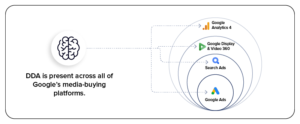
Google started sunsetting the majority of rule-based models (first-click, linear, time-decay, and position-based) across Google Ads and GA4 in April 2023, leaving DDA and last-click as the primary choices. The company also made data-driven attribution the default in GA4. Although this was marketed as a more equitable method of allocating credit across touchpoints, it also altered how dashboard performance is displayed and where budgetary decisions are made.
Awin, CJ, Rakuten Advertising, Tradedoubler, and others contributed to the CPA’s 2024 white paper, GA4 et l’affiliation 2024. The report highlights a major concern: GA4 often under-credits affiliate traffic in its data-driven attribution (DDA). It also notes that GA4’s rules and models may give more weight to Google’s own platforms, like YouTube and Search. This raises questions about whether measurement can really be objective when the same company is both the tracker and a major media seller.
The summary of the paper highlights three key points that are highly relevant to affiliate marketers:
In summary, using GA4’s DDA alone to guide spending may undervalue important sources for acquisitions and over-index funds for Google-owned inventory.
To find out how DDA versus last-click affects each channel’s reported contribution, use GA4’s Model comparison report. Performance appraisals ought to regularly include this.
GA4 should be viewed as one input, not the sole one. To get a fair picture, compare it with partner network information, ad platform reports, and CRM data.
Use server-side tagging to minimise signal loss, maintain click parameters throughout the funnel, and, if at all possible, implement server-to-server tracking.
Make sure that special coupon codes, dedicated URLs, and appropriate attribution windows are used to accurately track your most valuable touchpoints, such as late-stage partner referrals.
Create experiments (geo splits, holdouts, and partner on/off tests) to quantify real lift independent of the attribution model in cases where attribution is ambiguous.
Stakeholder reports should include DDA and last-click views side by side to avoid over-optimizing for the biases of one model.
Although GA4’s DDA provides insightful information on multi-touch journeys, it should be viewed as a guide rather than a rule. While DDA can assist in identifying upstream influence, last-click is still the most transparent method of measuring and rewarding final conversions. Combining models, verifying them through experiments, and maintaining control over budget transfers are crucial.
Industry examinations into GA4’s DDA emphasise the importance of cross-verification and model transparency. By routinely assessing attribution models, triangulating data from many sources, and validating performance through controlled experiments, businesses may make more informed budgetary decisions. The accuracy and dependability of attribution models will be further improved in the future by developments in AI-driven analytics and privacy-safe measurement, providing companies with even more assurance over their marketing expenditures.