

 Black Friday Deals 2026: How to Promote High Ticket Items to Affluent Shoppers
 Halloween Haul: Scale Your Earnings with the POP MART Affiliate Program
 AliExpress 11.11 Sale 2026: How Affiliates Can Capture Global Shopping Demand
 Best Electronics Campaigns to Test Before Scaling for BFCM
 BFCM Tech Deals: Scale Your Revenue with High Paying Saas Campaigns
D2C brands are spending lakhs on advertising, only to watch customers switch to competitors offering similar products at lower prices.
The global D2C market is projected to approach $900 billion this year (IMARC Group), with over 64% of consumers worldwide now buying directly from brands for a better experience. The opportunity is massive, but so is the competition. Every brand is fighting for the same customer across multiple channels.
However, a strong D2C marketing strategy is not about being present everywhere. It is about investing in the traffic sources that bring the right buyers at the right cost.
Below are the three traffic channels driving the best D2C customer acquisition results in 2026.
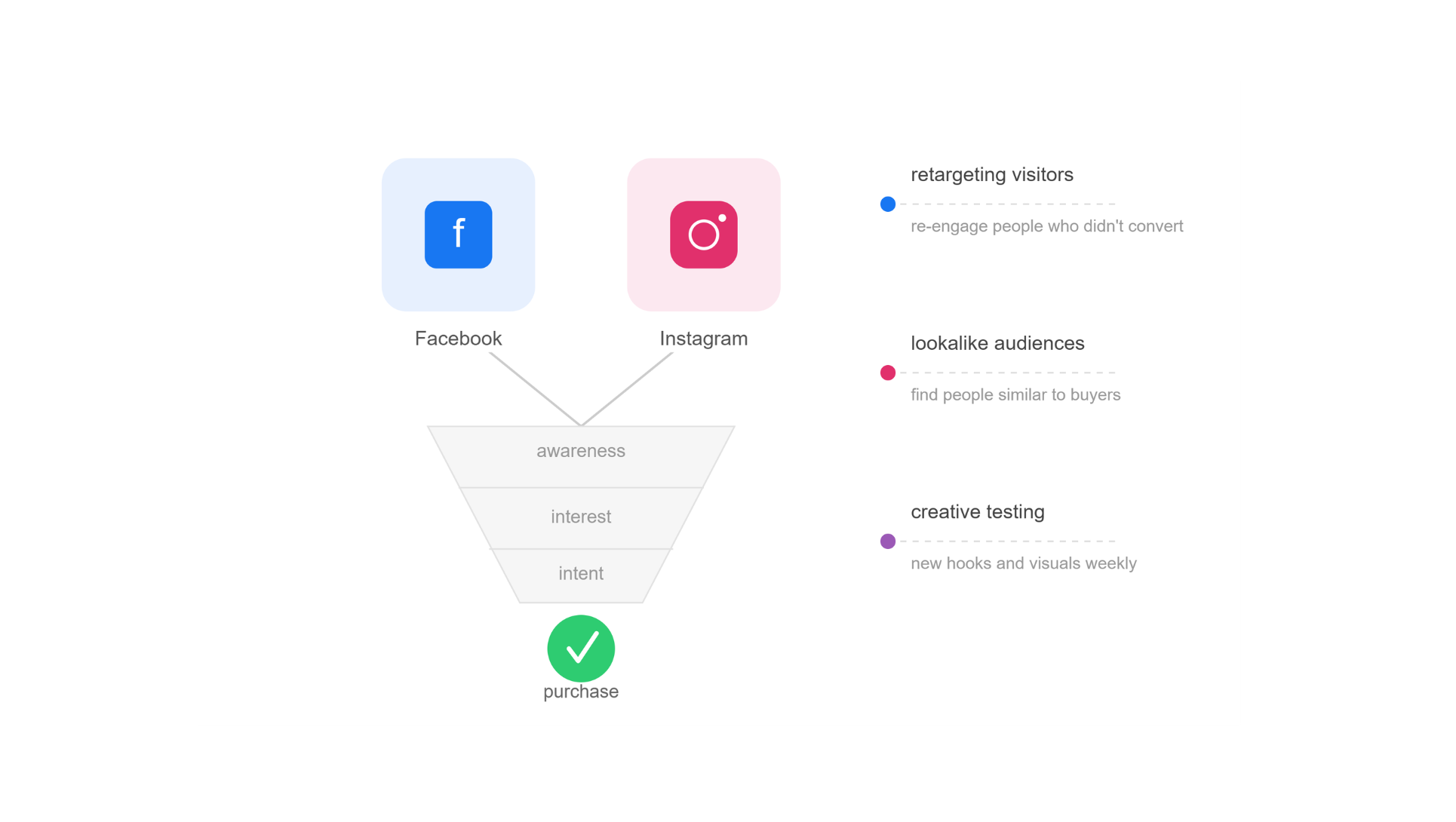
Google catches people who are already ready to buy. Meta creates that need in the first place. That’s why it has a core part in most D2C marketing strategy setups.
That’s what makes Meta a strong growth channel for direct to consumer marketing brands. Facebook and Instagram put your product in front of people who weren’t looking for it but are exactly the type to buy it. Done right, Meta doesn’t just drive traffic. It builds the purchase intent that Google later converts.
The platform also gives advertisers a lot of flexibility in how they reach people. Brands can introduce products to new audiences, reconnect with website visitors who didn’t convert, or reach people who share similar characteristics with existing customers. As campaigns run, these audience insights often become just as valuable as the traffic itself.
A lot of Meta performance comes down to creative. The audience may be right, but if the ad fails to stop the scroll, nothing else matters. For improved D2C customer acquisition, many brands regularly test new hooks, visuals, and messaging angles because what worked a few weeks ago may not perform the same way today.
For brands looking to scale, Meta is often the channel in D2C growth strategy that keeps products in front of potential customers long enough for interest to turn into intent and intent to turn into a purchase.
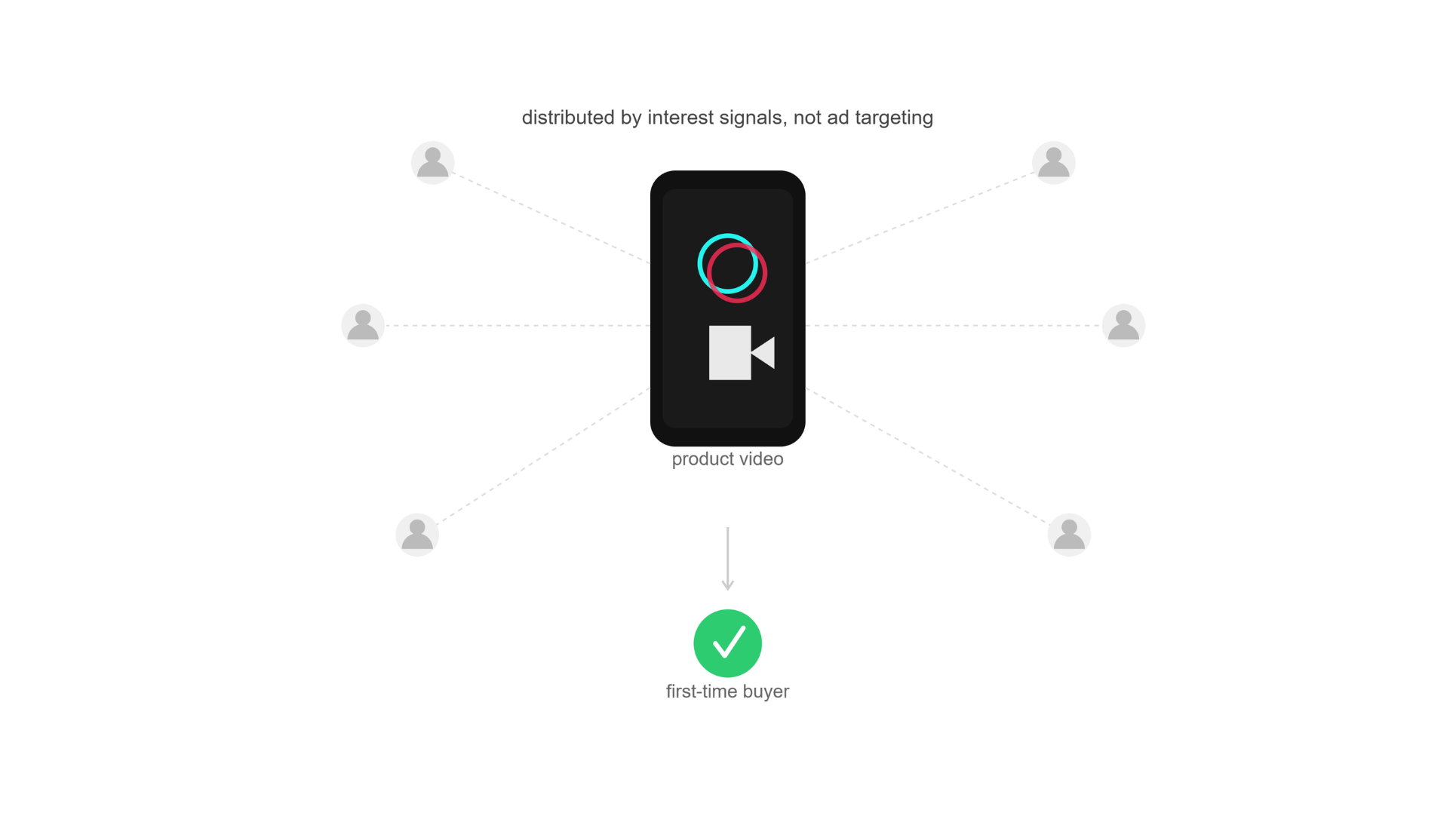
TikTok started as an entertainment platform. For D2C brands paying attention, it has quietly become one of the most effective Direct-to-consumer business models, to turn a first-time viewer into a first-time buyer.
The reason is how TikTok’s algorithm works. Unlike Meta, where you target the audience, TikTok distributes content based on interest signals. A new product video can reach hundreds of thousands of relevant viewers without a massive ad budget behind it. This is why it acts as the top-of-funnel discovery layer inside a broader D2C marketing strategy.
Many D2C marketing brands discover that the content that performs well on TikTok is not necessarily the content that performs well elsewhere. Users are there to watch videos, not advertisements, so content that feels natural to the platform often receives a stronger response.
Although TikTok may have started with a younger audience, many brands are now seeing traction across categories like beauty, fitness, and more. As more people spend time on the platform, D2C brands are increasingly treating it as a sales channel rather than just a place to build awareness.
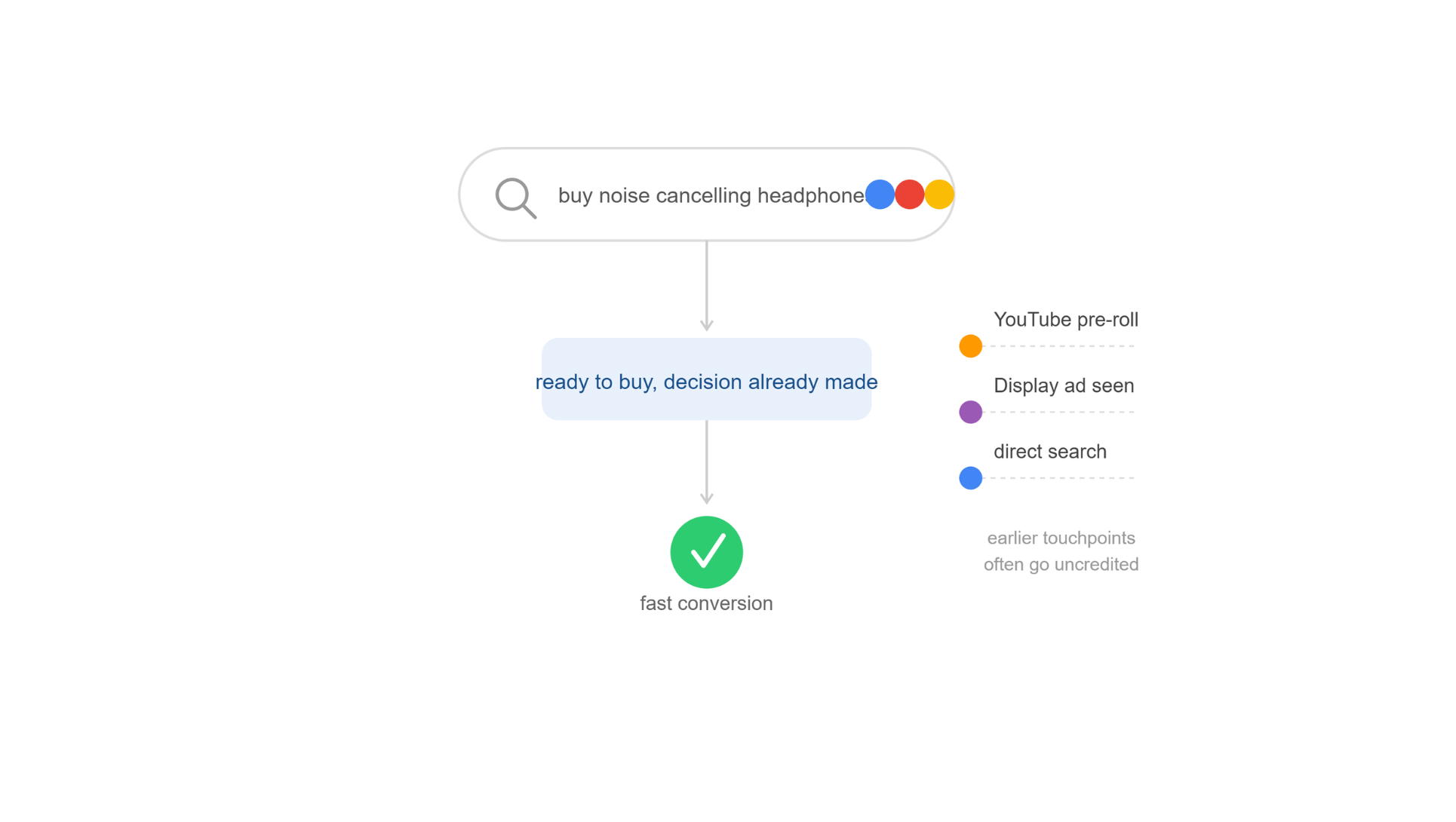
When someone searches for something on Google, they’re not browsing. They’ve already decided to buy. That’s the core advantage Google holds for D2C customer acquisition.
The conversion difference between a Google search visitor and someone who randomly saw your Instagram post is quite noticeable. Search traffic tends to buy more and buy faster because the research happened before the click, not after.
Most D2C brands figure this out too late. If a competitor is bidding on your brand name and you’re not running search ads, that warm traffic goes straight to them.
Attribution is the other gap most brands miss. Brands running both Google and Meta often undercount what Google is actually contributing because last-click models don’t tell the full story. A buyer who watched a YouTube pre-roll, saw a Display ad, and then searched directly gets counted as a Google conversion, but the earlier touchpoints influenced that decision entirely.

A strong Direct-to-consumer business model does not depend on one channel. Most D2C brands grow through a combination of Google, Meta, and TikTok. Think about buying habits. It usually starts when a product is seen on TikTok. The person may ignore it at first. Later, Instagram reinforces the brand, and the user explores the website before finally searching on Google to decide.
For many brands, that is how the D2C growth strategy leads to sales. It is rarely the result of a single ad or a single platform that leads to D2C customer acquisition. Customers move between channels before making a decision, which is why looking at each traffic source separately does not always tell the full story. A conversion credited to Google may have started with a TikTok video or a Meta ad days earlier.
A strong presence across Google, Meta, and TikTok can create significant growth opportunities for D2C brands. However, as budgets grow, brands need to know which channels are driving sales and where it makes sense to invest more. At this stage, vCommission supports advertisers by providing clearer visibility into performance and helping them identify opportunities to scale more effectively.
The impact of this approach can be seen across multiple D2C brands stories. Skimmylo, a fast-growing shapewear brand, wanted to scale its performance marketing but wasn’t fully sure what was actually driving sales. As spending increased, it became harder to understand which campaigns were really working. The brand partnered with vCommission to bring more clarity and structure to its growth efforts. With better tracking and improved Meta performance, Skimmylo was able to scale more steadily and eventually grew GMV by 19x.
Similarly, Slursh was operating in a category that required a lot more customer education than a typical direct to consumer marketing product. Since many shoppers were unfamiliar with the product, turning interest into sales was not always straightforward. By working with vCommission, the brand was able to reach relevant audiences at scale and build momentum over time. The campaign eventually delivered a 691% increase in GMV, showing how the right D2C growth strategy can help niche products find their market.
Most D2C brands don’t struggle because of a lack of traffic, but because they don’t understand how customers move across channels before buying. And at that stage, it’s more about getting clarity on what is actually working. For that, vCommission helps advertisers connect with relevant publisher networks and affiliate partners.
An advertiser manager is also there to support campaign management, helping brands run and optimize performance more effectively. Along with that, brands get clearer performance tracking, so they can understand what is working in their D2C growth strategy and shift budgets toward the channels that actually deliver results.
You should only scale when your campaigns are already giving consistent sales at a stable and profitable CAC. If you’re not sure what’s driving results, it’s too early to scale. An advertiser manager can help you sort that before you increase spend.
It may work in the beginning, but growth usually slows over time. Stronger scaling comes when multiple channels work together instead of depending on a single source.
If performance slows down, it’s usually a sign of creative fatigue or audience saturation, and the first fix is testing new creatives.
Products that can be understood instantly through video perform best. If the value can be shown in a few seconds, it usually has a higher chance of converting.
You can start with performance data and shift the budget toward the channel driving the most profitable conversions. If you’re unsure, an advertiser manager can guide the right allocation.